CEILING LANTERN
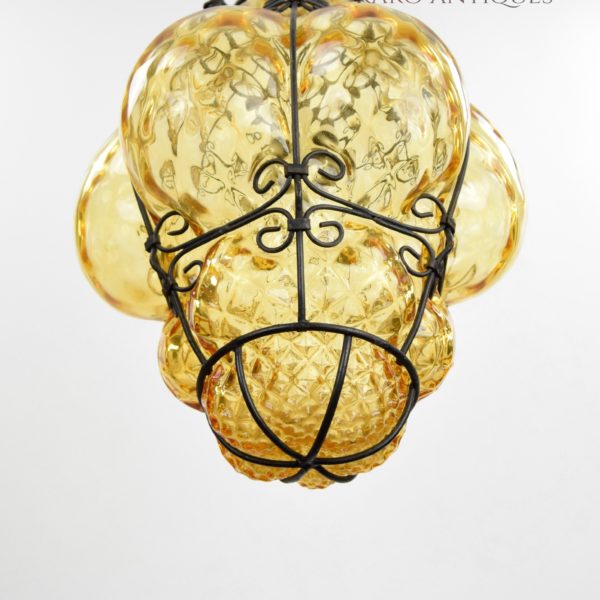
Ceiling lantern, Murano glass, made by Seguso in the 1940s.
A beautiful light fixture for hallways and entrances, suitable for any space where you want to add a touch of magic. This hand-blown glass lantern casts a wonderful net-like pattern on surrounding surfaces, and the yellow color of the glass adds vibrancy to any room. Dimensions: 33 x 22 cm Weight: 1600 g The lantern is in excellent condition, suitable for an E27 light bulb.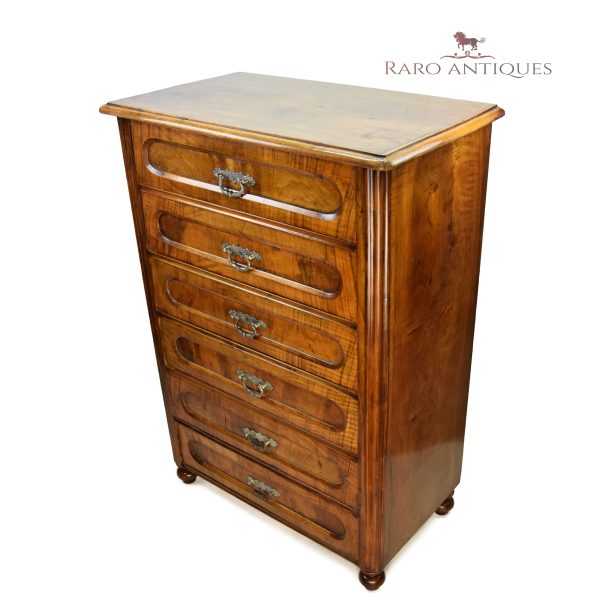
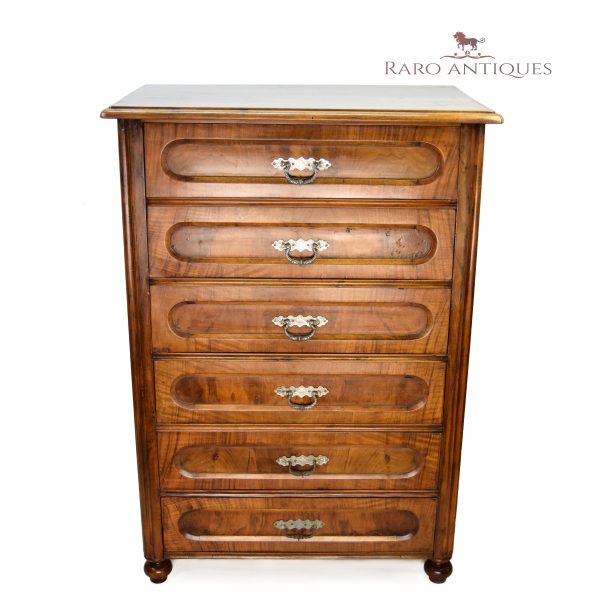
ALT DEUTSCH CHEST OF DRAWERS
Alt deutsch chest of drawers, from the late 19th century.
A smaller chest of drawers, perfect for adding character to your hallway or foyer, but also suitable for any other space, as its simple Old German style will complement any environment excellently. With its six deep drawers, it will also be great for storage. Durable and beautiful piece of furniture, which is both decorative and extremely useful. Dimensions: 115 x 79.5 x 46 cm Weight: 30 kg The chest of drawers is in excellent condition.

ANTIQUE UMBRELLA STAND
Wrought iron umbrella stand, 19th century.
This extraordinary umbrella stand showcases the pinnacle of blacksmith artistry. The precision of the master craftsman is evident in every detail of the stand, with the most striking feature being the base, adorned with two dragons with gleaming red eyes. Dragons hold special significance for the home, as they symbolize protection in many mythologies, guarding treasures and sacred spaces. Placing a dragon figure near the entrance is believed to ward off evil spirits and bring safety to the household. This makes this piece a perfect addition to your hallway or entryway, enriching it with unique artistry that will leave you in awe every time. Dimensions: 81 x 45 x 32 cm Weight: 4.8 kg The umbrella stand is in excellent condition.

GRAND TOUR MEDICI LIONS
"Grand Tour" Medici Lions, circa 1870, Italy.
These lions, carved from green serpentine marble quarried for centuries near Prato, northwest of Florence, represent the famous white marble Medici lions that have guarded the Loggia dei Lanzi's staircase at Piazza della Signoria in Florence since 1789. Before their placement in Florence, the original lions adorned the Villa Medici in Rome from 1598, commissioned by Ferdinando I de' Medici, Grand Duke of Tuscany. One lion dates back to the 2nd century, while its pair was sculpted by Flaminio Vacca to complement the ancient statue. These lions are celebrated as symbols of the Medici family, who famously invested in art and culture, fostering an environment where humanism and creativity flourished. The presented lions were crafted in the 19th century as souvenirs for wealthy travelers embarking on the "Grand Tour," a traditional journey through Europe from the 17th to 19th centuries, with Italy as a key destination. This tour was an educational rite of passage for young noblemen and upper-class individuals, focusing on art, history, and geography. Skilled artisans created exquisite mementos to cater to these affluent visitors, ensuring a tangible memory of their travels. Now, you can showcase these beautifully sculpted Medici lions in your own home. They are not just decorative items but artistic pieces that will spark conversation and admiration. Dimensions: 18 x 15 x 7 cm Weight: 1.6 kg The lions are in excellent condition. Price is for one.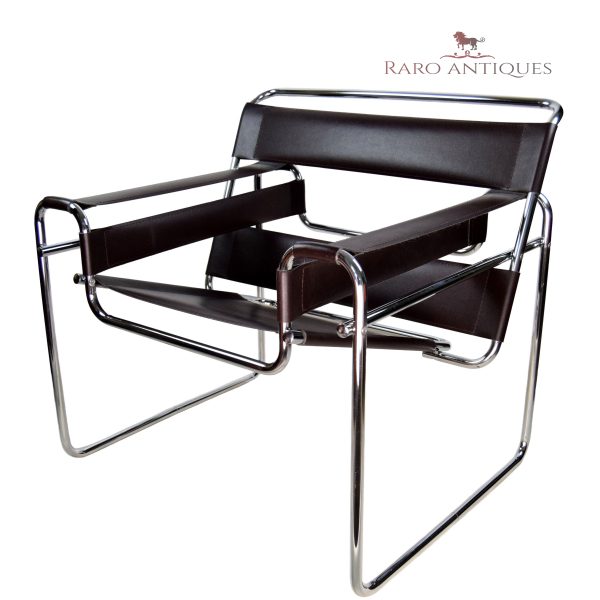
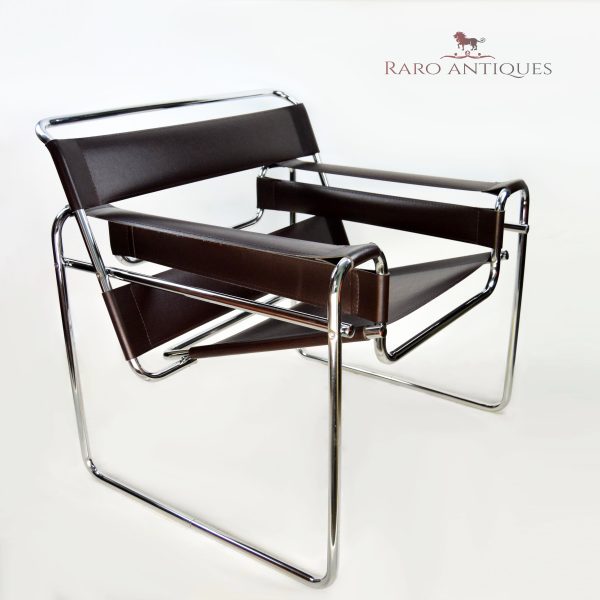
WASSILY B3 ARMCHAIR
Wassily B3 armchair, manufactured in the mid-20th century for the Italian company Gavina.
An icon among armchairs, the Wassily B3 was designed by Marcel Breuer, a Hungarian-American architect. He found inspiration for it in his Adler bicycle, which was entirely made of round tubes. Impressed by the durability and lightness of the bicycle, he began to contemplate how to use such tubes in furniture. In 1925, he designed the B3 armchair, crafted from curved steel tubes and leather straps, creating a seat that is both ergonomic and comfortable, yet still minimalist. With its unique exposed structure, the armchair demonstrated how modern design could be applied to everyday objects. The B3 armchair was later renamed Wassily, after Breuer's friend Wassily Kandinsky. Kandinsky, like Breuer, was a student and teacher at the Bauhaus and was highly enthusiastic about Breuer's prototype, even receiving a handmade armchair himself. Although the Wassily armchair is now Breuer's most recognized design, he gained greater fame in his time with the B32 chairs, which are also icons in design. Breuer will be remembered in history as an inspiration to many modern designers striving to pursue his vision of minimalist and seemingly weightless furniture. Breuer's minimalism ensures that this armchair, despite its nearly 100-year history, remains timeless, as the Wassily B3 armchair is still extremely popular and, due to its timeless appearance, suitable for almost any style and space. Dimensions: 79 x 73 x 69 cm Weight: 7 kg The armchair is in excellent condition.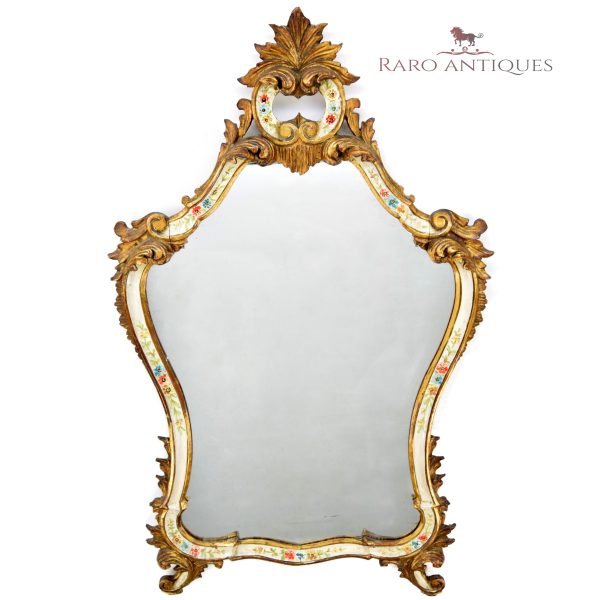
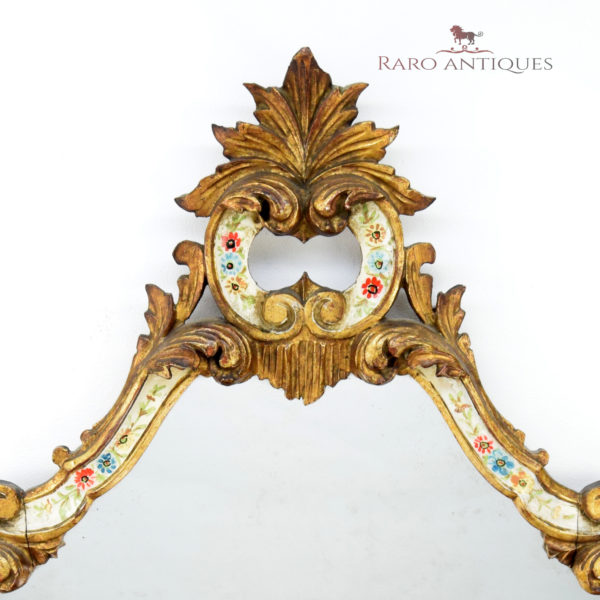
MIRROR
Mirror from the 1920s, made in Italy.
Hand-carved, painted, and gilded mirror, suitable for an entryway or bathroom due to its size. With its beautiful appearance, it can also embellish any other wall in your home. A mirror is not only a beautiful decoration for the wall but also a key element in a home. Think about it; we have them in hallways, by entrance doors, in bedrooms, and, last but not least, in the bathroom, serving as a tool for personal grooming. Mirrors can also be a wonderful source of light, so we can hang them in rooms where we don't usually need them, visually enhancing the space and adding some light. With antique mirrors, showcasing a beautiful patina, we bring uniqueness to our home that will inspire for years to come. Dimensions: 110 x 63 x 6 cm Weight: 3.7 kg The mirror is in excellent condition.
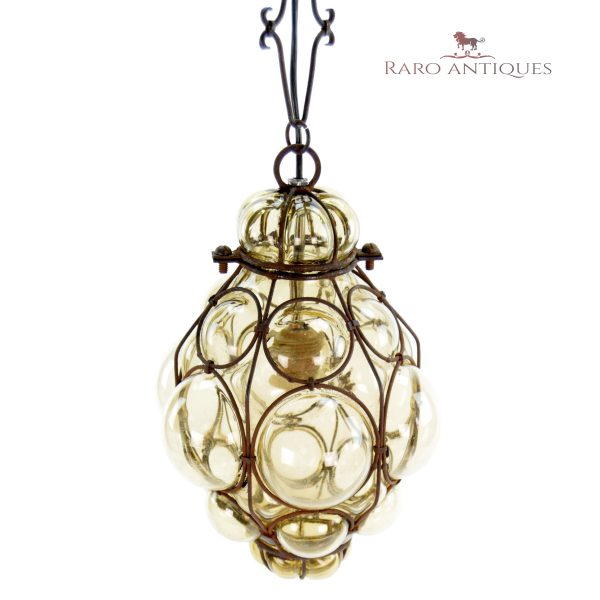
SEGUSO LANTERN
Lantern from Murano, made by Seguso glassworks in the 1960s.
A magical lantern that will bring a touch of Venice into your home. Beautifully crafted, this piece showcases the precision of meticulous handwork and skillful glass manipulation. With its organic shapes, it fits seamlessly into almost any interior. Designed for both practical and decorative purposes, it shines best in small spaces such as entryways, hallways, or conservatories—places where its beauty can be fully appreciated. Its soft, subtly refracted light creates a magical ambiance, unlike harsh, diffuse lighting that can disrupt the atmosphere of a room. The production of glass lanterns in “cages” began partly in response to the growing prominence of decorative arts exhibitions, such as the Milan Triennale during the interwar years. Another likely influence was the traditional arts movement known as the “Return to Order,” a revival of classicism across Europe in reaction to the mechanized destruction caused by World War I. After the financial crisis of 1929, Murano experienced several closures of key glassworks. To survive, many of them formed collaborations, including Artistica Soffiera e Vetreria – Barovier, Seguso & Ferro (Artistic Glassblowers and Glassmakers). This group included Luigi Ferro, Napoleone Barovier, and Antonio Seguso, along with Seguso's sons Ernesto and Archimede. In 1934, Flavio Poli joined the company as an artistic advisor, sparking a period of experimentation with colored glass and new techniques, which led to international success. By 1937, Poli became a full partner, and the company was renamed Seguso Vetri D’Arte, a name it still carries today. It was during Poli’s first collaboration with Seguso (1934–1940) that the iconic glass lanterns in “cages” were born. These lanterns remain a hallmark of Venetian glassblowing artistry. Dimensions: 73 x 22 cm Weight: 3 kg The lantern is in excellent condition and uses an E27 bulb.

MIRROR
Mirror from the first half of the 20th century.
A mirror in a gilded wooden frame, in the Rococo style. The mirror is not only a beautiful ornament for the wall but also a key element in the home. Imagine having mirrors in hallways, near entrance doors, in the bedroom, and even in the bathroom, serving as a tool for personal grooming. Mirrors can also be wonderful light transmitters, so we can hang them in rooms where they are not typically needed, visually enhancing the space and adding some light. With old mirrors that exhibit a beautiful patina, you bring a uniqueness to your home that will inspire you for years. Dimensions: 56 x 37 cm Weight: 890 g The mirror is well-preserved. The frame has an excellent patina, and the mirror itself carries the marks of time, creating a unique charm.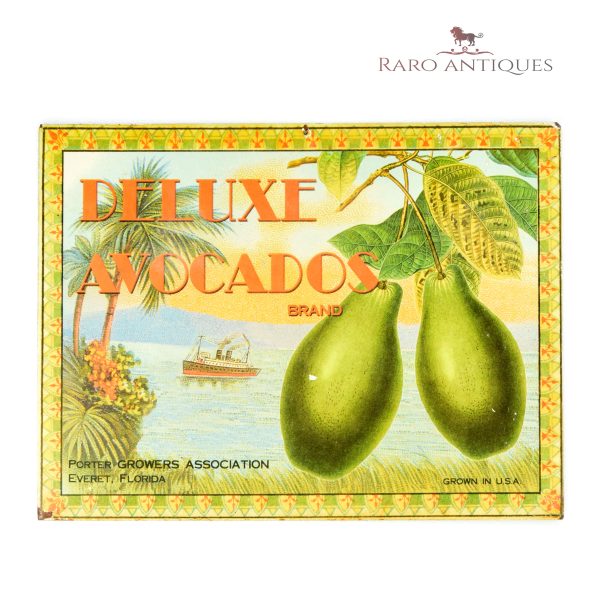
ADVERTISING SIGN
Deluxe Avocados brand advertising sign from the 1960s.
This vibrant sign will make an excellent addition to the kitchen or any other space where you want to infuse a vintage touch and color. Dimensions: 30 x 26.3 cm Weight: 530 g The sign is well-preserved, showing only a few signs of time, which adds character to
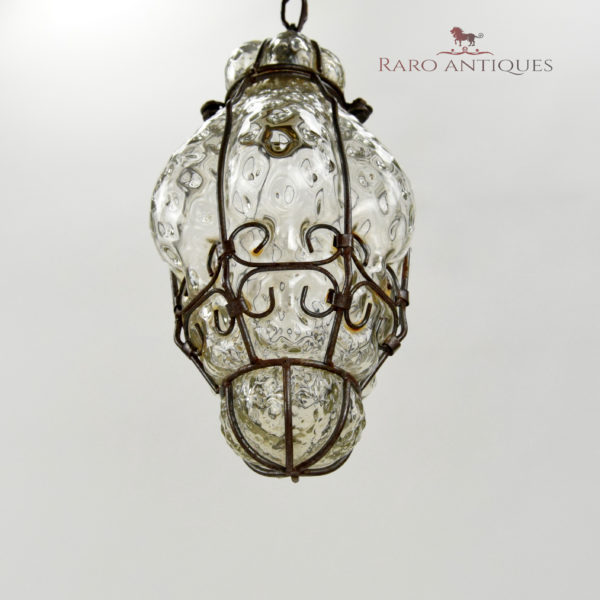
SEGUSO LANTERN
Lantern from the island of Murano, made in the Seguso glassworks in the 1930s.
This magical lantern will bring the charm of Venice into your home. It is crafted to reflect the shimmering water of the Venetian canals and bridges, creating a captivating play of light. The lantern is intricately detailed, showcasing the quality of precise handcraftsmanship and skillful manipulation. It stands as an excellent example of wartime artisanal decorative art when most production was still craft-based rather than mechanized. Due to its natural forms, it will complement almost any space. The lantern serves both practical and decorative purposes, particularly shining in smaller rooms such as a foyer, hallway, or a winter garden. It works best where you can directly appreciate its beauty, allowing its magical light to gently illuminate the walls with a soft, subtle glow rather than harsh diffusion that could disrupt the ambiance of the room. The production of glass lanterns in "cages" partly began in response to the growing exhibitions of decorative art, such as the Milan Triennale in the interwar years. Another likely influence was the movement for traditional art known as the "Return to Order," a revival of classicism throughout Europe as a response to the mechanized destruction caused by World War I. After the financial crisis of 1929, Murano suffered several closures of key glassworks. To survive, many of them, including Artistica Soffiera e Vetreria – Barovier, Seguso & Ferro (artistic glassblowers and glassmakers), joined forces. The group included Luigi Ferro, Napoleone Barovier, Antonio Seguso, and Seguso's sons Ernesto and Archemide. In 1934, artistic advisor Flavio Poli joined the company. This marked a period of experimentation with colored glass and new techniques, leading to international success. In 1937, Poli was accepted as a full partner, and the company was renamed Seguso Vetri D’Arte, a name that endures to this day. The iconic glass lanterns in "cages" emerged from Poli's first collaboration with Seguso from 1934 to 1940, becoming a symbol of Venetian glassblowing expertise. Dimensions: 75 x 16 cm Weight: 1400 g The lanterns are in excellent condition. For E14 light bulb. Price for one.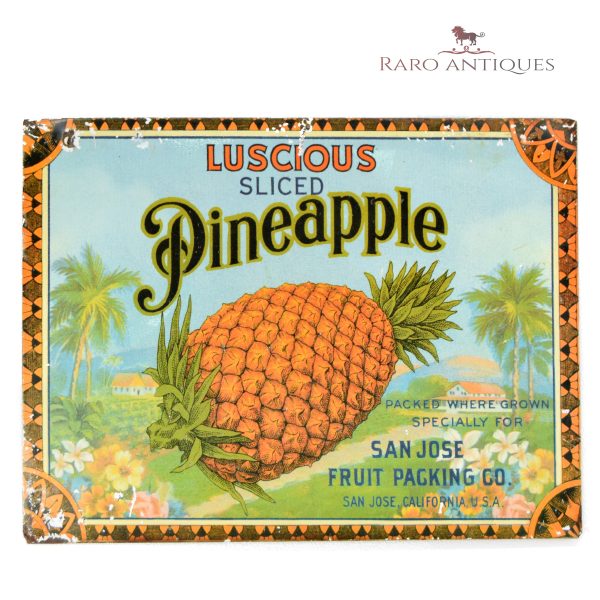
ADVERTISING SIGN
San Jose Pineapple advertising sign from the 1960s.
This colorful sign will be an excellent addition to the kitchen or any other space where you want to enhance the vintage touch and add some color. Dimensions: 30 x 26.3 cm Weight: 530 g The sign is well-preserved, showing only a few signs of age, which adds character to it.


CONCAVE MIRROR SUN
Concave mirror – sun, made in France in the 1950s.
A concave mirror housed in a beautiful wooden gilt frame in the shape of the sun. This mirror is full of symbolism for several reasons. The symbol of the sun has always captured people's imagination. The motif of the sun first appeared in medieval religious art. In the 17th century, the motif became popular in the Catholic Church, especially in Italy. Louis XIV, known as the Sun King, chose the head of Apollo with rays of light as his personal emblem. His reign was marked by numerous decorative and architectural uses of sun motifs, especially in the Hall of Mirrors at Versailles. Original sun-shaped mirrors were often used in churches as symbols of God watching over the faithful, usually placed above the altar. Concave mirrors also have an interesting history. In France, they are known as "oeil de sorcière" – literally translating to "witch's eye." The history of such mirrors dates back to antiquity when mirrors were considered magical and mystical objects. Beliefs about mirrors were strengthened in the Middle Ages, associating them with witchcraft and black magic. Concave mirrors became particularly popular in the 15th century, thanks to Flemish artists who used such mirrors to experiment with optics and play with perspective. One of the most famous paintings is Jan van Eyck's "The Arnolfini Portrait" (1434), in which a convex mirror reveals different planes, filled with new figures, adding depth to the painted scene. Because a concave mirror allows you to observe a specific area without physically moving, such mirrors were soon used for surveillance. They were often placed in locations where most surveillance cameras are found today, such as banks and stores. As symbols of power, control, and deterrence, concave mirrors found their way into bourgeois circles in the 15th century. They were used to monitor servants, who, prone to superstition, believed that even when the master was absent, he could still see them. However, concave mirrors are still associated with superstition. In ancient times, it was believed that placing a concave mirror near the entrance doors or windows would prevent evil from entering. Whichever way you decide to use it, this is a wonderful decorative piece that will bring symbolism into your space. Dimensions: 47 x 39 x 6.5 cm Weight: 2 kg The mirror is in excellent condition.

VINTAGE WALL LAMP
Vintage wall lamp.
A brass and glass wall lamp crafted in the style of ship wall oil lamps. An intriguing addition to any wall. Dimensions: 31 x 12.5 x 11.5 cm Weight: 700 g The electric oil lamp is in excellent condition. Suitable for an E14 light bulb.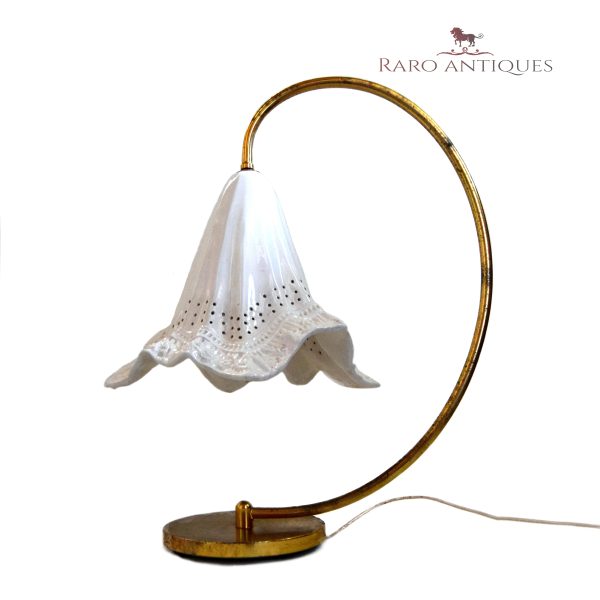
TABLE LAMP
Table lamp, made of porcelain and brass.
An extremely interesting table lamp adorned with a large porcelain shade. The sheer size of the shade is a notable feature, and discovering that it is entirely made of porcelain adds to its wonder. Truly a special lamp that will capture every gaze, and due to its lace-like design, it emits beautiful light. Height: 55 cm. The lamp is in excellent condition, with no damage to the porcelain. Suitable for an E27 bulb.

SEGUSO LANTERN
Lantern from Murano Island, crafted by the Seguso glassworks in the 1930s.
A magical lantern that brings Venice into your home – designed to reflect light in a way that evokes the shimmering water of Venetian canals and bridges. The lantern is exquisitely crafted, showcasing the quality of precise handmade work and skilled manipulation. It is also a superb example of interwar decorative craftsmanship, from a time when most production was still artisanal rather than mechanical. With its organic shape, it fits harmoniously into almost any interior. Both functional and decorative, it is best appreciated in small spaces such as entryways, hallways, or conservatories – places where its beauty can be fully enjoyed and its magical light can spread across the walls. The lantern emits a gentle, slightly refracted glow, rather than a harsh diffused light, preserving the ambiance of the room.
The production of “caged” glass lamps partly began in response to the growing number of decorative art exhibitions, such as the Milan Triennale during the interwar period. Another likely influence was the traditionalist art movement known as the “Return to Order” – a revival of classicism across Europe as a reaction to the mechanical destruction caused by the First World War.
After the financial crisis of 1929, Murano experienced the closure of several key glassworks. To survive, many of them merged into groups, one of which was Artistica Soffiera e Vetreria – Barovier, Seguso & Ferro (Artistic Glassblowers and Glassmakers). This group included Luigi Ferro, Napoleone Barovier, and Antonio Seguso, along with Seguso’s sons Ernesto and Archimede. In 1934, Flavio Poli joined the company as an artistic advisor. This marked the beginning of an experimental era in color glass and innovative techniques, which led to international success. In 1937, Poli became a full partner and the company was renamed Seguso Vetri d’Arte, which remains its name today. It was during Poli’s first collaboration with Seguso (1934–1940) that the iconic “caged” glass lamps were born. These lights remain a symbol of Venetian glassblowing mastery to this day.
Dimensions: 45 x 22 x 22 cm
Weight: 1,4 kg
The lantern is in excellent condition. Suitable for E27 bulb.
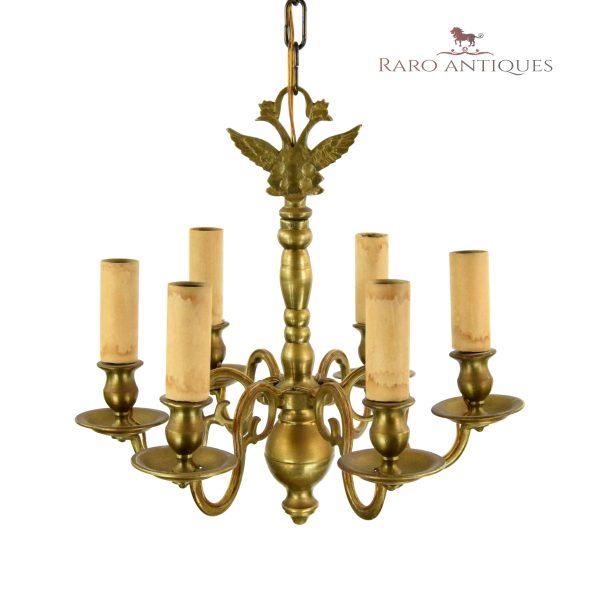
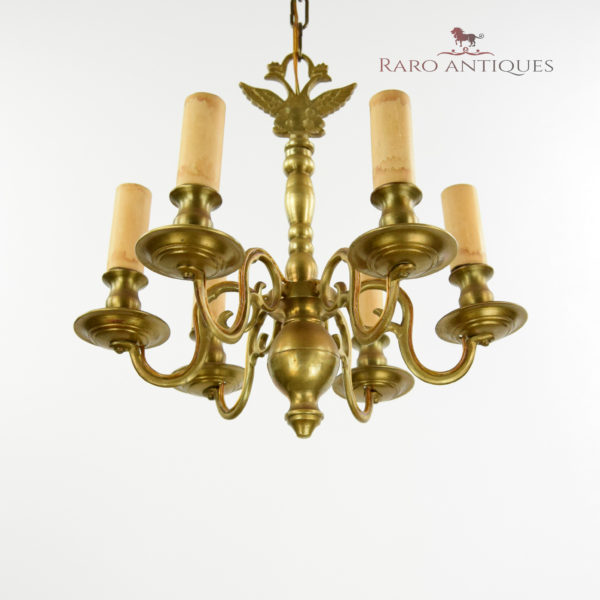
FLEMISH CHANDELIER
Flemish Chandelier.
An intriguing chandelier, unusually small for this style of light fixture. Do you want to add a touch of flair to your living room or another space? This light fixture will undoubtedly achieve that for you. It brings elegance and style to the room, elevating it to an entirely new level. Dimensions: 110 x 32 cm Weight: 2.4 kg The chandelier is in excellent condition, suitable for six E14 bulbs.

BIG BRONZE SCULPTURE OF A DOG WITH PHEASANT
Bronze Sculpture of a Dog with a Pheasant.
A large bronze sculpture depicting an exceptionally realistic portrayal of a dog in the moment after a successful hunt. Its size makes it a striking decorative focal point – suitable for both classic and contemporary interiors – and it stands out for its dynamic and natural modeling, with beautifully emphasized details.
This sculpture is a perfect addition that will bring your space to life and add a true artistic touch.
Dimensions: 64 x 41 x 28 cm
Weight: 12 kg
The sculpture is in excellent condition.


ANTIQUE TRAY
Antique tray, made circa 1920.
This tray, featuring an interesting pattern, is a beautiful decorative piece for your dining room or kitchen. It is perfect for serving guests and ideal for holding fruit or pastries. Dimensions: 37 x 21 x 5.5 cm Weight: 0.4 kg The tray is in good condition.

FLOOR LAMP
Floor Lamp, Made in Italy, 1960s.
An elegant brass floor lamp that will be a splendid addition to any room where you need both more light and decoration. Dimensions: 165 x 55 cm Weight: 5 kg The lamp is in excellent condition. The lampshade is original. For two E27 bulbs.


BRONZE STATUE OF A WOMAN
Bronze statue of a woman.
A bronze statue depicting a woman. An interesting representation that will surely find a place where everyone can admire it. Dimensions: 48 x 22 x 18 cm Weight: 6.3 kg The bronze statue of a woman is in excellent condition.

ADVERTISING SIGN
James Dean Jeans advertising sign from 1994.
The sign is particularly interesting because of the icon James Dean; undoubtedly an excellent addition that will bring color and a vintage touch to your space. Dimensions: 44 x 31.5 cm Weight: 330 g The sign is in excellent condition.