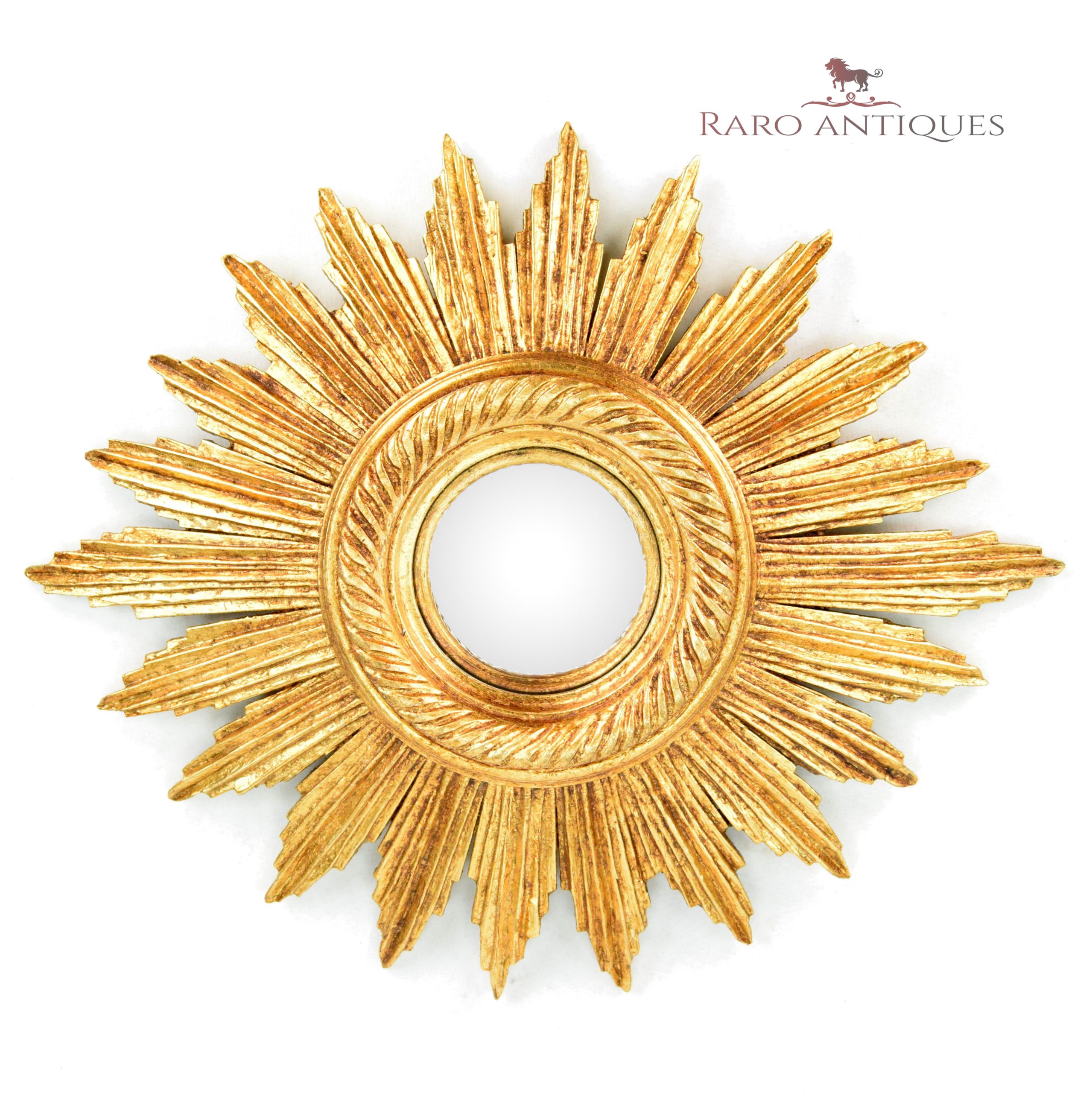
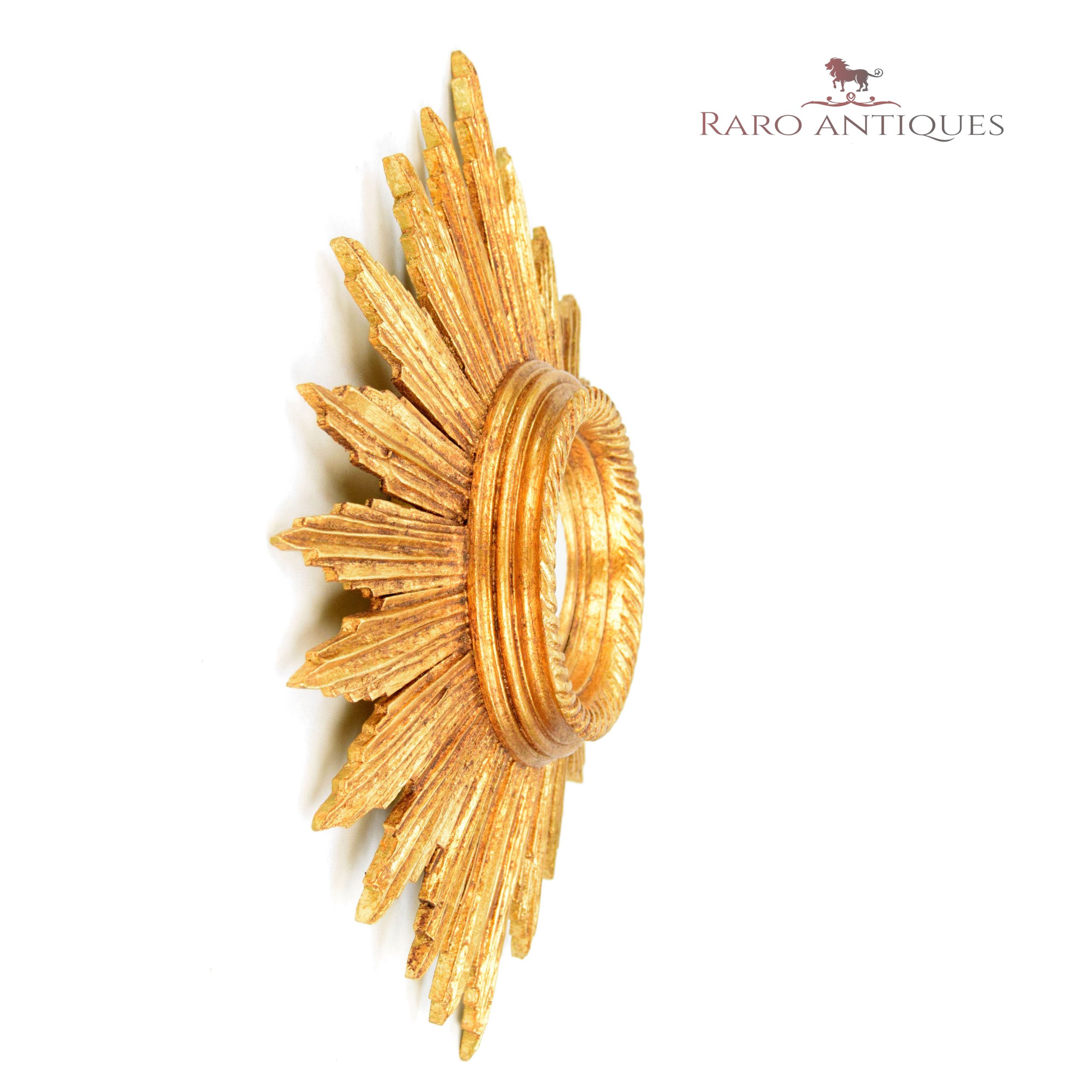
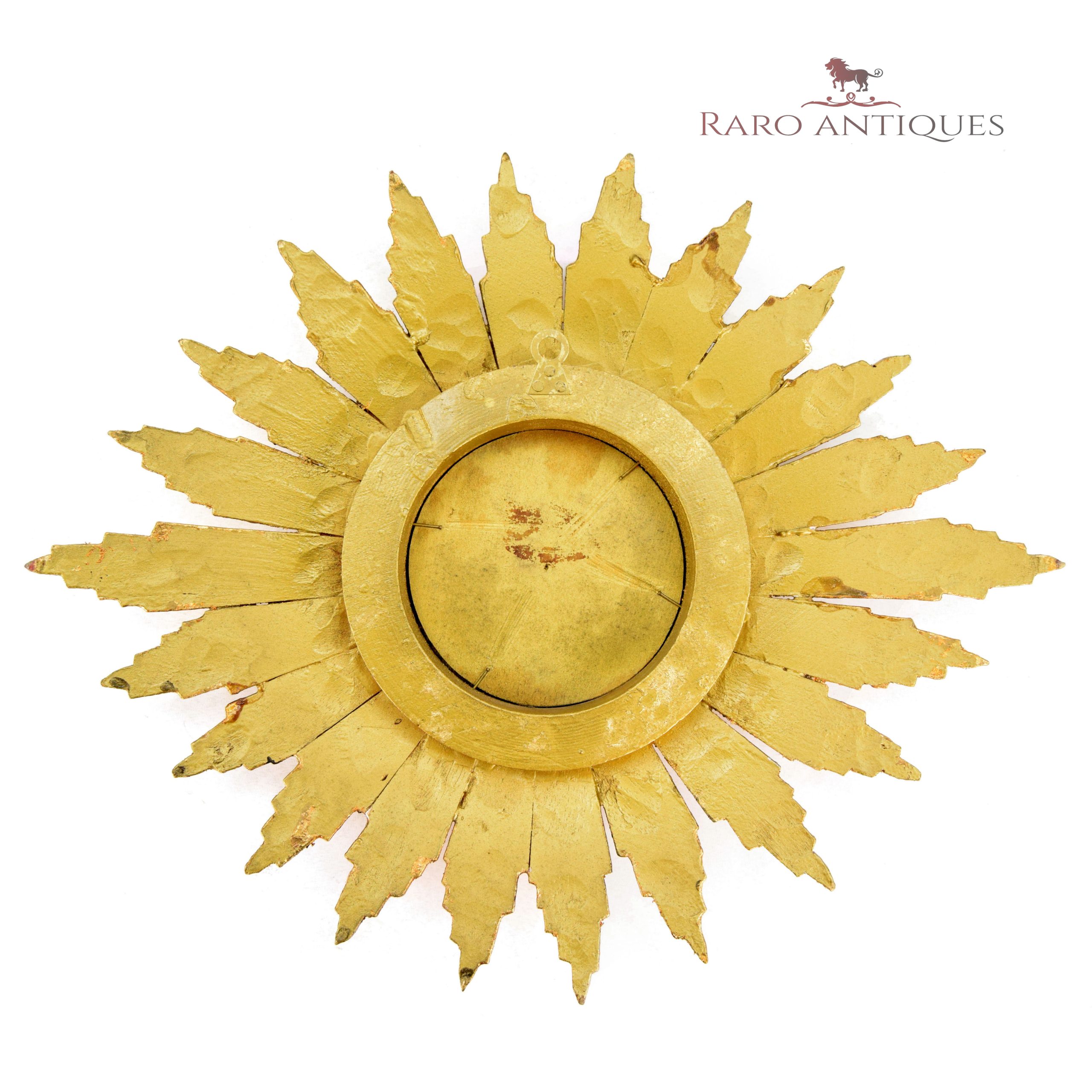
Concave mirror – sun, made in France in the 1950s.
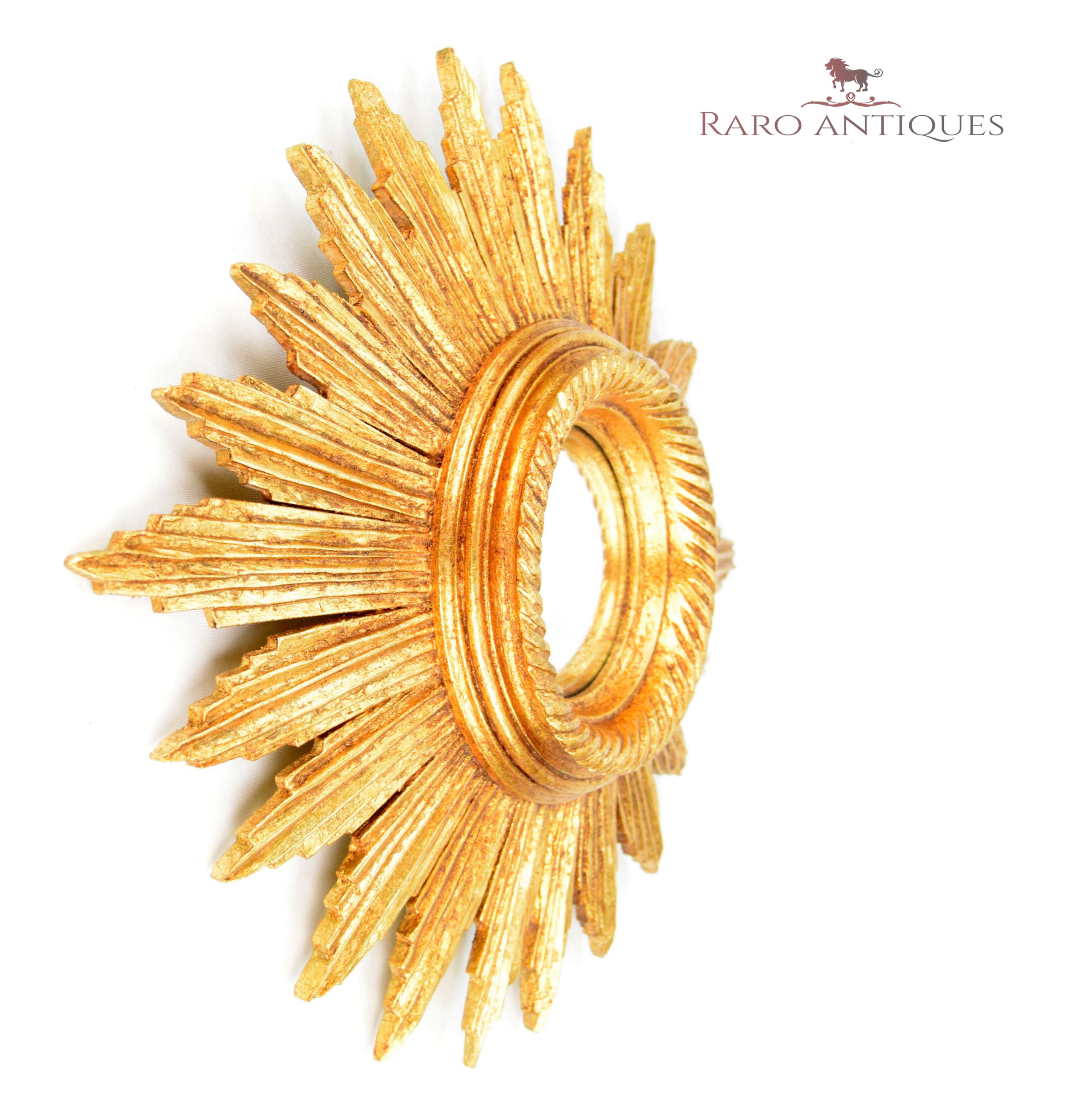
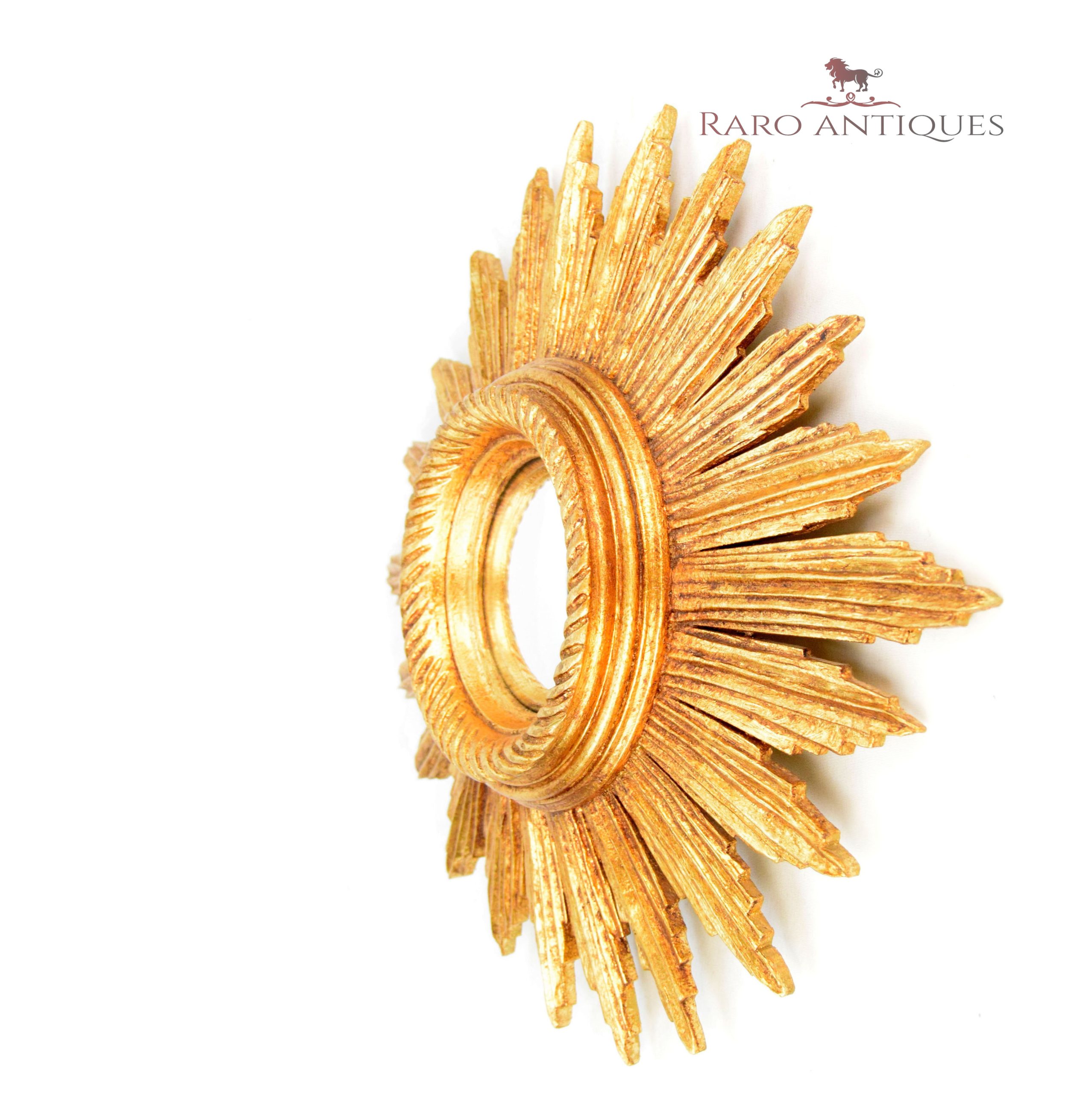
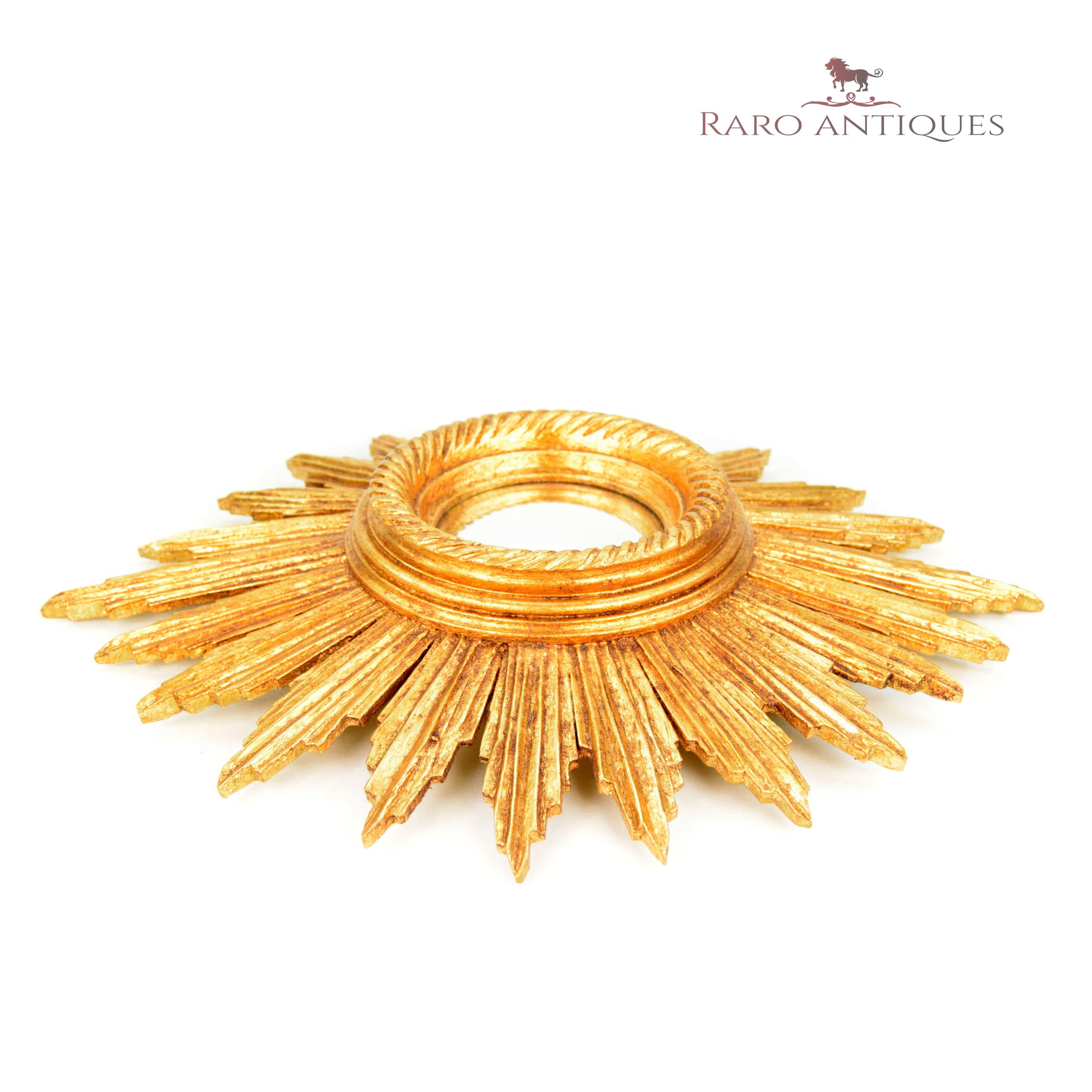
A concave mirror housed in a beautiful wooden gilt frame in the shape of the sun.
This mirror is full of symbolism for several reasons. The symbol of the sun has always captured people’s imagination. The motif of the sun first appeared in medieval religious art. In the 17th century, the motif became popular in the Catholic Church, especially in Italy. Louis XIV, known as the Sun King, chose the head of Apollo with rays of light as his personal emblem. His reign was marked by numerous decorative and architectural uses of sun motifs, especially in the Hall of Mirrors at Versailles. Original sun-shaped mirrors were often used in churches as symbols of God watching over the faithful, usually placed above the altar.
Concave mirrors also have an interesting history. In France, they are known as “oeil de sorcière” – literally translating to “witch’s eye.” The history of such mirrors dates back to antiquity when mirrors were considered magical and mystical objects. Beliefs about mirrors were strengthened in the Middle Ages, associating them with witchcraft and black magic. Concave mirrors became particularly popular in the 15th century, thanks to Flemish artists who used such mirrors to experiment with optics and play with perspective. One of the most famous paintings is Jan van Eyck’s “The Arnolfini Portrait” (1434), in which a convex mirror reveals different planes, filled with new figures, adding depth to the painted scene.
Because a concave mirror allows you to observe a specific area without physically moving, such mirrors were soon used for surveillance. They were often placed in locations where most surveillance cameras are found today, such as banks and stores. As symbols of power, control, and deterrence, concave mirrors found their way into bourgeois circles in the 15th century. They were used to monitor servants, who, prone to superstition, believed that even when the master was absent, he could still see them.
However, concave mirrors are still associated with superstition. In ancient times, it was believed that placing a concave mirror near the entrance doors or windows would prevent evil from entering.
Whichever way you decide to use it, this is a wonderful decorative piece that will bring symbolism into your space.
Dimensions: 47 x 39 x 6.5 cm
Weight: 2 kg
The mirror is in excellent condition.





Reviews
There are no reviews yet.