


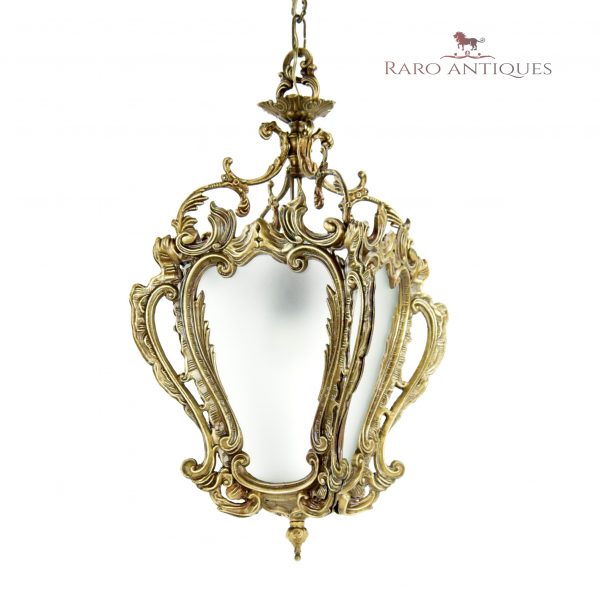

LANTERN
Lantern from the 20th Century.
A brass ceiling lantern will be an excellent addition to your foyer, hallway, staircase... the possibilities are endless as its beautiful design will complement any space. Thanks to the frosted glass, it emits a pleasant, soft light. Dimensions: 83 x 32 x 21.5 cm Weight: 4 kg The lantern is in excellent condition. For E27 light bulb.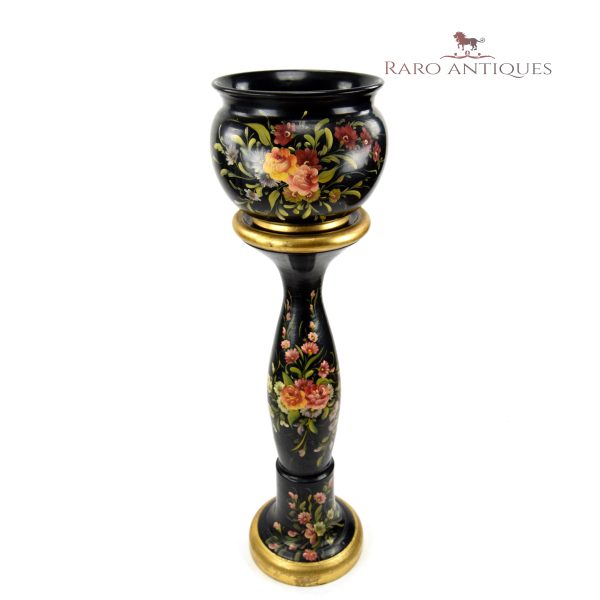

ANTIQUE FLOWER POT WITH STAND
Flower pot with stand, from the late 19th to early 20th century.
An attractive and highly decorative flower pot with a stand. Made of ceramic, hand-painted, and glazed. The hand painting is signed - Livia. Excellent for all types of plants, this piece will undoubtedly enrich the space on its own. Dimensions: 93 x 27 cm Weight: 7.7 kg The flower pot with a stand is in excellent condition.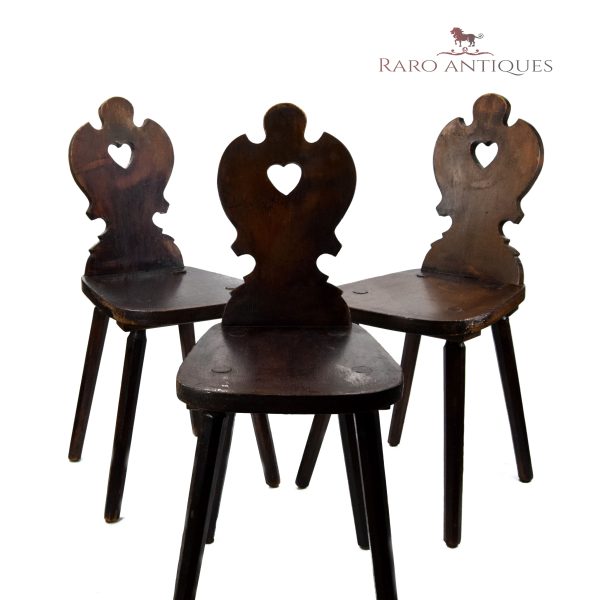
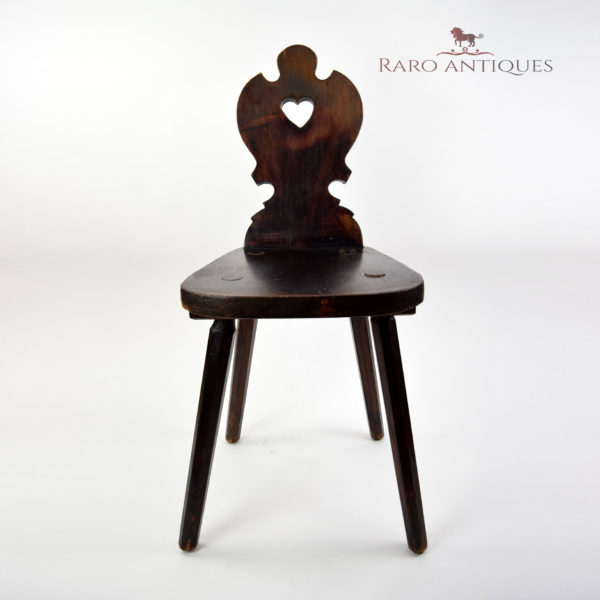
TYROLEAN CHAIR
Tyrolean chair, a typical example of a mountain chair from the Tyrolean Alps.
Bring some relaxed atmosphere into your home with these unique chairs. Dimensions: 87 x 53 x 36 cm Weight: 5 kg Chairs are in excellent condition. Price is for one.

VINTAGE STUFFED CAIMAN
Vintage stuffed caiman, from the mid-20th century.
A stuffed caiman, made at a time when there was great interest in exotic animals that were not commonly seen in our region, and technology did not provide the means to easily observe them. People wanted to see for themselves the existence of these unusual creatures. Nowadays, taxidermy has acquired a different, somewhat negative connotation, but it still serves as an intriguing and exotic decoration, often becoming the centerpiece of many conversations. Dimensions: 22 x 17 x 10 cm Weight: 100 g The caiman is well-preserved.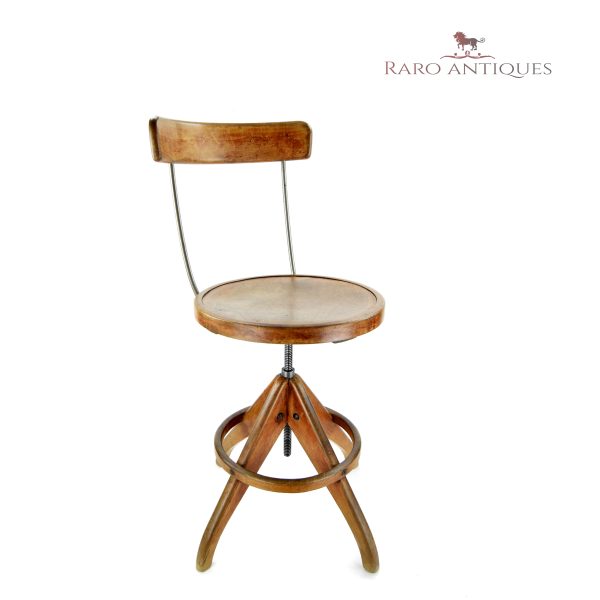

OFFICE CHAIR
Office chair from the 1930s.
A wooden swivel chair that will add charm to any study. Suitable for any work or writing desk, it is height-adjustable for added convenience. Dimensions: 78 x 54 cm Weight: 4.5 kg The chair is in good condition.

ROCOCO FRAME
18th century frame with chromolithograph of the Holy Family from the late 19th century.
An exceptional wooden and gilded frame in the typical Rococo style. The frame features intricate carvings, indicating the work of a highly skilled craftsman, and the gilding has developed a beautiful patina over time. The depiction of the Holy Family was likely inserted into the frame later, as chromolithographs like this one became popular in the 19th century with the development of this technique. Chromolithography is similar to lithography but uses color and does not require relief, producing images that resemble oil paintings. While the frame is the star of the piece, the image has been framed for over a century, and although the frame and image come from different periods, they complement each other beautifully. Of course, the chromolithograph could be replaced with another image, photograph, or mirror. Dimensions: 55 x 35 x 7 cm Weight: 0.6 kg The frame is in excellent condition.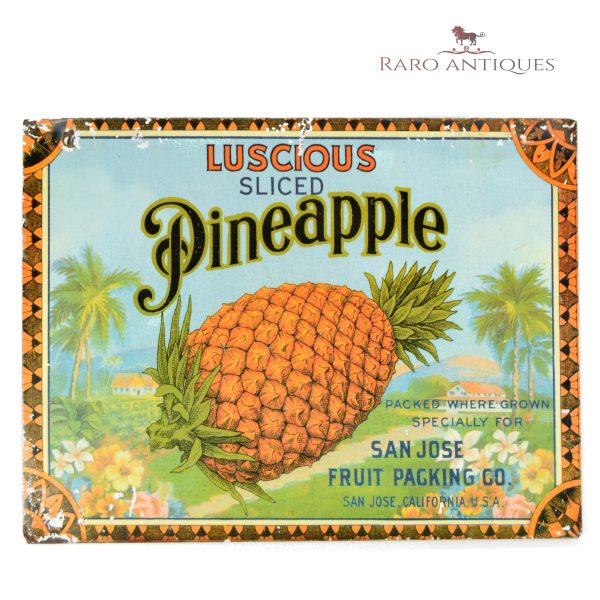
ADVERTISING SIGN
San Jose Pineapple advertising sign from the 1960s.
This colorful sign will be an excellent addition to the kitchen or any other space where you want to enhance the vintage touch and add some color. Dimensions: 30 x 26.3 cm Weight: 530 g The sign is well-preserved, showing only a few signs of age, which adds character to it.

HANAU SOLLUX LIGHT
Hanau Sollux light, from the 1930s.
A light from the German company Hanau "Sollux," founded by chemist and pharmacist Wilhelm Heraeus in 1851 in the city of Hanau. They mainly produced quartz lamps, which were then used for medical purposes, especially known for their phototherapy lamps. This particular light once had an adjustable base, but today it can be lowered from the ceiling to add a touch of industrial style. Made of aluminum, it reflects light well, providing us with exceptional illumination. Dimensions: 40 x 34 cm Weight: 1.6 kg The light is in excellent condition. For an E27 bulb.

ANTIQUE CRYSTAL CHANDELIER
Crystal chandelier, made in the first half of the 20th century.
A chandelier with crystals in the Empire style. It will enrich any room and lend it an air of elegance. The glass crystals add vibrancy to the space by radiating a warm light that beautifully spreads throughout the room. Dimensions: 100 x 30 x 30 cm Weight: 3.6 kg The crystal chandelier is in excellent condition. Suitable for an E27 bulb.
BARBER CHAIR
Barber chair from the 1930s-1940s.
Also suitable as an interesting lounge chair as it can be adjusted in height, angle of the backrest, and features a headrest. This barber chair will be an intriguing addition to a living room or a social space, undoubtedly sparking conversation whenever you have guests. It can still be used for its original purpose in a barbershop or hair salon. The chair is in excellent condition, without any damage to the fabric or frame.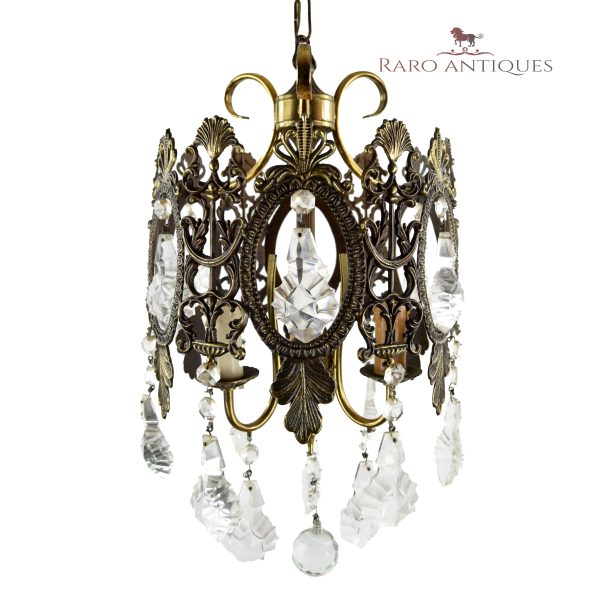

CRYSTAL CHANDELIER
French crystal chandelier from the mid-20th century
A beautiful addition that can quickly transform a space from dull to stylishly refined. Chandeliers are available in various shapes and styles, allowing everyone to find the one that suits their taste. Dimensions: 80 x 25 cm Weight: 2.9 kg The chandelier is in excellent condition and uses three E14 type bulbs.
ADVERTISING SIGN
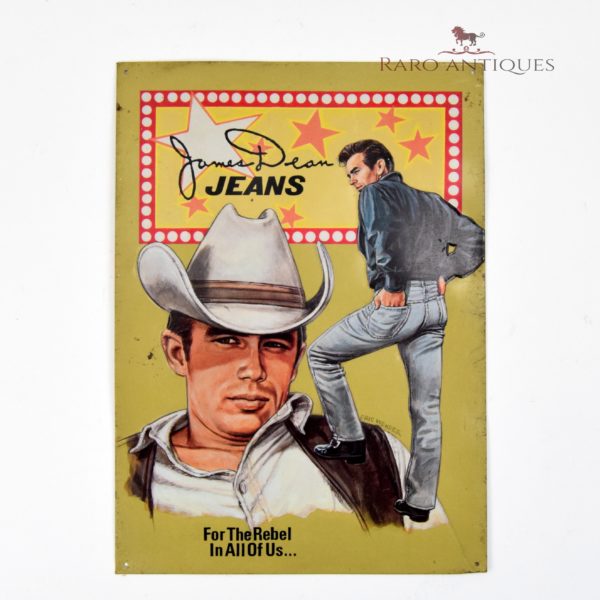
James Dean Jeans advertising sign from 1994.
The sign is particularly interesting because of the icon James Dean; undoubtedly an excellent addition that will bring color and a vintage touch to your space. Dimensions: 44 x 31.5 cm Weight: 330 g The sign is in excellent condition.

ANTIQUE CAULDRON
Antique cauldron from the 19th century.
This bronze cauldron has acquired exceptional patina over the years. Now, it can be a truly unique decorative piece in your household. Dimensions: 27 x 17 cm Weight: 3 kg The cauldron is excellently preserved.

TRAMP ART MIRROR
Tramp art mirror.
A tramp art frame with an original patinated mirror. An intriguing addition to any home, bringing with it the authentic charm of the past.
Tramp art was popular roughly from the 1870s to the 1940s. Its exact origins remain uncertain, but the materials commonly used—especially wooden cigar boxes—became widely available around the 1850s. At the time, cigarette smoking was highly popular, and by law, manufacturers were not allowed to reuse cigar boxes, making them an excellent source of raw material.
It is generally believed that tramp art developed from folk carving traditions. Cigar boxes and pieces of wood from dismantled crates were intricately carved and layered to create picture frames, decorative boxes, and even furniture. The style is thought to have originated in Germany and Scandinavia, though examples can be found across all industrialized countries.
The name “tramp art” comes from the myth that these objects were made by traveling workers or “tramps,” who would trade them for food and lodging. While there may be some truth to this, many tramp art makers were in fact skilled artisans who dedicated significant time and care to their craft. Most pieces are unsigned and undated, which only adds to their enduring sense of mystery.
Dimensions: 35 x 29 x 3 cm
Weight: 1 kg
The mirror is in excellent condition.


CONCAVE MIRROR SUN
Concave mirror – sun, made in France in the 1950s.
A concave mirror housed in a beautiful wooden gilt frame in the shape of the sun. This mirror is full of symbolism for several reasons. The symbol of the sun has always captured people's imagination. The motif of the sun first appeared in medieval religious art. In the 17th century, the motif became popular in the Catholic Church, especially in Italy. Louis XIV, known as the Sun King, chose the head of Apollo with rays of light as his personal emblem. His reign was marked by numerous decorative and architectural uses of sun motifs, especially in the Hall of Mirrors at Versailles. Original sun-shaped mirrors were often used in churches as symbols of God watching over the faithful, usually placed above the altar. Concave mirrors also have an interesting history. In France, they are known as "oeil de sorcière" – literally translating to "witch's eye." The history of such mirrors dates back to antiquity when mirrors were considered magical and mystical objects. Beliefs about mirrors were strengthened in the Middle Ages, associating them with witchcraft and black magic. Concave mirrors became particularly popular in the 15th century, thanks to Flemish artists who used such mirrors to experiment with optics and play with perspective. One of the most famous paintings is Jan van Eyck's "The Arnolfini Portrait" (1434), in which a convex mirror reveals different planes, filled with new figures, adding depth to the painted scene. Because a concave mirror allows you to observe a specific area without physically moving, such mirrors were soon used for surveillance. They were often placed in locations where most surveillance cameras are found today, such as banks and stores. As symbols of power, control, and deterrence, concave mirrors found their way into bourgeois circles in the 15th century. They were used to monitor servants, who, prone to superstition, believed that even when the master was absent, he could still see them. However, concave mirrors are still associated with superstition. In ancient times, it was believed that placing a concave mirror near the entrance doors or windows would prevent evil from entering. Whichever way you decide to use it, this is a wonderful decorative piece that will bring symbolism into your space. Dimensions: 47 x 39 x 6.5 cm Weight: 2 kg The mirror is in excellent condition.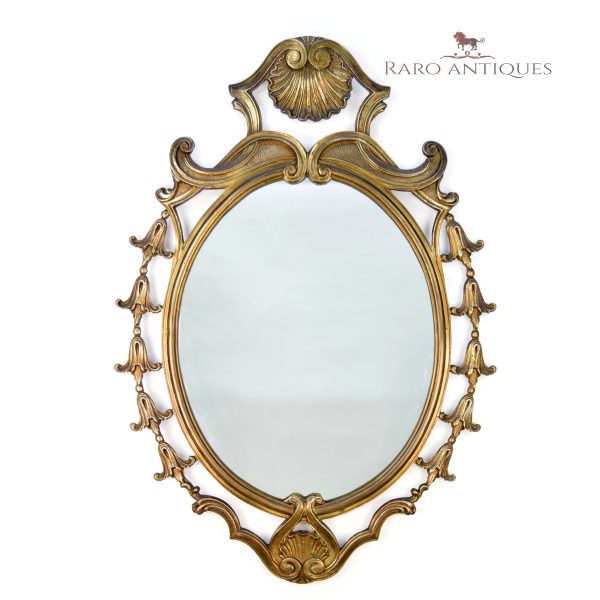

MIRROR
Mirror from the 1950s
Mirror in a beautiful brass frame.
A mirror is not just a stunning wall decoration but also one of the key elements of a home. Think about it—we have them in hallways, by the entrance, in the bedroom, and of course, in the bathroom as a personal grooming aid. However, mirrors can also be wonderful light reflectors, making them a great addition even in rooms where they are not typically needed, visually enhancing the space and adding brightness.
With vintage mirrors, often adorned with a charming patina, you bring uniqueness into your home—something that will inspire you for years to come.
Dimensions: 72 x 51 x 2,5 cm
Weight: 6,1 kg
The mirror is in good condition.

MID-CENTURY GENTLEMAN’S VALET STAND
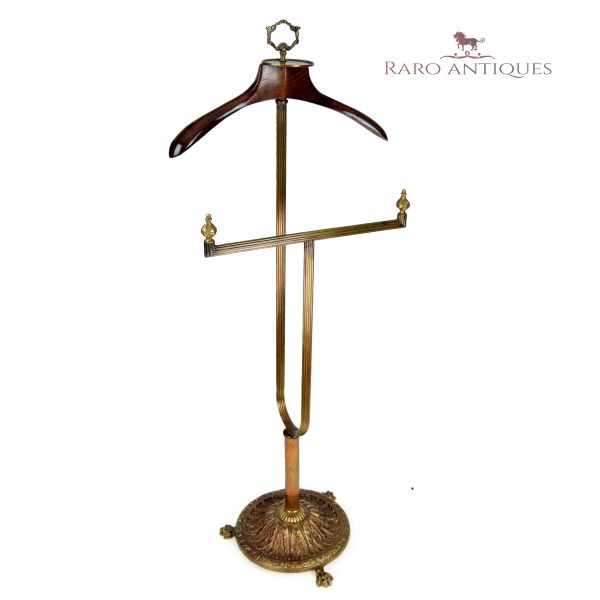
Gentleman’s valet stand, mid-20th century, made in France.

VENETIAN CHEST OF DRAWERS
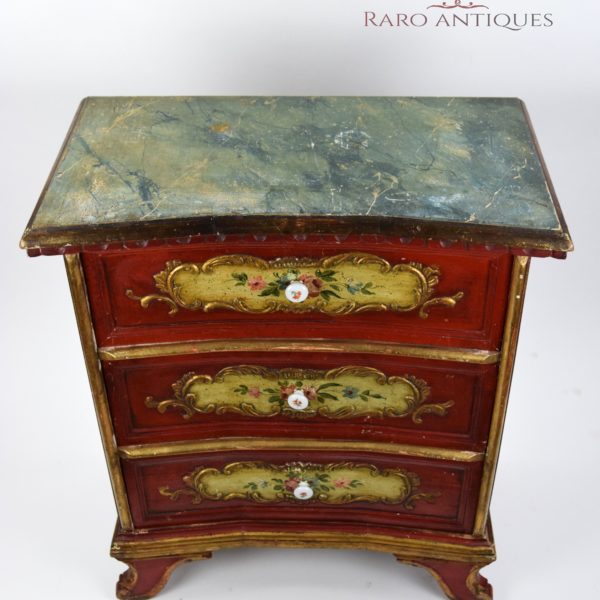
Venetian chest of drawers, made in the mid-20th century.
Decorate your bedroom or living room with this colorful chest of drawers; made in Italy. The chest features three drawers adorned with ceramic handles. The multicolored dresser is hand-painted on the sides and front, with flower and leaf motifs. The chest's top is painted to resemble stone. The bold colors – red, gold, yellow, and green – are still very vibrant, making it an exceptional addition to the space. Dimensions: 70 x 60 x 33.5 cm Weight: 8.2 kg The chest of drawers is excellently preserved.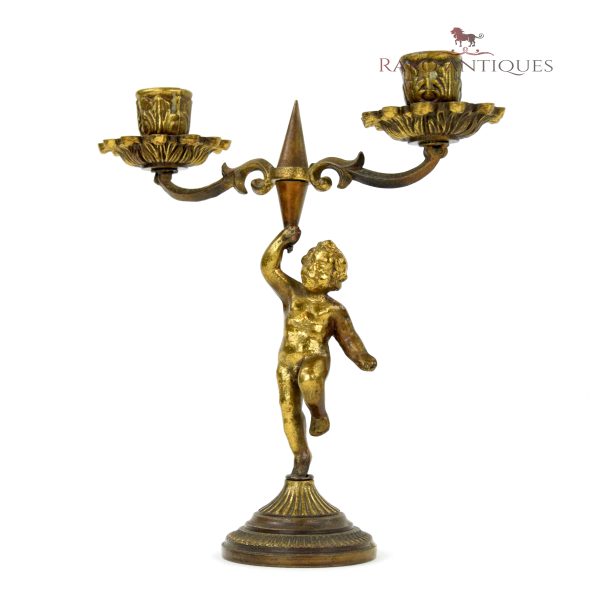
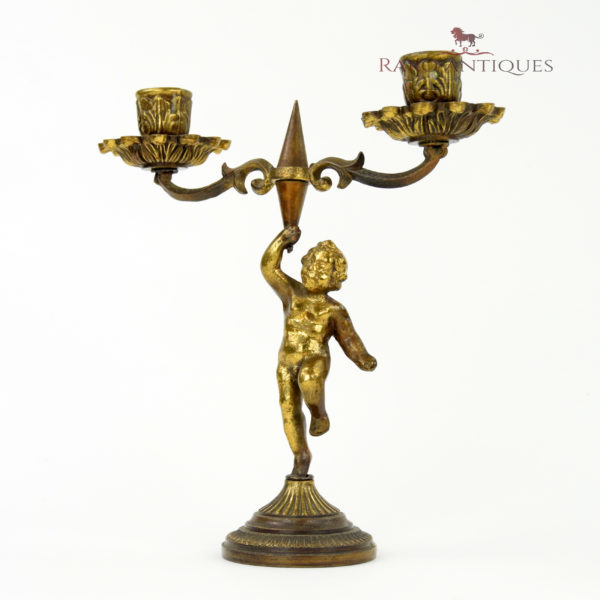
CANDLESTICK
Candlestick from the 20th century.
A brass candlestick for two candles, featuring a cherub figurine. Candlesticks are a welcome decoration in any home. They can illuminate a festive dinner in the dining room or create a romantic atmosphere in the bedroom. However they are used, candlesticks are certainly one of those items that come in handy on any occasion. Dimensions: 19.5 x 18.5 x 6.5 cm Weight: 420 g The candlestick is in excellent condition.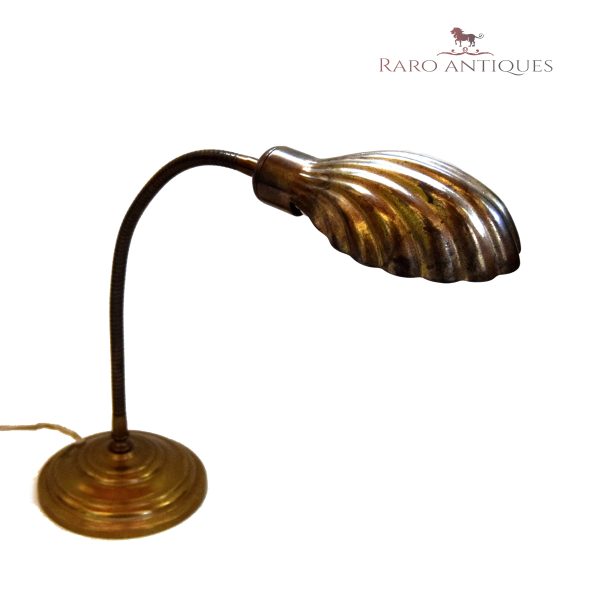
TABLE LAMP
Table lamp from the 1950s, in the style of art deco.
An interesting table lamp with a shell-shaped shade, it will be a wonderful addition to any table or shelf. The lamp is in excellent condition. Suitable for an E27 bulb.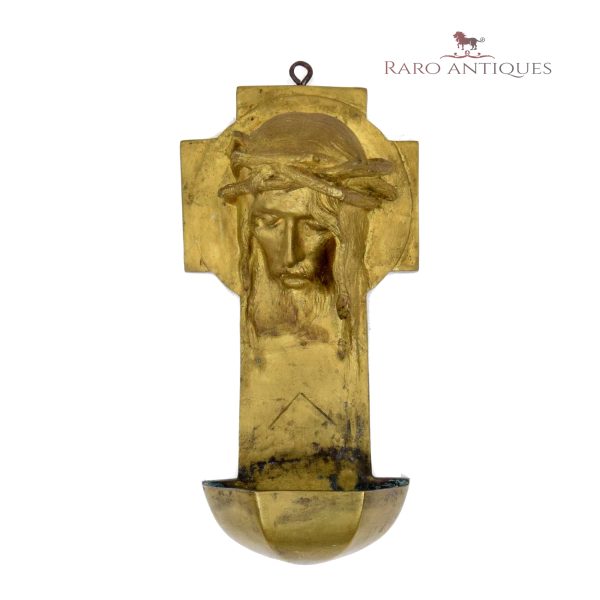

VINTAGE HOLY WATER FONT
Holy water font from the 1940s.
An intriguing holy water font featuring the head of Jesus with a crown of thorns. Dimensions: 28 x 13 x 8 cm Weight: 1.6 kg The holy water font is in excellent condition.

TABLE LAMP
Table lamp from the mid-20th century.
An interesting table lamp with a shade that allows you to regulate the light. Due to its unique shape, it will enliven and enhance any table or shelf. The lamp is in good condition. Suitable for an E14 bulb.