


As we all know, throughout history, several different styles have emerged. This time, we want to briefly talk about some of them and how they differ. This way, you’ll be more attentive to the age of the object when searching for antiques. Before the Renaissance, there are, of course, several interesting periods, but let’s start with it, and we’ll discuss the older ones some other time.
1. RENAISSANCE 14TH-17TH CENTURY
The Renaissance began to develop in Italy, where there was a growing wealth among the bourgeoisie who desired larger and better homes, thereby increasing the demand for high-quality home products. Although the Renaissance initially spread to us from the northern regions, mainly Germany, at first they only imitated decorative parts, and later the form. In the Renaissance, artists returned to the classical world, so this style is characterized by strong architectural design. Four-poster beds became popular among the wealthy, while simpler beds with straw-filled mattresses were used by the less affluent. Similarly, chairs varied; the wealthy preferred large, comfortable ones often imitating the style of church dignitaries’ thrones, while simpler designs were favored by the less affluent. The X-shaped chair was very common during this period. The most popular piece of furniture at that time was the “cassoni” or wedding chest. All social classes of that time aspired to have at least one such chest in the house. These chests were usually highly decorated on the top and sides, although the most ornate ones were affordable only to the wealthiest. Furniture was moderately ornamented with simple designs. Common carvings on the surface of wood included architectural features of the classical world, such as columns. Inspiration was drawn from mythology, religion, and history. Common motifs included demons, angels, arabesques, and floral patterns, while lion paw motifs were often used for table and chest legs. Walnut and maple were commonly used materials, while oak, which was previously popular, was phased out during this period. Furniture pieces from this period typically had darker hues. Only oils and beeswax were used for surface finishing.
2. BAROQUE 17th CENTURY – 1740
The Baroque era began to develop in Italy shortly after the decline of the Renaissance, and it arrived in our regions quite late, again through the northern lands. The Baroque period, as the very name suggests, is characterized by abundant ornamentation. When we think of Baroque, we often envision lavishly decorated church altars and opulent palaces. Initially promoted by the Catholic Church as a response to the Protestant Reformation, the Baroque artistic movement soon gained popularity among Catholic monarchies as a means of displaying their wealth and power. Artisans began crafting refined and embellished pieces for the monarchy, initially in France, and gradually this style spread throughout the royal courts of Europe. Some pieces made for the French King Louis XIV became symbols of Baroque furniture and are known as the Louis XIV style, commanding considerable demand among collectors and antique enthusiasts alike.
During the Baroque period, furniture shared some characteristics with other artistic periods, with intricate ornamentation being the most notable feature. Furniture pieces were highly detailed, with rich and sometimes overly decorated designs. Despite the exquisite ornamentation, Baroque compositions exhibited a delicate balance and harmonious integration of all elements. Furniture pieces were typically symmetrical, with all details mirrored on both sides with very minor variations. The overall arrangement often included twisted columns incorporating many curves to create a sense of dynamism. In most tables, cabinets, windows, and high furniture pieces, the feet of the pedestal were often interlaced diagonally. Four legs were usually the only elements touching the ground. Heavy moldings were used to decorate not only the upper part but also the top of each section where there was a significant change in size, such as pedestals and lower drawers. Various elements were used for decorating crowns, from pediments to sculptures.
The regular trade routes between Europe and Asia played a significant role during this period, influencing the materials used in the production of goods. There was a high demand for exclusive and exotic woods, leading to the inclusion of ebony and mahogany in many elements. However, domestic wood was still essential, with oak, walnut, and chestnut being the most commonly used during this period. Compositions made with inlays became characteristic of Baroque furniture, with inserts made by inserting contrasting veneers or different materials such as metal and ivory. Marble tables were also common, and craftsmen used various types to create contrasting compositions.
At the turn of the 18th century, gilding furniture became a significant trend. Gold became associated with wealth, and having gilded furniture represented the ultimate luxury. Gilded chandeliers and frames for mirrors or paintings became popular in European courts. Even the handles had refined designs and golden decoration. Decoration motifs often included stylized foliage and geometric shapes, spirals, and curves. Cherubs and animals were depicted as ornaments on corners and the tops of legs. Furniture makers also began incorporating coats of arms and initials of the owner, as furniture was a significant status symbol.
3. ROCOCO 1700-1750
Rococo is essentially a late Baroque style that was more popular in many parts of Europe than Baroque itself. The name originates from France and means “rockwork.” It began to develop in France, where there was a desire to reject the rigidity of court art and embrace a lighter, more whimsical aesthetic. While Baroque furniture is heavily ornamented yet grounded and sturdy, with decorations arranged logically and symmetrically, Rococo furniture diverges by employing lighter colors and woods. However, it remains equally ornate, characterized by excessive gilding and silvering. The entrenched features of Baroque furniture are gradually discarded in Rococo pieces. Rococo furniture typically features thinner legs, often curving in an S-shaped form called a cabriole leg, modeled after the legs of animals, possibly goats, reflecting another element of Rococo: organic motifs. While Baroque focused on architectural motifs, Rococo utilized vines, leaves, flowers, shells, and other natural forms in furniture ornamentation. Perhaps the most significant difference in Rococo furniture was the rejection of symmetry. Rococo art is distinctly asymmetric, conveying a sense of whimsicality. In Rococo furniture, one finds asymmetrical, organic designs flowing along gilded legs, armrests, and backs.
4. NEOCLASSICISEM 1750 – 1810
In Slovenia and Austria, it is also known as the Josephine style, named after the Austrian emperor and reformer Joseph II. Neoclassicism began in France, where artisans, weary of the opulence of Rococo, began turning back to the classical forms of the ancient world. The movement was also fueled by archaeological discoveries and publications of works on classical monuments throughout Europe. Neoclassicism is based on straight lines, rectangular shapes, and the selective use of classical ornamentation. Initially, classical motifs were moderately applied to furniture in unchanged forms, but gradually the curved lines of Rococo were replaced by simpler and stricter rectangular designs: chair legs became straight and tapered. Inlays continued to be widely used for decoration. During this time, new techniques were also discovered, one of the most famous being shellac polish, or French polish. In the last 20 years of the 18th century, there was a tendency in furniture design towards greater refinement, lightness, and delicacy. Characteristics include heart and shield-shaped backs on chairs and tables, as well as conical and fluted supports for tables and other pieces.
5. EMPIRE 1789-1815
The Empire style began in Paris during the time of the revolution and quickly spread throughout Europe, with each country adapting it to its own national taste. Furniture from this period was mostly imported to our country, especially from Vienna. Two French architects, Charles Percier and Pierre Fontaine, made significant contributions to the creation of this style by designing the furnishings for Napoleon’s interiors.
Essentially, the Empire style was an extension of Neoclassical design with a much stronger archaeological influence, leading to direct copies of classical furniture forms. Due to Napoleon’s expeditions to Egypt, a considerable amount of Egyptian ornamentation was incorporated into the copying of classical elements. Furniture veneered with mahogany took on the forms of Roman, Greek, and Egyptian chairs and tables, often featuring pedestals with winged lions or palm leaves. Gilded elements reappeared on the furniture, mainly representing ancient statues and mythological creatures, while the legs were often in the form of gilded lion’s paws. Where there were no classical prototypes, contemporary designs were enlivened with classical ornamentation.
6. BIEDERMEIER 1815-1848
Biedermeier style began to develop primarily in Germany and Austria, where the middle class, bourgeoisie, became stable and a significant part of society. Due to censorship and suppression, they did not participate in political circles and instead focused on the comfort of their homes, leading art to focus on the pleasures of private life for the middle class. The name “Biedermeier” comes from the satirical magazine Munich Fliegende Blätter, where the fictional character Papa Biedermeier was a humorous symbol of middle-class comfort.
The furniture style of Biedermeier is a simplification of Empire forms, with fewer embellishments, as during this time, the greatest ornamentation was the wood itself. Therefore, veneer was carefully chosen to be symmetrically distributed around a central line. This style is characterized by classical simplicity. Chairs had curved legs, while sofas had rolled arms and were generously upholstered.
7. HISTORIZEM 1840-1900
To obdobje zaznamuje več stilov, ki pa vsi svoje značilnosti jemljejo iz zgodovinskih stilov, med njih prištevamo neogotiko, neobarok, neorenesanso ter tretji rokoko in tretji barok. Neobarok in nemški historizem – pri nas znan tudi kot alt deutsch ali staronemški stil, je pri nas v tistih časih najbolj opažen.
7.1. NEOBAROK
Neobaročno pohištvo, kot že samo ime pove, ponavlja linije iz baroka, čeprav se sprva še drži linij bidermajerja in se nato postopoma čedalje bolj približuje baroku, s časom se začne dodajati tudi baročna ornamentika. Kot furnir se uporabi orehov les.
7.2. NEMŠKI HISTORIZEM
Pri nas znan kot alt deutsch ali staro nemški stil, se je razvil v Nemčiji kjer se je imenoval Gründerzeit, kar pravzaprav pomeni „leta ustanoviteljev“, saj se je takrat v Nemčiji dogajal ogromen gospodarski razcvet. Ta leta so bila čas, ko so državljani vse bolj vplivali na kulturni razvoj in ko je zlasti nemški srednji razred hitro povečal življenjski standard in kupoval sodobno pohištvo, kuhinjsko opremo in gospodinjske stroje. Začela se je načrtna gradnja več stanovanjskih zgradb, zaradi česar se poveča povpraševanje po pohištvu. Pohištvo v staro nemškem slogu se je povečini izdelovalo v obratih in tovarnah in se je izdelovalo v celoti, na primer kuhinja, dnevna soba…Staronemški stil, je pravzaprav preplet vseh prejšnjih slogov, še vedno uporabljajo veliko orehovega furnirja, a kasneje zaradi stroškov proizvodnje, uporabijo tudi bukev. Stoli so v tem obdobju prekriti z ornamentiranim usnjem, ker je usnje drago, pa kmalu začnejo uporabljati tudi imitacijo usnja, narejenega iz stisnjenega papirja. Velik poudarek je v tem obdobju, na struženih delih in rezbarijah, slog ornamentike pa je povzet iz renesanse in baroka.
8. ART NOUVEAU 1890-1914
Art nouveau obdobje, se začne v Franciji, pri nas je znan pod imenom secesija, ki ponovno do nas pride preko Nemčije in Avstrije. Art nouveau v dobesednem prevodu pomeni „nova umetnost“ in prav to so želeli narediti njeni ustvarjalci. Art nouveau je bila želja po ustvarjanju novega sloga za prihajajoče stoletje in zavestni poskus opustitve kakršnega koli pojma o davnih slogih preteklosti. Njegov cilj je bila nova umetnost za novo dobo. Umetniki in oblikovalci, ki so delali v art nouveauju, so želeli znova ceniti dobro obrtništvo, v dobi rastoče industrializacije in množične proizvodnje. Želeli so ustvariti umetnost za vsakdanje življenje, zato je art nouveau vplival na dekorativno umetnost in notranje oblikovanje. Pohištvo v slogu art nouveau je bilo priljubljeno, vendar ni nikoli popolnoma nadomestilo drugih slogov pohištva, saj je bilo drago in je zahtevalo visoko raven spretnosti. Najbolj značilni elementi pohištva, elastične krivulje so morale biti narejene ročno. Ustvarjanje in rezbarenje teh krivih oblik iz trdega lesa ni bilo enostavno. Rezultat je bil slog, ki si ga večina ljudi ni mogla privoščiti. Ena prvih stvari, ki jih opazimo pri slogu art nouveau, je občutek dolge, trdovratne črte. Nekaj tega izvira iz sploščenega prostora in linearne kakovosti japonske umetnosti, ki je bila takrat priljubljen vpliv med umetniki. Nekatere od teh linij so v obliki bičastih krivulj, podolgovatih krivih linij, ki se upogibajo nazaj k sebi. Te oblike lahko opazimo na dekorativnih predmetih za dom, lučeh in seveda pohištvu. Pohištvo art nouveau, odlikujejo ukrivljene črte in organske oblike in je bilo rezultat idej, ki so združevale naravo, oblikovanje in izdelavo. Art nouveau pohištvo je pogosto narejeno iz materialov, kot so trdi les, zlasti oreh, hrast in tikovina. Nekatere površine so ponovno okrašene z intarzijami. Kosi pohištva lahko vključujejo tudi kovine, ki so elegantno ukrivljene in upognjene.
9. ART DECO 1920-1940
Art deco, umetniški in oblikovalski slog, je bil priljubljen v dvajsetih in tridesetih letih prejšnjega stoletja, začel se je v Parizu kot rezultat velike razstave dekorativne umetnosti leta 1925. Hitro se je razširil po vsem svetu, kjer je našel uporabo v likovni umetnosti, arhitekturi, modnem oblikovanju in dekorativni umetnosti. Art deco praznuje sodobno življenje in poudarja razkošje in prefinjenost. V art deco obdobju so bili predstavljeni novi materiali, kot so krom, bakelit in ploščasto steklo, pa tudi dragi materiali, kot so slonovina, mahagonij in temno lakirane površine. Art deco zaznamujejo predvsem geometrijske oblike, pogosto v obliki cik-cak ali chevronov (v obliki črke V). V tem obdobju poudarjajo navpične črte in gladke površine ter pogosto uporabljajo drzne barve in visoke kontraste. Kot pri obdobju pred tem, se stil, razširi na vse dekorativne izdelke za dom in svetila, seveda pa tudi na pohištvo. Pohištvo, ki je bilo izdelano v začetku tega obdobja je veljalo za drago razkošje, saj so ga izdelovali iz dragega in eksotičnega lesa, kot na primer mahagonija. Intarzije so v tem obdobju izdelane iz slonovine, medenine ali biserovine in pogost element pohištva art deco.
Drzne barve, kot sta črna in rdeča, so bile priljubljene. Če je bilo pohištvo oblazinjeno, so pogosto uporabljali usnje ali eksotično krzno.
10. BAUHAUS 1919-1933
Zadnji slog, ki ga bomo predstavili danes je bauhaus, saj ta stil ostaja vpliven še dan danes. Razvil se je v Nemčiji v znani šoli umetnosti in oblikovanja Bauhaus, ki je razvila značilen, sodoben stil pohištva.Prepoznaven slog, ki so ga razvili oblikovalci pohištva bauhaus, temelji na načelu preprostosti. Dela naj bi bila predvsem funkcionalna. Zaradi tega je bilo pohištvo reducirano na njegove osnovne elemente. Enostavnost pohištva bauhaus se kaže v elegantnem, lahkem in zelo modernem slogu. Osnovni deli pohištva, kot so plošče miz in noge ali nasloni sedežev in dna, so navadno reducirani na poenostavljene geometrijske oblike. Barvna paleta, ki se uporablja pri pohištvu , je preprosta. Natisi, vzorci in svetle barve so bili redki. Večina kosov je koncentrirana na osnovnih barvah, kot so črna, rjava, siva in druge naravne barve. Okraski, ki jih najdemo v nekaterih drugih slogih oblikovanja pohištva, intarzije ali izrezljane oblike, v slogu Bauhaus niso več prisotni.
Seveda, bi o teh obdobjih lahko napisali še marsikaj, a upamo, da vam to oriše osnovno podobo, kako so se stili razvijali in katere so glavne značilnosti in razlike med njimi.
Viri: study.com/David Julia, Christopher Muscato, Stephanie Przybylek
britannica.com/Joseph T. Butler
-
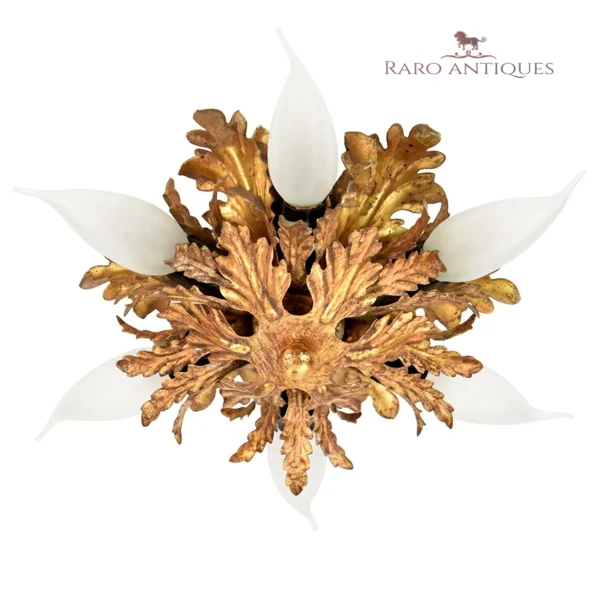 BANCI FIRENZE CEILING LIGHT, 1960s340,00 €
-
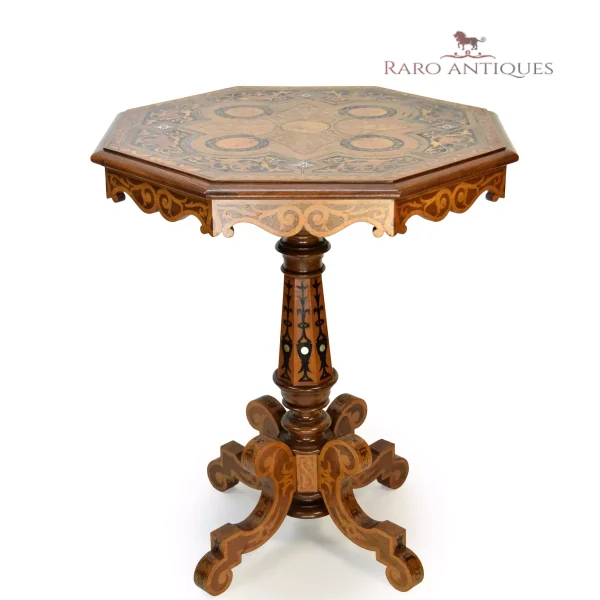 MARQUETRY TABLE, 19. CENTURY1.550,00 €
-
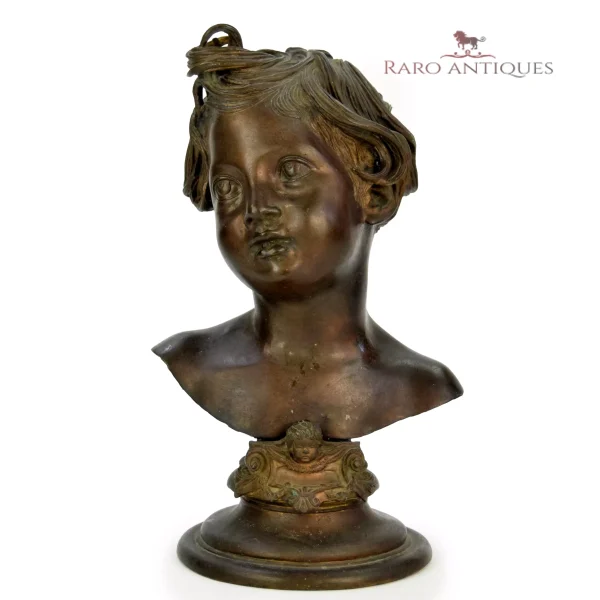 BRONZE SCULPTURE, VINCENZO GEMITO3.860,00 €