Items that, due to their unique and specific characteristics, do not belong to a specifically defined category. Therefore, this category is where you will find interesting and unusual objects.

Showing 1–24 of 84 results

Show sidebar
Close

SCHOOL BELL, CCA. 1900

45,00 

School bell, made around 1900.

This brass bell with a wooden handle was most likely used in a school to announce the beginning and end of lessons. However, bells of this type had several possible uses — they were also used in hotels to summon staff and in bourgeois households to call servants.

An interesting and nostalgic piece that can still serve its original purpose today.

Dimensions: 20 × 8,5 × 8,5 cm

Weight: 0,3 kg

The bell is in good condition.

Close

BRONZE INKWELL, CCA. 1900

230,00 

Bronze inkwell, made circa 1900.

A bronze inkwell in the form of a hunting dog holding a captured duck. The outstanding quality of craftsmanship is evident in the remarkable level of detail: when the dog’s head is opened to reveal the inkwell, one can also see the carefully modelled interior of the mouth, including the muzzle, tusks, teeth, and palate. Such refined details are characteristic of high-quality pieces from the turn of the 20th century.

The inkwell can still be used for its original purpose, or placed as a striking decorative object on a desk, where it will attract attention and admiration.

Dimensions: 29 × 20 × 10,5 cm

Weight: 2,5 kg

The inkwell is in excellent condition.
Close

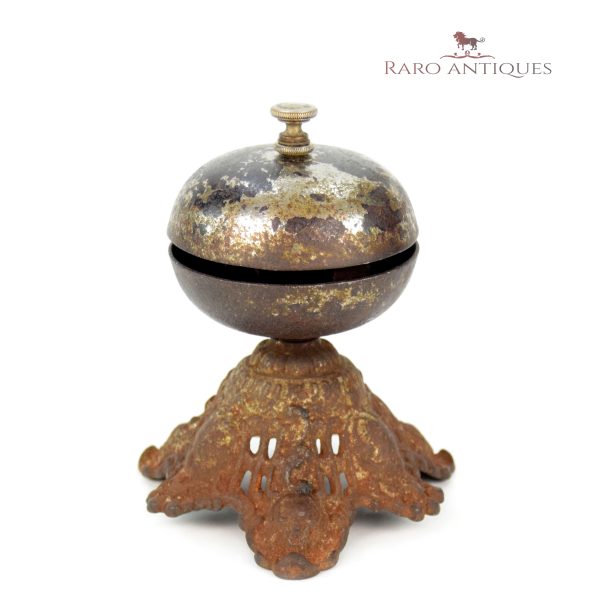
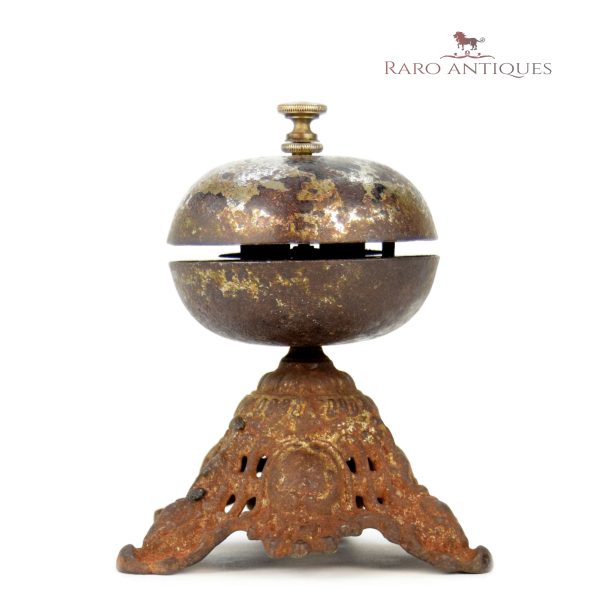
ANTIQUE TABLE BELL

45,00 

Table bell, from the late 19th century.

An interesting table bell that rings when the top button is turned. It was most likely used in establishments such as hotels or shops to attract attention from customers. Table bells were historically used, particularly in aristocratic homes, where they were used during long meals to call for a servant to bring new dishes or drinks. This custom was especially common in America, while in Europe, the tradition was for servants to stand by the table and attend to any request. Table bells became widely used in Europe only in the 19th century, as they were needed in establishments like hotels, restaurants, and shops. Dimensions: 13 x 8 x 8 cm Weight: 350g The bell is somewhat worn but still functional.
Close

TORTURE COLLAR

870,00 

Torture collar from the second half of the 18th century.

An interesting object from bygone times that reminds us of the dark past of humanity. Torture devices like this one were popular since the Middle Ages and were used to humiliate, torture, and control convicts and slaves. The collar was placed around a person's neck, preventing normal movement, lying down, and overall comfort. Similar collars were also used on dogs, but without a lock, only with a buckle. In this case, the collar served to protect a dog guarding livestock from potential wolf attacks. Dimensions: 30 x 8 cm Weight: 1.1 kg Considering its age, the collar is excellently preserved, with patina that speaks to its history. It includes a lock, but without a key.
Close

DEATH MASK

370,00 

Death mask, made in 1928.

A plaster death mask, first casting, signed Schäper and dated 1928.

Death masks are certainly one of the more fascinating traditions of human history and a way in which people preserved the memory of the deceased. The most famous death masks undoubtedly originate from Egypt, where they were buried together with the dead. Ancient Roman masks made of wax are also well known; these were used as models for carving tombstones. A similar tradition continued for centuries until changes in production occurred toward the end of the Middle Ages, when plaster began to be used instead. At that time, masks were used in funeral rituals and later preserved in libraries, museums, and universities.

Death masks were not made only for royalty and nobility, but also for distinguished individuals — poets, philosophers, dramatists, and others. As in ancient Rome, these masks were often used as references for portraits, sculptures, busts, or engravings depicting the deceased. Today, death masks have somewhat fallen into obscurity, yet they remain a powerful reminder of mortality and carry a strong memento mori symbolism.

Dimensions: 28 × 17 × 14 cm

Weight: 1,1 kg

The mask is in good condition.

Close

ANTIQUE OIL LAMP

290,00 

Mid-19th Century Oil Lamp

This intriguing hand-forged oil lamp was in use up until the invention of electricity. Typically, it was filled with rapeseed oil or whale oil. However, since the light produced by such fuels is weak, kerosene was often mixed in to strengthen the flame. Such lamps were mostly used as work lights. In our region, a similar lamp can be found in the Idrija museum, where it is presented as a miner's lamp. Abroad, its use is often associated with weavers, as weaving usually started when there was no more work in the fields and the days began to shorten, making the additional light very welcome. Today, this interesting oil lamp can be an attractive decorative piece, especially because of the rooster decorating the screw used to open the lamp for oil refilling and wick replacement. Of course, the lamp is still functional; just pour in the chosen fuel, and it's ready to light up your dark days and nights. Dimensions: 61 x 14 x 12 cm Weight: 1.5 kg The oil lamp is in excellent condition.
Close

VINTAGE PURSE

175,00 

Vintage purse from the 1950s, made in America.

Purses made of Lucite were the most coveted fashion accessory in the mid-20th century. Lucite, a hard plastic, was developed by DuPont in 1931 but began to be used in fashion and interior design purposes only after World War II. The first Lucite purses were introduced in the late 1940s and immediately gained popularity as one of the most sought-after fashion accessories of the time. Such purses became a symbol of that era, representing the introduction of new materials and designs. The featured purse is an excellent example of why these purses were so popular. The intricately crafted cover of the purse and the pearl on the clasp give a sense of luxury while combining the robustness of Lucite with elegant design. Add this iconic purse to your fashion collection, and we are confident that you will not go unnoticed. Dimensions: 24 x 14 x 10 cm Weight: 600 g The purse is in good condition.
Close

ANTIQUE CRUCIFIX

128,00 

Antique crucifix from the 19th century.

A crucifix with a few missing pieces, which makes it uniquely special. An exceptional piece that reflects the passage of decades. Dimensions: 46 x 21 x 8.5 cm Weight: 0.5 kg The crucifix is well-preserved.
Close

ANTIQUE WINE PITCHER

235,00 

Antique wine pitcher, manufactured in 1906 by WMF.

This wine pitcher features characteristic Art Nouveau motifs. A beautiful addition to your collection of Art Nouveau items, an exceptional gift for a wine lover, and above all, a perfect addition to your home to serve yourself and your guests in style. WMF (Württembergische Metallwarenfabrik) is a globally renowned manufacturer of household, hotel, and catering products. They began production as far back as 1853. In their range, you can find items made from various metals, both common and noble, which are popular collectibles. Dimensions: 35 x 16 x 14 cm Weight: 1 kg The wine pitcher is in excellent condition.
Close

ANTIQUE KNIFE

65,00 

Antique knife with a brass handle.

Dimensions: 36 cm Weight: 530 g The knife is well-preserved.
Close

ANTIQUE ONYX PEDESTAL

2.300,00 

Onyx pedestal, made in the 19th century.

An elegant pedestal carved from green onyx, featuring a stepped octagonal base, a finely carved, fluted and spirally twisted shaft, and a richly ornamented capital with classical detailing — clear evidence that this piece was crafted by the hands of a master stone carver. This outstanding decorative object brings architectural structure to any interior, while the polished green onyx, with its beautiful natural veining in warm, translucent tones, offers an attractive support for a sculpture, bust, vase, or other decorative object. Whatever you choose to display on this exclusive piedestal, it will undoubtedly create a striking focal point in the room.

Dimensions: 118,5 × 34 × 34 cm

Weight: 46,2 kg

The onyx pedestal is in very good condition.

Close

ANTIQUE PHARMACY BOTTLE

98,00 

Antique pharmacy bottle from the late 19th century.

A large bottle made of thick glass, traditionally used in pharmacies to store aqua calcis (diluted water solution of calcium hydroxide). Surely, the sight of this bottle transports us back in time, making it an exceptional detail in any home or business establishment. This item is bound to spark conversations about the old days, serving as a decorative piece with soul and history. Dimensions: 45.5 x 20 cm Weight: 3.5 kg The pharmacy bottle is in excellent condition, missing only the stopper.
Close

ANTIQUE BABY BOTTLE

39,00 

Antique baby bottle from the English company Allenburys, made in London in 1905.

In 1894, the first banana-shaped feeding bottle appeared on the market. The British pharmaceutical company Allenburys (alias Allen & Hanburys) was quite proud of its feeding bottle, which indeed had some excellent features. Firstly, both ends allowed good airflow, which is crucial for feeding a baby: one end of the bottle had a nipple, and the other had a valve. Secondly, it was easy to grip. Thirdly, and most importantly, it was hygienic, as claimed on the bottle itself. It could be easily cleaned and sterilized. The Allenburys brand is known for emphasizing the increasing awareness of hygiene and cleanliness in the early 20th century. On the box itself, we can read their vision: "This feeder ensures absolute cleanliness and eliminates all causes which induce fermentation of food. The infant is freed from disease, winds, digestive disturbances, diarrhea, etc. It is especially recommended for use with 'Allenburys' infant foods. You can offer clean and uncontaminated food in a bottle that can be easily cleaned." Allenburys was right: its bottle was much more hygienic than those before it, which were so difficult to clean that they became a breeding ground for deadly bacteria – these charming bottles later became known as "murder bottles." Now, this bottle can be an interesting decorative item, and the box itself is also very interesting. It features captivating images and refined yet not entirely refined messages, showing us what innovations artificial feeding brought in those times. A very interesting item that tells us a lot about the past. Dimensions: 19.5 x 8 x 6.5 cm Weight: 220 g The bottle is in excellent condition, albeit without the nipple and valve that originally came with it. The box is well-preserved.
Close

ANTIQUE JANSENIST CRUCIFIX

120,00 

Jansenist crucifix, 18th century.

A wooden crucifix featuring naively carved figures of Jesus and a skull, both crafted from bone. The vertical positioning of Christ’s arms, more aligned upwards than horizontally, is a characteristic hallmark of Jansenist crosses. This exquisite crucifix is a remarkable collector's piece, ideal for any religious or historical collection. Jansenism was a religious movement within the Catholic Church that emerged in 17th-century France. Rooted in the teachings of Dutch theologian Cornelius Jansen, it emphasized a strict and ascetic view of Christian faith. Central tenets included a focus on human sinfulness and the belief in divine grace as the sole path to salvation. Jansenism was also known for its opposition to worldly luxury and for promoting strict morality and humility. While Jansenism did not take deep root in Slovenia as it did in other parts of Europe, its influence was felt among certain theological circles. Some priests and theologians advocated stricter moral and religious practices and criticized elements of the Catholic Church at the time. However, the movement remained limited in its impact on Slovenian society and culture. Dimensions: 32 x 12 x 2 cm Weight: 0.3 kg The crucifix is well-preserved and serves as an extraordinary artifact reflecting a significant historical and theological era.
Close

INKWELL WITH ROE DEER ANTLER, CCA. 1900

220,00 

Inkwell with roe deer antler, circa 1900.

An exceptional inkwell distinguished by its natural roe deer antler, which serves both as decoration and as a practical rest for a writing quill. The antler is adorned with beautiful brass details depicting oak leaves, acorns, and small branches. The inkwell container itself is made of crystal, adding further elegance to the piece.

This inkwell is a wonderful decorative accent for any writing desk and an excellent collector’s item — perfect for lovers of calligraphy as well as collectors of hunting-related antiques.

Dimensions: 22 × 13,5 × 11 cm

Weight: 0,6 kg

The inkwell is in excellent condition.
Close

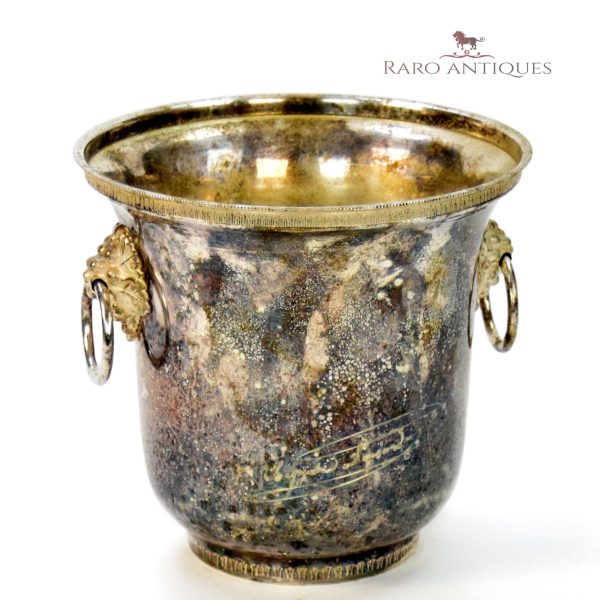
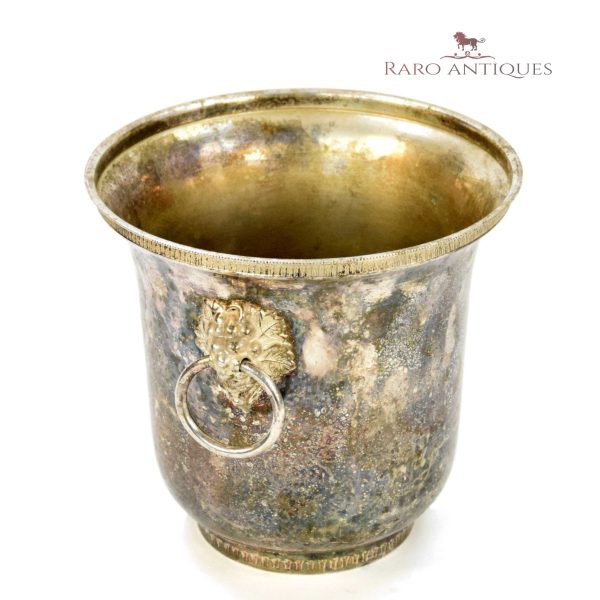
CHAMPAGNE BUCKET VEUVE CLICQUOT PONSARDIN

190,00 

Champagne bucket for Veuve Clicquot Ponsardin, manufactured by the French company Saint Hilaire Paris in the 1970s.

This silver-plated champagne bucket was produced for the prestigious champagne house Veuve Clicquot Ponsardin, as evidenced by the engraved signature on the bucket itself. Pieces like this were often supplied to luxury hotels, fine restaurants, and wine cellars, where they were used for the elegant presentation and service of this celebrated beverage.

Over the decades, the silver-plated surface has developed a beautiful iridescent patina, which is considered an important part of the character, history, and authenticity of such pieces.

Without a doubt, this is a piece perfectly suited for serving chilled drinks in style. Thanks to its timeless appearance, it also makes an excellent decorative accent for a cocktail corner, kitchen, or home bar.

Dimensions: 21 × 22 × 22 cm

Weight: 1 kg

The bucket is in good condition.

Close

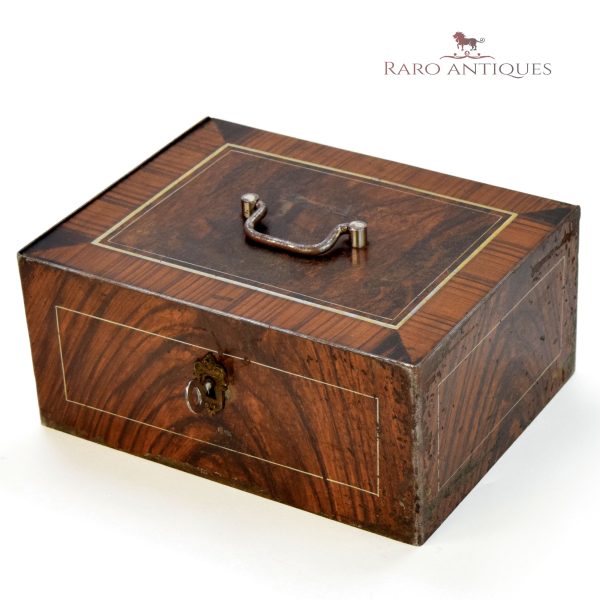
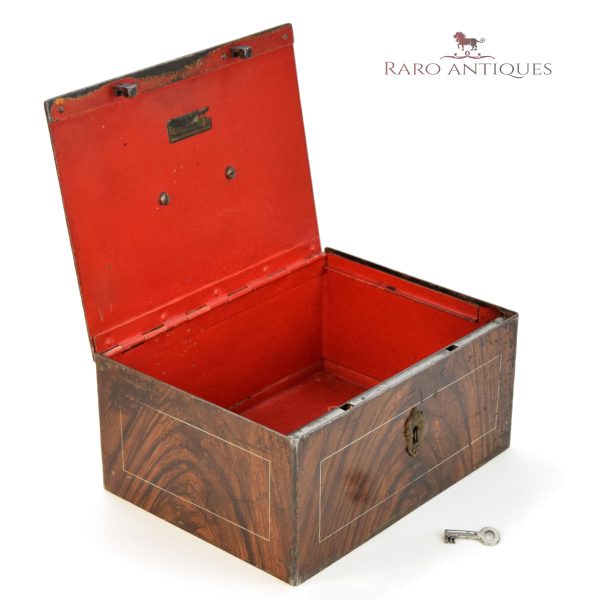
SAFE, CCA. 1900

125,00 

Safe, made in Poland, early 20th century.

A safe with a faux wood-grain finish, a working lock and key, and a maker's label. Unfortunately, only the place of manufacture, Breslau (present-day Wrocław), can still be identified on the label.

Today, this heavy metal box serves as an excellent decorative piece. Thanks to its functioning lock, it remains suitable for storing valuables and personal belongings.

Dimensions: 29 × 22 × 14 cm

Weight: 4,5 kg

The safe is in good condition.

Close

SPICE BOX

170,00 

Spice box from early 19th century, from India.

An intriguing spice box made from a single piece of wood, featuring a side-opening lid secured with a hand-forged latch. Such boxes (masaladabbis) are artistic objects passed down through generations within families. A beautiful piece that can still be used for its original purpose or to store other small items. Its excellent craftsmanship and unique appearance also make it an outstanding decorative piece. Dimensions: 34 x 15.5 x 10 cm Weight: 1.3 kg The box is excellently preserved.
Close

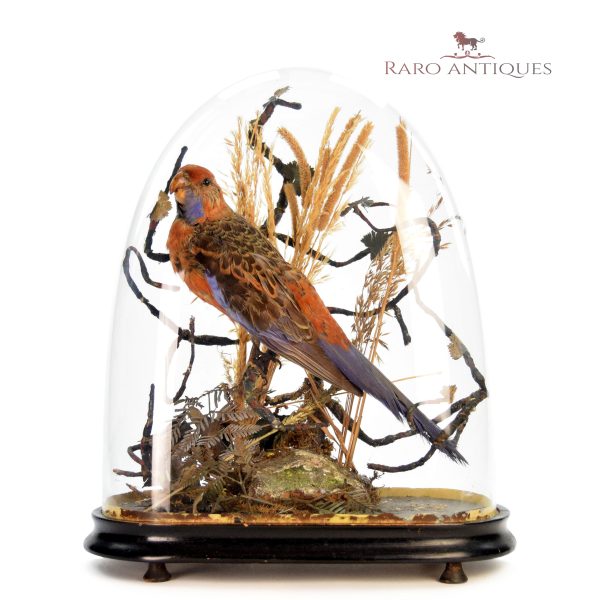
VICTORIAN TAXIDERMY ROSELLA PARROT

580,00 

Rosella parrot under a glass dome, circa 1880.

The presented rosella parrot comes from the 19th century, a time when placing taxidermied animals under glass domes was a popular practice, particularly during the Victorian era. This tradition stemmed from a passion for natural history collections known as "cabinets of curiosities," where people would gather and display natural wonders such as minerals, exotic plants, and animals. Glass domes were often used to protect and showcase these collectible items, especially taxidermied animals. The popularity of this practice grew alongside a rising interest in natural sciences, fueled by major scientific discoveries and expeditions to exotic lands, which introduced new animal species. These collections reflected a sense of awe and fascination with nature, and they were part of the Victorian obsession with documenting and classifying the world. Taxidermy during this period was not only a scientific practice but also became a form of home decoration. Taxidermied animals under glass domes were displayed in homes as symbols of refined taste and education. The domes were designed to protect the specimens from dust and damage, allowing for long-term preservation. Within these glass enclosures, taxidermied animals were often arranged in elaborate scenes that could depict them in their natural habitats – as with the presented rosella parrot – or sometimes in purely artistic or imaginative settings. These exhibits were intricately crafted and carefully arranged to create the illusion of realism. However, by the end of the 19th century, this trend gradually faded as aesthetic tastes changed, as did the relationship with nature and animals. Dimensions: 40 x 34 x 16 cm Weight: 1.5 kg The rosella parrot exhibit under the glass dome is in excellent condition.
Close

VINTAGE IMHOFF CONE

55,00 

Vintage Imhoff cone with stand, made in Pula during the time of Yugoslavia.

An interesting addition to your home, it can be used as an intriguing flower vase, or it can be a wonderful industrial decoration on its own. The Imhof cone is typically used for measuring sedimentation in liquids. Dimensions: 53 x 27 cm Weight: 1.02 kg The cone is in excellent condition. Has a volume of 1 liter.
Close

ANTIQUE ICE BUCKET

1.800,00 

Ice bucket, from the 1913.

An exceptional ice bucket, commemorating the 30th anniversary of the Milanese gymnastics club Pro Patria, as engraved on the bucket itself. The ice bucket displays all the marks of top-tier craftsmanship. Its most beautiful details are undoubtedly the intricately crafted elephants, along with the festive garland encircling the bucket, further emphasizing its luxurious design. This exquisite piece serves both as a decorative and functional item, ideal for chilling champagne during special occasions. Its beauty ensures it will also find a prominent place on your shelf, where you can admire it daily. Dimensions: 46 x 38 x 22 cm Weight: 2.8 kg The ice bucket is in good condition.
Close

VINTAGE FREE-STANDING ASHTRAY

180,00 

Free-standing ashtray, made in the 1970s.

A free-standing chrome ashtray with a push-button mechanism that closes the ash compartment, helping to reduce the spread of odors. Suitable for indoor use or on a terrace. Its modernist design also makes it an attractive decorative piece.

Dimensions: 56 × 19 × 19 cm

Weight: 2,6 kg

The ashtray is in excellent condition.

Close

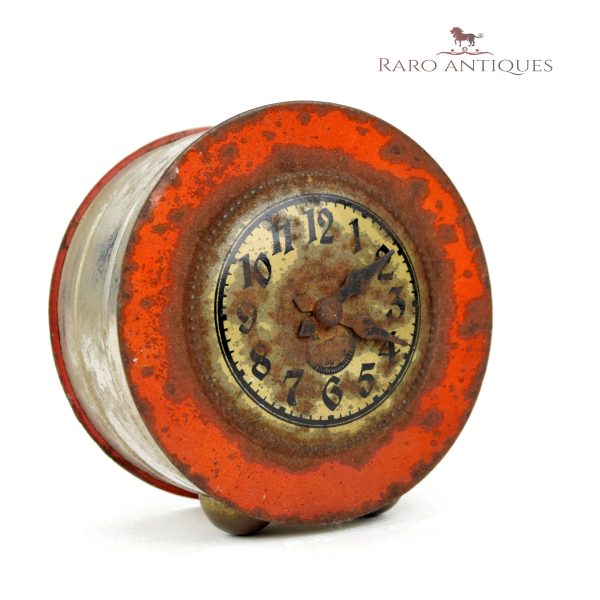
ANTIQUE PIGGY BANK

29,00 

Piggy Bank, manufactured between 1891 and 1952.

Tin savings bank in the shape of a clock – alarm clock, with moving hands, will be a surprising decoration on your shelves. It also carries symbolic value, reminding us of the proverb – time is money. It still has the original key, so you can still use it for its original purpose. Dimensions: 8.5 x 4.5 cm Weight: 20 g The savings bank is well-preserved.
Close

ANTIQUE DUMBBELLS

37,00 

Dumbbells from the late 19th century.

Are you ready to train in style? These exceptional iron dumbbells, with a beautiful patina, will surely be an additional reason for you to grab them and exercise your hand muscles. They can also serve as a wonderful decoration. Certainly, a unique example of a gym accessory from the late 19th century. Dimensions: 26 x 7.5 cm Weight: 3.3 kg The weights are in excellent condition. Price is for one.