ITALIAN NYLON STOCKINGS GI. LO. DE, 1950s
Gi. Lo. De Nylon Stockings, made in Italy in the early 1950s.
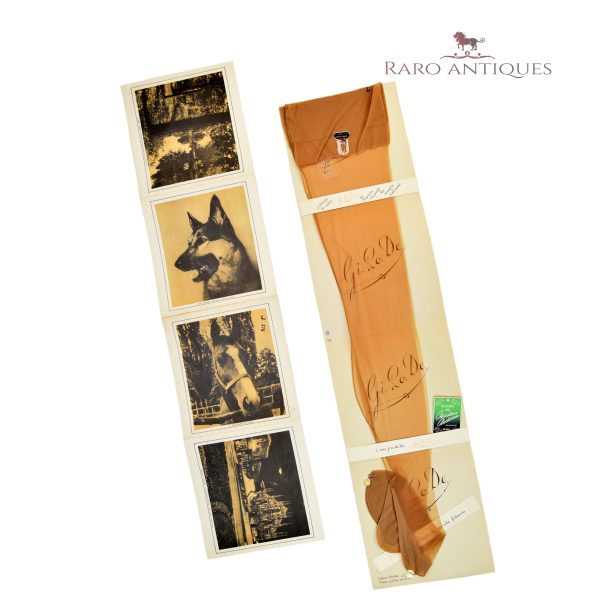
A rare and exceptionally preserved factory sample set by the Italian brand Gi.Lo.De, dating to around 1950–1951.
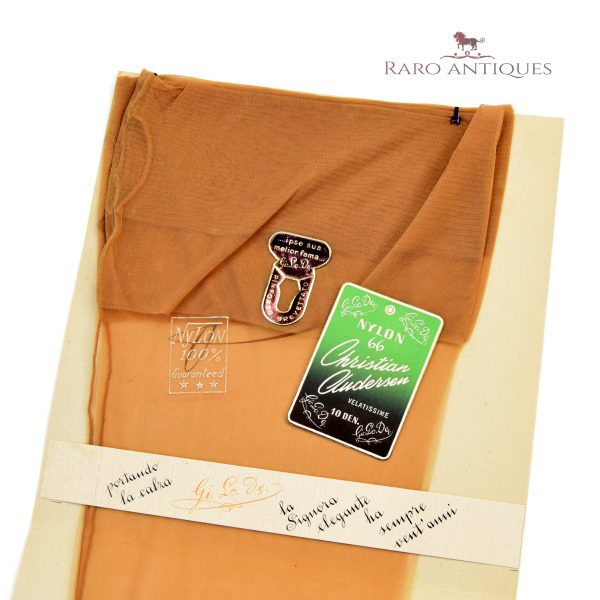
The set includes a pair of never-worn, ultra-sheer nylon stockings with a back seam, attached to the original presentation card featuring four sepia-toned photographs (Duomo, horse, dog, and landscape), along with factory labels and pins.
This is a typical post-war display sample, where luxury nylon stockings were presented with artistic packaging — a reflection of their status as a luxury item at the time.
The green “Nylon 66” card also confirms the use of the first generation of DuPont nylon, which makes this piece particularly special.
An exquisite find for vintage fashion lovers, and a museum-worthy collectible for connoisseurs of mid-century design.
Dimensions: 91 × 22 × 0,5 cm
Weight: 0,01 kg
The stockings are in excellent preserved condition. Price per pair.


ANTIQUE WINE GLASS
Antique wine glass crafted by the prestigious French glassmaking company Saint Louis in the early 1900s.
An exceptional work of Saint Louis glassmakers, who have been crafting glass art since 1586. The glass is ruby-colored, with 24-carat gold leaf depicting lions, floral wreaths, and bows. The motif is also known as the Congress pattern, which is extremely rare, as such patterns have not been produced for a long time. The glass is exceptionally elegant and refined, with the gold leaf adding prestige, while the ruby color adds vibrancy, ensuring that this is a glass you would want to showcase prominently in your collection. The wine glass is already an outstanding and rare piece in itself, but there is another aspect that makes it particularly rare and desirable among collectors of fine and authentic items. On its stem, we can observe an inventive repair, executed with special skill, adding a unique touch to the glass that speaks volumes about its history and previous owners. Inventive repairs are made when an object is damaged. In Japan, such repairs are called "kintsugi," where it has long been believed that if something is damaged and has a history, it becomes even more beautiful and magnificent; hence, damages are often filled with gold. This shows that people used to respect their belongings more, and when items were damaged, they were repaired rather than discarded and replaced with new ones as we often do today. Even wealthy people didn't just discard and replace damaged items; instead, they entrusted them to craftsmen who could not only restore the item but also add additional decorative value through the repair, as was the case with this wine glass. It is precisely because of this inventive repair that this glass is a unique and irreplaceable piece. Dimensions: 19.5 x 7.5 cm Weight: 0.35 kg The glass is in excellent condition.
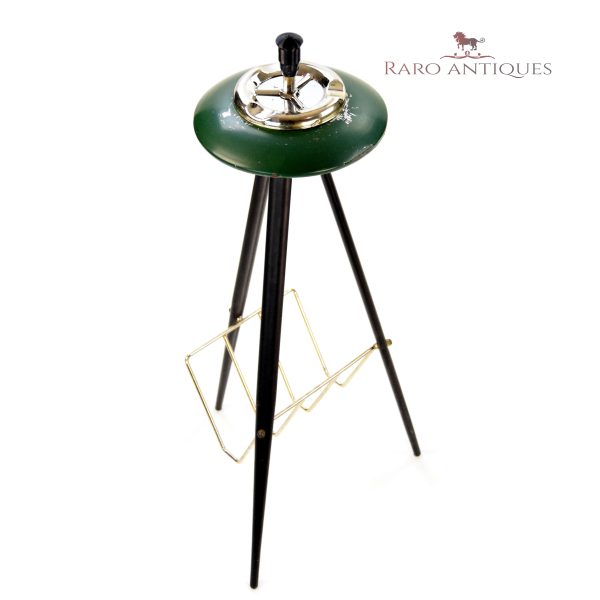
VINTAGE FREESTANDING ASHTRAY
Freestanding ashtray, made in the mid-20th century.
This freestanding ashtray features a push-button mechanism that closes the ash inside the container, helping to reduce the spread of odors. It also includes a convenient holder for magazines and newspapers. Suitable for indoor use or on a terrace, and with its modernist design it also works as a striking decorative piece.
Dimensions: 65 × 30 × 27 cm
Weight: 1,5 kg
The freestanding ashtray is in good condition.


VINTAGE FREE-STANDING ASHTRAY
Free-standing ashtray, made in the 1970s.
A free-standing chrome ashtray with a push-button mechanism that closes the ash compartment, helping to reduce the spread of odors. Suitable for indoor use or on a terrace. Its modernist design also makes it an attractive decorative piece.
Dimensions: 56 × 19 × 19 cm
Weight: 2,6 kg
The ashtray is in excellent condition.


ANTIQUE MEDICAL CHEST
19th-century medical chest, made in France.
This rare wooden medical chest is a relic from the era when home remedies were essential, especially for families living far from cities and medical care. Such chests were used to store a variety of medicinal preparations to provide aid for all family members. This particular chest contains 19 glass bottles, some still holding remnants of their original contents, a wooden case for a thermometer, antique gauze, and a small box with a glass syringe accompanied by various ampoules, also retaining their original contents. Due to its remarkable preservation, this piece is a true museum artifact, ideal for collectors, medical history enthusiasts, and lovers of historical treasures. Exploring its contents is an educational journey, while the chest itself serves as an unusual and fascinating decorative item. Dimensions: 44 x 29 x 19 cm Weight: 7.7 kg The medical chest is in excellent condition.

ANTIQUE HAT STAND
Antique hat stand from the mid-19th century.
Turned wooden hat stand will be an excellent addition to any wardrobe, as you can keep your favorite headwear on it. Since it was originally made as a display item in millinery, it can find its place there again. Dimensions: 39 x 14 cm Weight: 320 g The hat stand is in good condition.

ANTIQUE SALT AND PEPPER SHAKERS
Antique salt and pepper shakers from the early 20th century.
Two large glass containers for salt and pepper. Due to their size, they will be an excellent addition to any kitchen. Their appearance also makes them a beautiful centerpiece for the dining table. Dimensions: 13 x 9 cm Weight: 200 g The salt and pepper shakers are in excellent condition. Price is for one.

ANTIQUE CRUCIFIX
Antique crucifix from the 19th century.
A crucifix with a few missing pieces, which makes it uniquely special. An exceptional piece that reflects the passage of decades. Dimensions: 46 x 21 x 8.5 cm Weight: 0.5 kg The crucifix is well-preserved.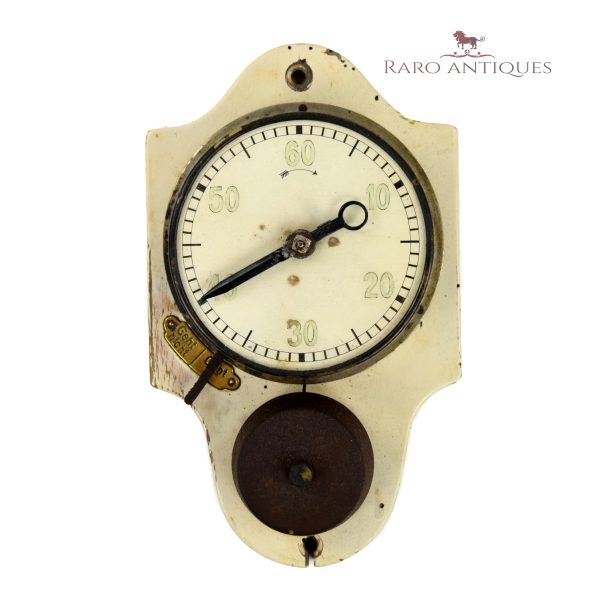
HANAU COUNTDOWN TIMER
Countdown Timer from the German company Original Hanau, manufactured in the 1920s.
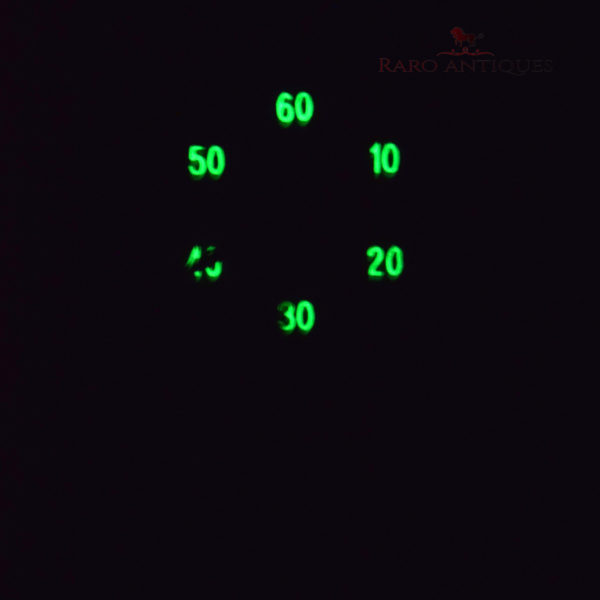
This countdown timer was designed for use during sunbathing. It features a sixty-minute dial that glows in the dark, adjustable by hand, and a bell with an alarm mechanism for start and stop. Today, you can use it again, perhaps just like in the past, or it can come in handy for other tasks, such as cooking. In any case, it is undoubtedly a very interesting wall decoration. Dimensions: 26 x 15.5 cm Weight: 610 g The countdown timer is functional, as well as the start and stop mechanism. The signs of time are visible, but they only add charm to it.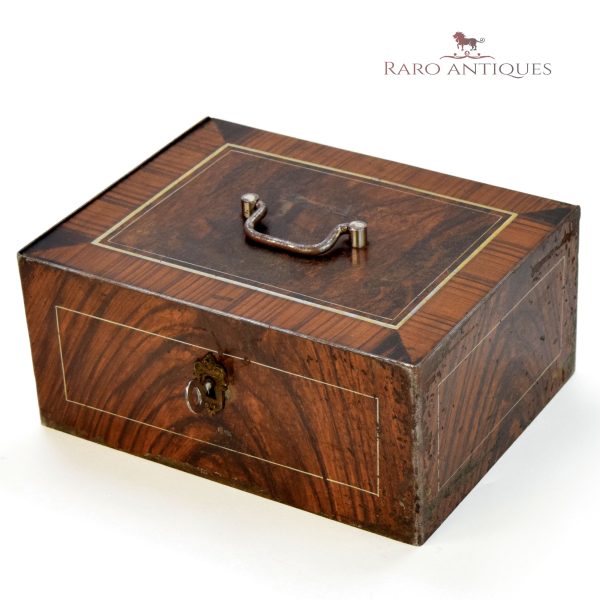
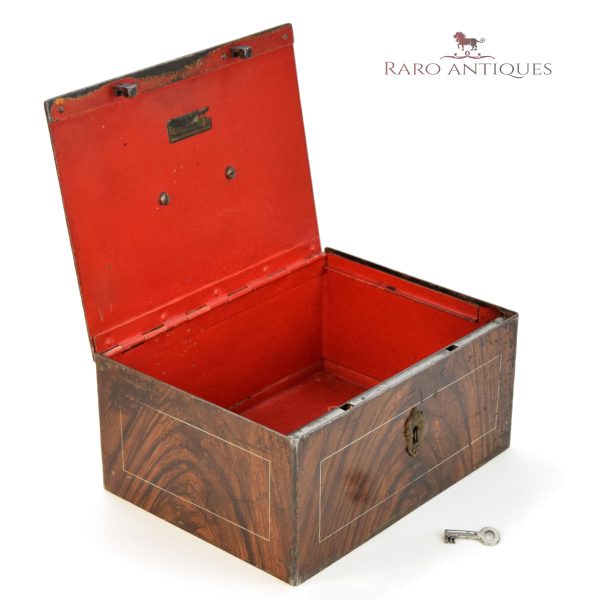
SAFE, CCA. 1900
Safe, made in Poland, early 20th century.
A safe with a faux wood-grain finish, a working lock and key, and a maker's label. Unfortunately, only the place of manufacture, Breslau (present-day Wrocław), can still be identified on the label.
Today, this heavy metal box serves as an excellent decorative piece. Thanks to its functioning lock, it remains suitable for storing valuables and personal belongings.
Dimensions: 29 × 22 × 14 cm
Weight: 4,5 kg
The safe is in good condition.


ANTIQUE WOODEN HAT STRETCHER
Wooden hat stretcher, made in late 19th century.
A unique and rare find for collectors and enthusiasts of vintage fashion and millinery tools. Crafted from solid wood, this hat stretcher features a simple yet effective mechanism for resizing hats. Designed to adjust to different sizes and shapes, it allowed milliners to create perfectly fitting hats for their clients. This adjustable stretcher is ideal for vintage fashion lovers, collectors, or hat enthusiasts looking for a creative way to display their hats. It can also return to use in the millinery industry, as its cast iron mechanism remains fully functional. Dimensions: 33 x 30 x 19 cm Weight: 4.1 kg The hat stretcher is in good condition. Woodworm holes are old, and the woodworm is inactive.