
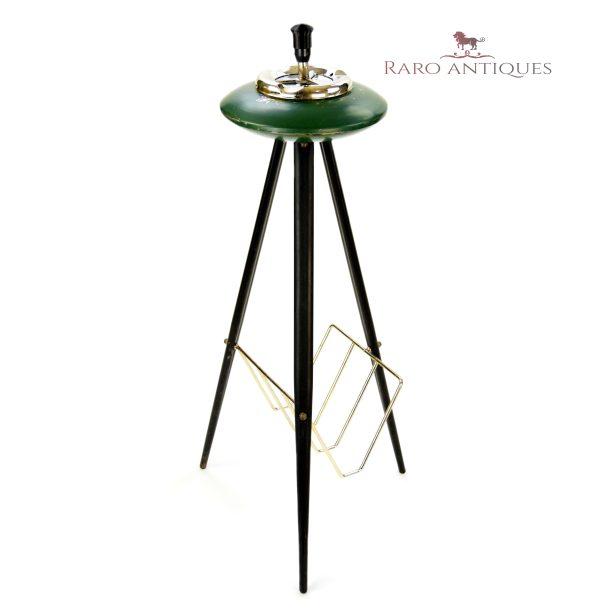
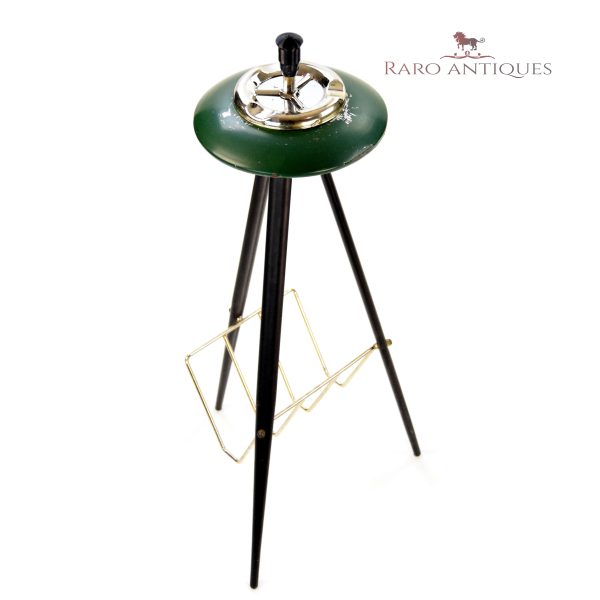
VINTAGE FREESTANDING ASHTRAY
Freestanding ashtray, made in the mid-20th century.
This freestanding ashtray features a push-button mechanism that closes the ash inside the container, helping to reduce the spread of odors. It also includes a convenient holder for magazines and newspapers. Suitable for indoor use or on a terrace, and with its modernist design it also works as a striking decorative piece.
Dimensions: 65 × 30 × 27 cm
Weight: 1,5 kg
The freestanding ashtray is in good condition.
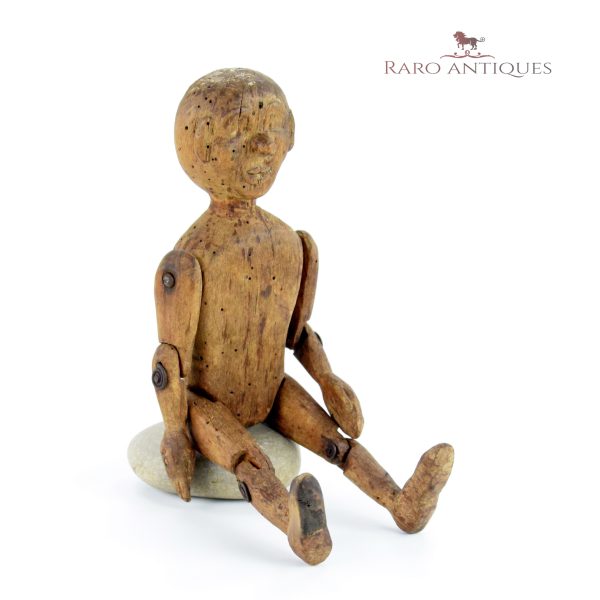
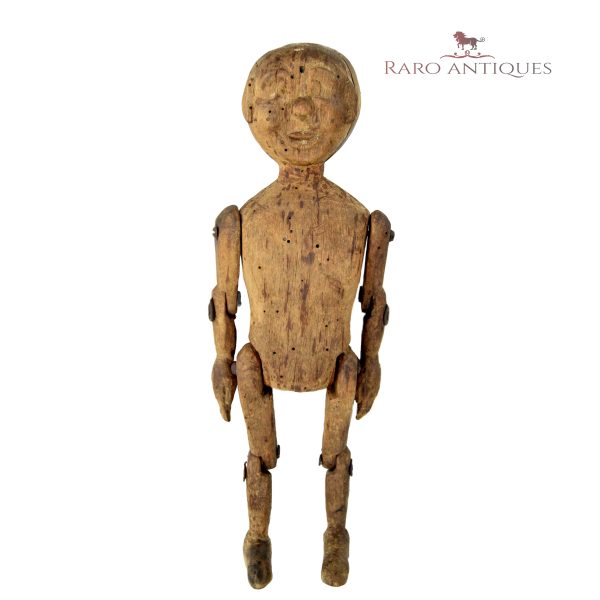
WOODEN TOY FROM 19TH CENTURY
Charming wooden toy from the mid-19th century.
This delightful wooden toy with joints on its legs and arms undoubtedly once entertained many children's hearts. The toy is crafted in a naive style, adding to its charm and placing it within the realm of folk art. One can imagine a father crafting this exceptional toy for his child sometime in the mid-19th century. The child or perhaps multiple children must have cherished it dearly, as there are traces of past repairs, indicating efforts to keep the toy joyfully functional. Now, it stands as a wonderful example of naive and folk art, serving as both decoration and a reminder of a bygone era when toys were not so plentiful. Dimensions: 29 x 10 x 6 cm Weight: 200 g The toy is well-preserved.

ANTIQUE PHARMACY BOTTLE
Antique pharmacy bottle from the late 19th century.
A large bottle made of thick glass, traditionally used in pharmacies to store aqua calcis (diluted water solution of calcium hydroxide). Surely, the sight of this bottle transports us back in time, making it an exceptional detail in any home or business establishment. This item is bound to spark conversations about the old days, serving as a decorative piece with soul and history. Dimensions: 45.5 x 20 cm Weight: 3.5 kg The pharmacy bottle is in excellent condition, missing only the stopper.

VINTAGE PURSE
Vintage purse from the 1950s, made in America.
Purses made of Lucite were the most coveted fashion accessory in the mid-20th century. Lucite, a hard plastic, was developed by DuPont in 1931 but began to be used in fashion and interior design purposes only after World War II. The first Lucite purses were introduced in the late 1940s and immediately gained popularity as one of the most sought-after fashion accessories of the time. Such purses became a symbol of that era, representing the introduction of new materials and designs. The featured purse is an excellent example of why these purses were so popular. The intricately crafted cover of the purse and the pearl on the clasp give a sense of luxury while combining the robustness of Lucite with elegant design. Add this iconic purse to your fashion collection, and we are confident that you will not go unnoticed. Dimensions: 24 x 14 x 10 cm Weight: 600 g The purse is in good condition.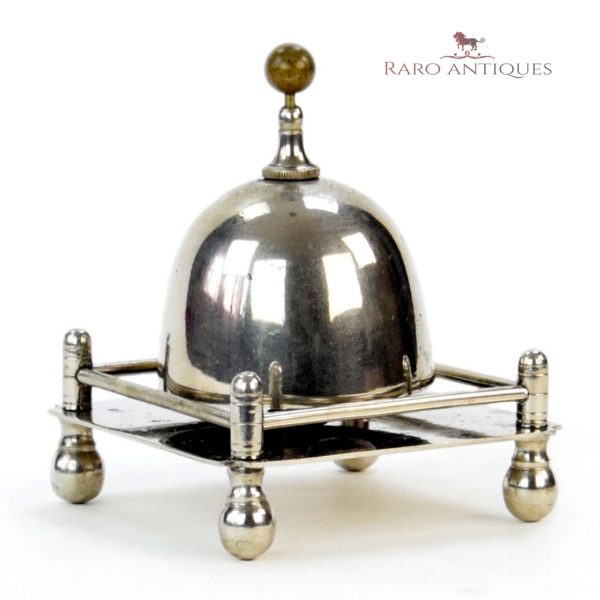

TABLE BELL, CCA. 1905
Desk bell, made in the early 20th century in Berlin
A chrome-plated desk bell that rings when the top button is pressed. It was most likely used in establishments such as hotels or shops, where customers could ring it to attract attention.
Historically, desk bells were primarily used in aristocratic households. During long meals, they were used to summon a maid to serve the next course or bring drinks. This custom was particularly widespread in America, whereas in Europe it was more common for servants to stand by the table so they could immediately attend to any request. Desk bells became widely used in Europe only in the 19th century, when they started to appear in establishments such as hotels, restaurants, and shops.
Dimensions: 11,5 × 9,5 × 9,5 cm
Weight: 0,4 kg
The bell is in excellent condition.


SCOLD’S BRIDLE
The scold's bridle.
The scold's bridle or brank, originating from Scotland in the 16th century, was a horrific device designed to cause shame, discomfort, and pain to its wearer. Its usage spread from Scotland to England, Germany, and other European countries. Its purpose was to shame, silence, and physically discomfort individuals who were deemed unruly or outspoken, particularly women who challenged authority or societal norms. Often, these bridles were crafted to resemble masks with distorted facial features, such as large ears, noses, or horns. Some even had bells attached to them, further humiliating the wearer and drawing attention to their presence. The bridle, worn for a minimum of several hours, prevented its wearer from eating, drinking, and most importantly, speaking. It consisted of a metal part inserted into the mouth, similar to a bit in a horse's harness, which held the tongue in place. In more severe cases, these metal mouthpieces had spikes, causing additional pain. The bridle was predominantly used as a punishment for women who were considered too vocal or contentious in public, especially widows or older women who were not under male control. It was also known as a "witch's bridle," indicating its use during witch trials to prevent accused witches from casting spells on their captors or communities. Additionally, disobedient wives could be subjected to this punishment at their husbands' request. While men could also face this punishment if perceived as a threat to the common good, it was primarily reserved for women deemed gossips, adulterers, prostitutes, or witches, as well as those who defied societal norms. The bridle served as a stark reminder of the oppression women faced and the consequences of expressing dissent in conservative societies. Remarkably, this punishment was not abolished in England until 1967, reflecting the enduring legacy of patriarchal control and the gradual progress towards women's rights. The scold's bridle serves as a poignant relic of the past, prompting reflection on the darker aspects of human history. Dimensions: 26 x 25.5 x 21 cm Weight: 3.2 kg The scold's bridle is in excellent condition, complete with a lock and accompanying key.

ANTIQUE KNIFE
Antique knife with a brass handle.
Dimensions: 36 cm Weight: 530 g The knife is well-preserved.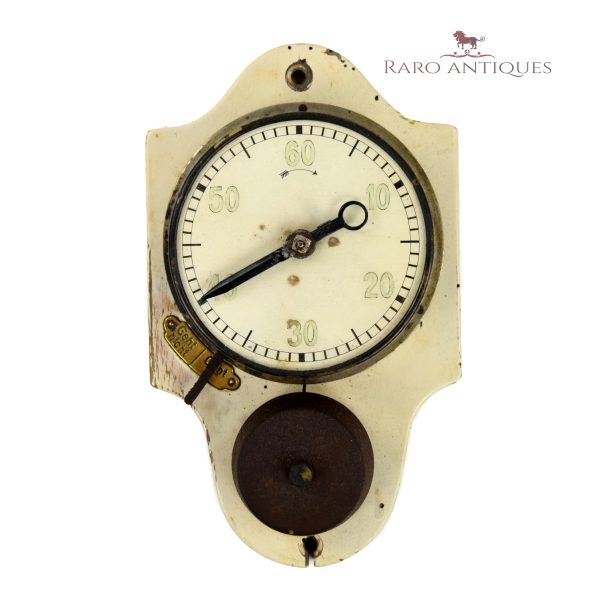
HANAU COUNTDOWN TIMER
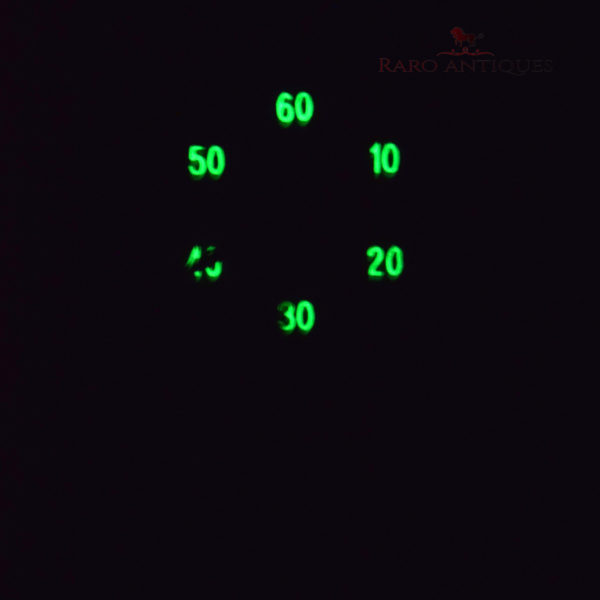
Countdown Timer from the German company Original Hanau, manufactured in the 1920s.
This countdown timer was designed for use during sunbathing. It features a sixty-minute dial that glows in the dark, adjustable by hand, and a bell with an alarm mechanism for start and stop. Today, you can use it again, perhaps just like in the past, or it can come in handy for other tasks, such as cooking. In any case, it is undoubtedly a very interesting wall decoration. Dimensions: 26 x 15.5 cm Weight: 610 g The countdown timer is functional, as well as the start and stop mechanism. The signs of time are visible, but they only add charm to it.

ANTIQUE SALT AND PEPPER SHAKERS
Antique salt and pepper shakers from the early 20th century.
Two large glass containers for salt and pepper. Due to their size, they will be an excellent addition to any kitchen. Their appearance also makes them a beautiful centerpiece for the dining table. Dimensions: 13 x 9 cm Weight: 200 g The salt and pepper shakers are in excellent condition. Price is for one.

ANTIQUE TEAPOT
Teapot, from 1911.
A silver-plated teapot with a milk jug can be a wonderful decoration on your kitchen shelves, and of course, you can still use it to make an unforgettable tea party. Dimensions: 28.5 x 15 x 13.5 cm Weight: 550 g The teapot is well-preserved.

ANTIQUE WOODEN HAT STRETCHER
Wooden hat stretcher, made in late 19th century.
A unique and rare find for collectors and enthusiasts of vintage fashion and millinery tools. Crafted from solid wood, this hat stretcher features a simple yet effective mechanism for resizing hats. Designed to adjust to different sizes and shapes, it allowed milliners to create perfectly fitting hats for their clients. This adjustable stretcher is ideal for vintage fashion lovers, collectors, or hat enthusiasts looking for a creative way to display their hats. It can also return to use in the millinery industry, as its cast iron mechanism remains fully functional. Dimensions: 33 x 30 x 19 cm Weight: 4.1 kg The hat stretcher is in good condition. Woodworm holes are old, and the woodworm is inactive.

DECORATIVE SILVER-PLATED TRAY, LATE 19. CENTURY
Decorative silver-plated tray, made in the late 19th century.
An exceptionally large and decorative serving tray that reflects the elegance and refined style of the late 19th century. Made of silver-plated copper, it is richly engraved with floral and botanical motifs, while the rim and handles are strongly accentuated with raised decorative details.
Thanks to its generous size, it is ideal for serving a larger number of guests, yet its visual appeal also makes it perfect as a standalone decorative piece.
Dimensions: 57 × 36 × 4 cm
Weight: 2,3 kg
The tray is well preserved and in good vintage condition.