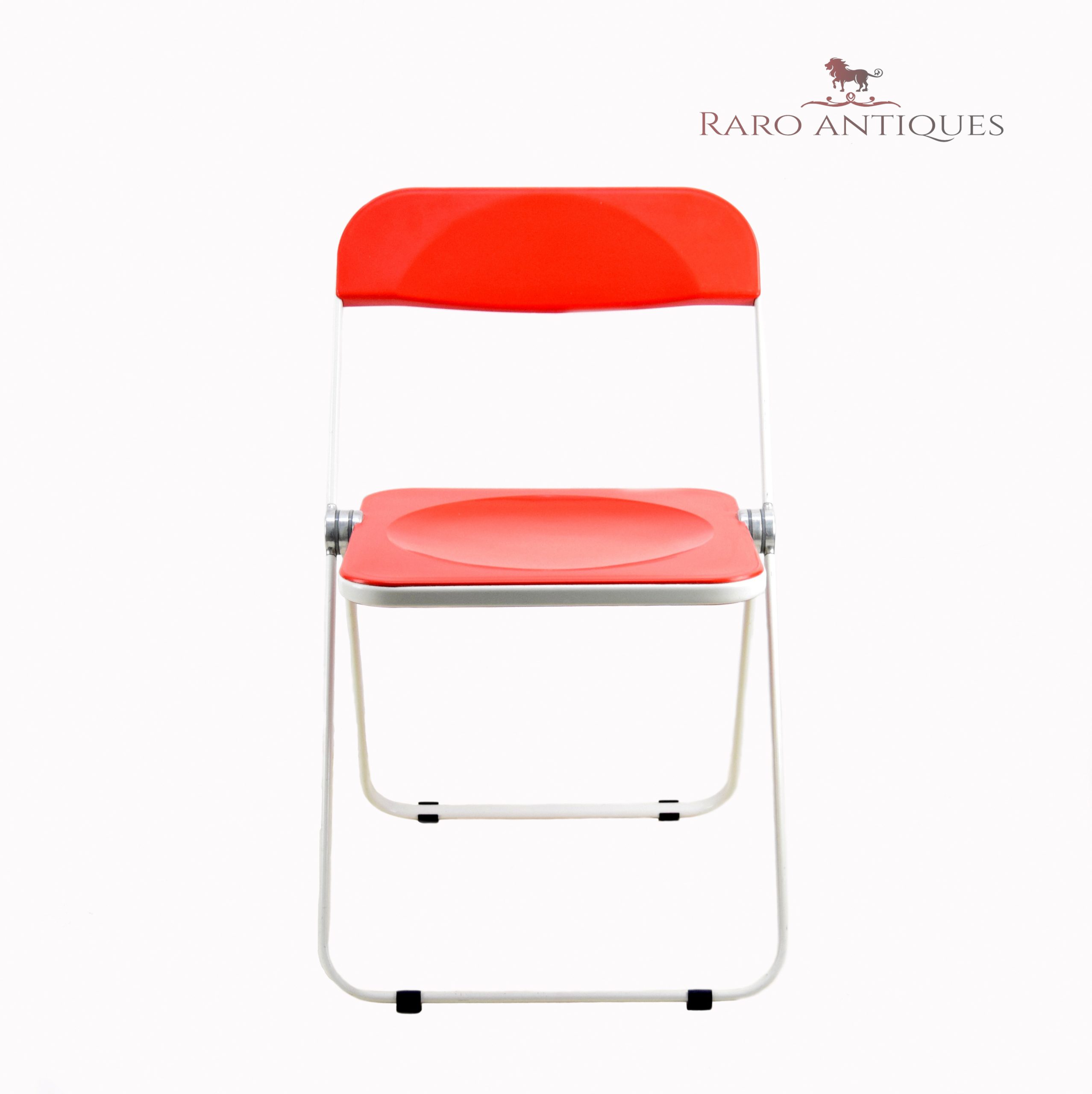
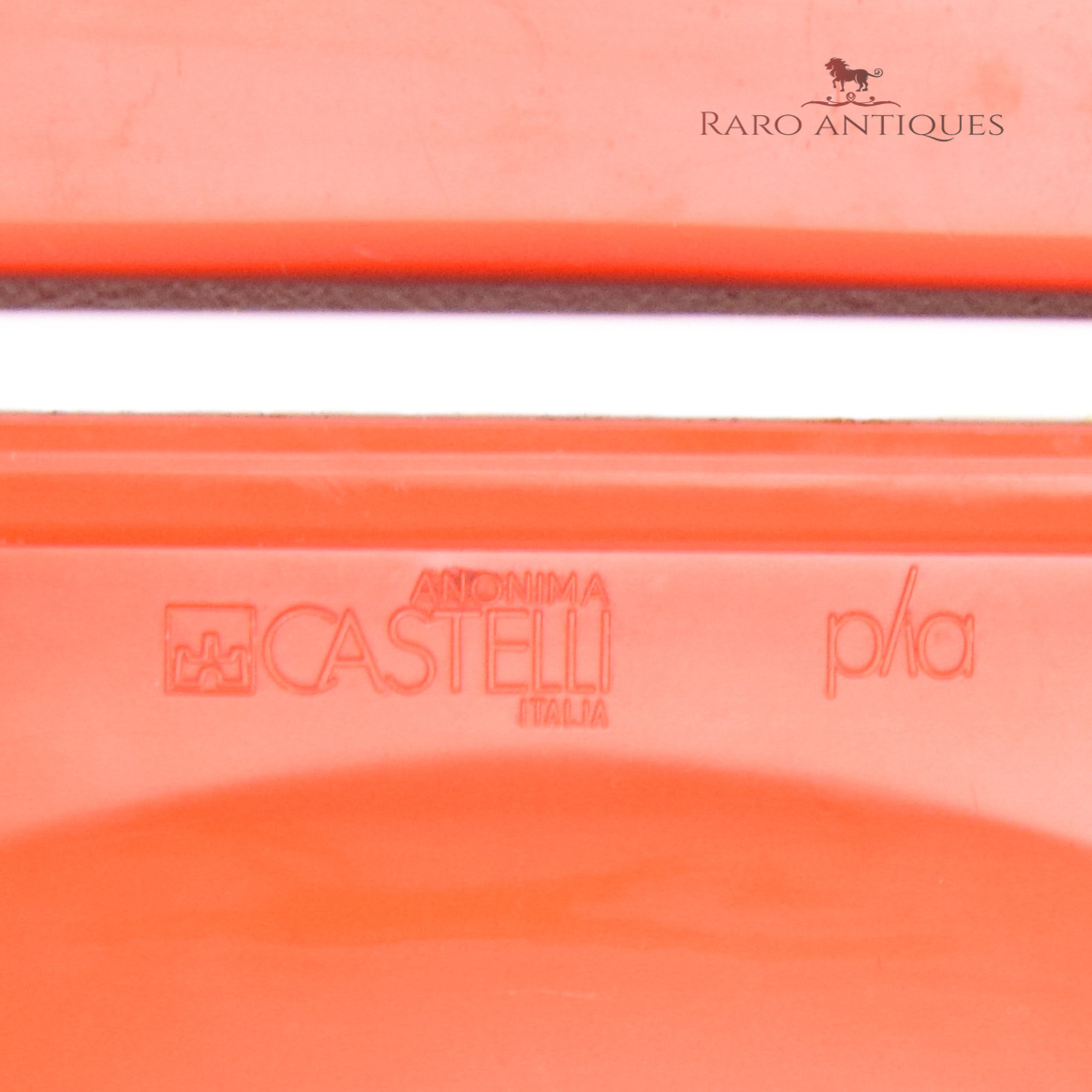
Plia chair, manufactured in the late 1960s. Designed by Giancarlo Piretti for Anonima Castelli.
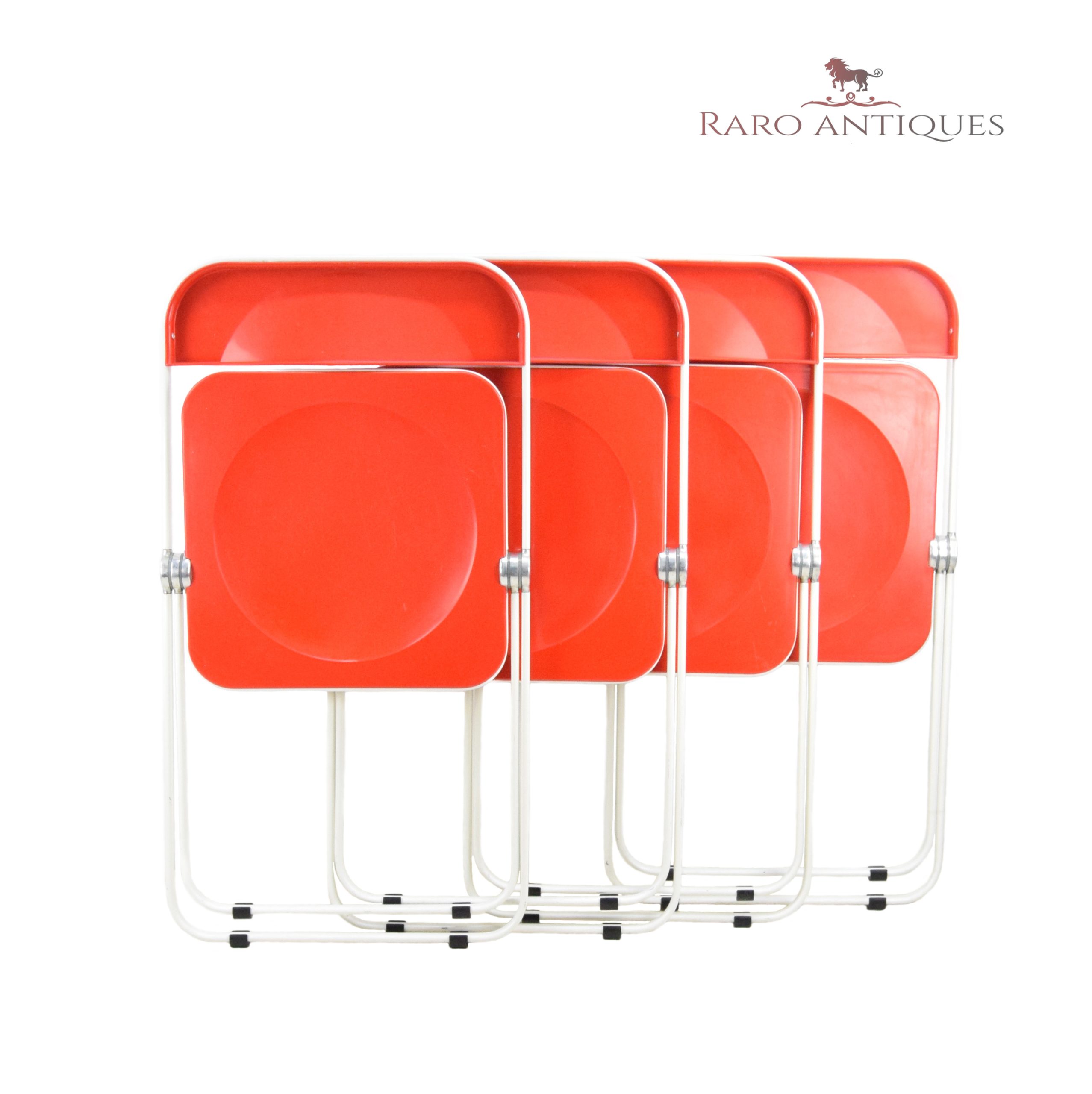
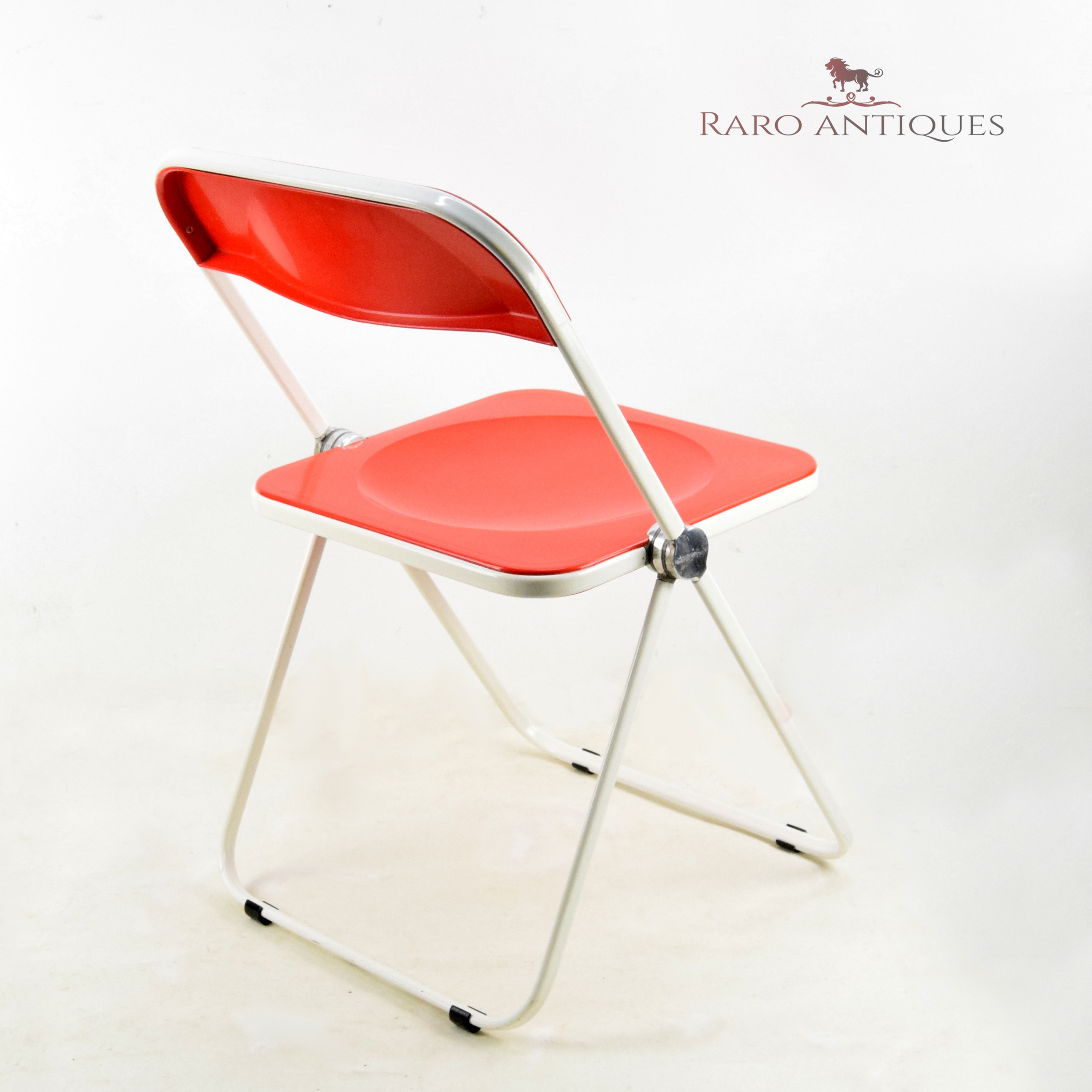
The iconic folding Plia chair was first introduced at the Milan Furniture Fair in 1967 and immediately garnered immense public enthusiasm. Its revolutionary folding mechanism offered a completely new concept for folding chairs. The main advantages of this exceptional chair are its lightweight construction, adaptability, and the ability to be used both indoors and outdoors. The folding mechanism was entirely novel and highly innovative for its time. The chair relies on one of its metal discs to connect the backrest, seat, and legs, allowing it to be folded into a compact, flat shape just five centimeters thick. Speaking about this innovative concept, designer Piretti referred to it as the “Thonet of the 20th century.” He explained, “If you look at a typical folding chair from the side profile, you’ll see it has three joints. I found a way to condense that triangular mechanism into a single joint that looked so elegant and beautiful that I wanted it to be fully visible.” Additionally, the chairs can be stacked on top of each other or hung on a specially designed wall hook when folded. The Plia chair was not only revolutionary in its folding mechanism but also in its use of plastic, a material that was still finding its place in the furniture industry at the time. Combining a metal frame with a plastic seat and backrest, the Plia chair became a symbol of 1970s design. It is also partially connected to our region, as it received the BIO5 award at the Ljubljana Biennial in 1971 and another award in Germany in 1973. Its iconic status is further evidenced by its inclusion in exhibitions at museums of modern art, such as the legendary Museum of Modern Art (MoMA) in New York.
The Plia chair is an ideal seat for any household. With its modern appearance and materials, it complements contemporary interiors perfectly, including apartments, terraces, cafes, and offices. Being foldable and incredibly compact in its folded form, it is ideal as an auxiliary chair for any home, as it can be easily stored until its next use. However, we are confident that this cult chair will find its place as an everyday chair, as its vibrancy and unmistakable design will bring a special charm to any space.
Dimensions: 75 x 50 x 47 cm
Weight: 5.5 kg
The chairs are excellently preserved. Price is for one chair.





Reviews
There are no reviews yet.