- View cart You cannot add that amount to the cart — we have 1 in stock and you already have 1 in your cart.
The spaces in which we spend the most time reflect our style, our taste, and in a way, our personality. We can make a space our own with small details that reflect our desires and interests. This is most easily achieved with decorative objects. We are confident that you will find the piece here that represents you, inspires you, and transforms the space into your home.
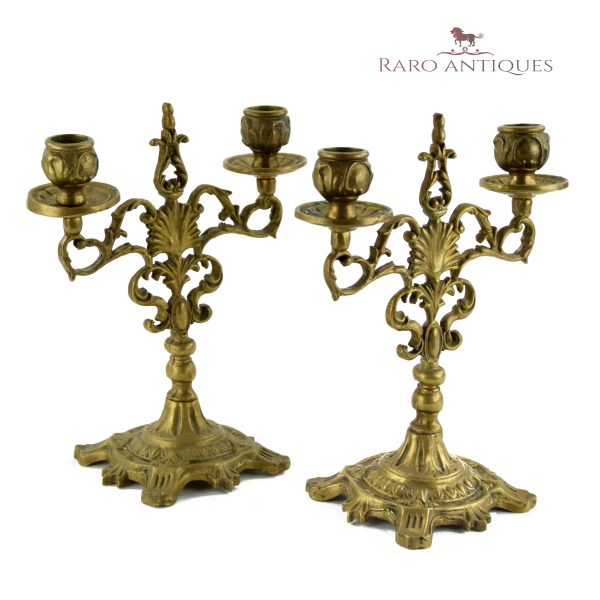
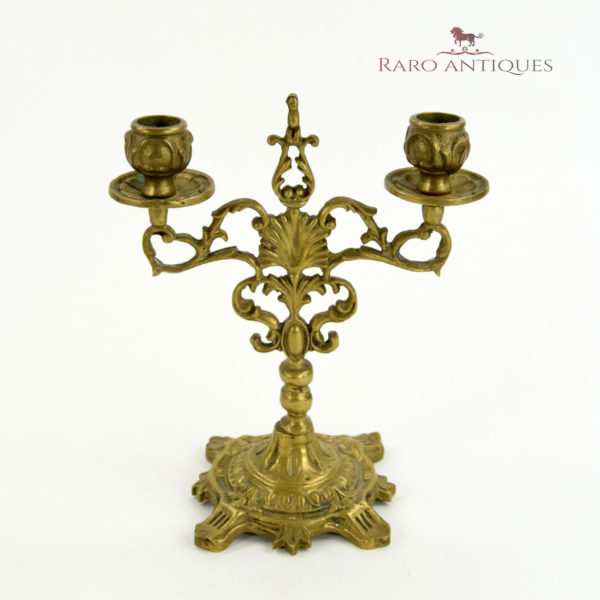
ANTIQUE CANDLESTICK
Candlestick from the first half of the 20th century.
Two exceptional brass candlesticks. Candlesticks are a welcome ornament in any home. Whether in the dining room to illuminate a festive dinner or in the bedroom to create a romantic atmosphere, candlesticks are undoubtedly one of those items that come in handy for every occasion. Dimensions: 20.5 x 16.5 x 10 cm Weight: 600 g The candlesticks are excellently preserved. Price is for one.

ART NOUVEAU MIRROR
Hand Mirror from the Art Nouveau Period.
A hand mirror, once used by a lady to check her appearance, is now a unique and beautifully crafted piece of art. The mirror is shaped like a pond, with a girl sitting by it, gazing into the water and pinning a flower in her hair. The delicate details on the mirror, such as grass blades, water lilies, and a frog, are surprising. Due to the strong patina of the mirror, it becomes an even more special piece, creating the illusion of real water and mud in the pond. Such mirrors are a rarity today and are highly sought after by collectors. Nowadays, this mirror will certainly no longer serve its original purpose but will be an excellent decorative piece that will inspire us with its playfulness and bring a smile to our faces. Dimensions: 16 x 13 x 7 cm Weight: 400 g The mirror is in excellent condition, bearing the marks of time, which only adds to its charm and enchantment.

ANTIQUE INKWELL
An inkwell from the 20th century.
This luxurious inkwell reflects the style of the Art Nouveau period, adorned with exquisite leaf patterns and details. It features undamaged crystal vials for ink. Remember the days when everything was written with a quill, and desks were often splattered with ink? Now you can adorn your own desk with this beautiful inkwell. Even if you don't use it for writing, it will surely ignite your imagination and transport you to another time. Perhaps you're into calligraphy or simply appreciate the old-fashioned way of writing. In that case, this inkwell will undoubtedly come in handy, serving as both a delightful ornament for your desk and a useful tool for writing. Dimensions: 35 x 31 x 11 cm Weight: 2.7 kg The inkwell is in excellent condition.

SERVING TROLLEY BREMSHEY
Bremshey Dinett serving trolley from the 1950s, manufactured in Solingen, Germany.
The Bremshey Dinett serving trolley is a mid-century furniture icon, and now you have an excellent opportunity to make it part of your home. Made of chrome-plated metal and special palisander veneer panels, which were impregnated with synthetic resin and then compressed, creating a robust and nearly indestructible surface known as gerlinol. Bremshey serving trolleys were known for their exceptional quality and utility. As this was an incredibly innovative and unique trolley, its makers weren't afraid that someone would steal their idea. Therefore, earlier models don't bear the company's mark. When you bought it, you only received the company seal. The bottom had a label highlighting the trolley's advantages, promising the following useful features: "Resistant to water, fruit juices, alcoholic beverages, and kitchen acids; heat-resistant and nearly unbreakable. Maintains a shiny appearance even after years of use. Simply rinse with cold or warm water." Due to the age of this trolley, all these qualities can be confirmed. Despite its age, the trolley looks like new, with only a few signs of use on the chrome parts, adding to its charm. The versatility of this trolley makes it exceptionally useful. When not in use, it can be completely folded for easy storage. Partially folded, it becomes an interesting wheeled shelf. As depicted in advertisements from the 1950s and 1960s, it is a necessary addition to parties, offering a stylish way to serve food and drinks. It can be placed in a corner for cocktails or used in everyday life as an interesting side table or a unique plant stand. Dimensions: Open: 79 x 66 x 41 cm / Folded: 79 x 66 x 6.5 cm Weight: 6.7 kg The serving trolley is in excellent condition, with only some signs of use on the chrome parts.

ANTIQUE BUST SCULPTURE
Antique bust sculpture from the 18th century, crafted by the sculptor Bernardi.
The bust sculpture, made of terracotta, depicts an older woman. The sculpture will be an excellent addition to any space, as it enriches the environment with such details and adds a story to it. Due to the precise craftsmanship, which reflects the mastery of the sculptor who created it, this is also an artistic piece that you will proudly display in a prominent place. Dimensions: 34 x 20 x 19 cm Weight: 4 kg The bust sculpture is well-preserved. It is double-signed, both on the sculpture itself and on the base.

ART DECO ENAMELED HANGER
Enameled hanger, circa 1930.
An enameled hanger from the Art Deco era, designed for hanging kitchen utensils. However, you can let your imagination run wild and use it, for example, in the bathroom as a holder for soap and towels. A functional and decorative wall accessory. Dimensions: 48.5 x 31.5 x 12 cm Weight: 2 kg The enameled hanger is in good condition.

VINTAGE MIRROR
Mirror from the first half of the 20th century.
A mirror with an intriguing brass frame. A wonderful addition to your hallway, entrance, or bathroom. A mirror is not just a beautiful ornament for the wall but also a key element in the home. Think about it – we have them in hallways, at entrance doors, in bedrooms, and, of course, in bathrooms as a tool for personal grooming. However, mirrors can also be a beautiful source of light, so we can hang them in rooms where we don't necessarily need them, thus visually enhancing the space and adding some light. With antique mirrors, which often bear a beautiful patina, we bring uniqueness into our homes, inspiring us for years to come. Dimensions: 84 x 41.5 x 3 cm Weight: 4.2 kg The mirror is in excellent condition.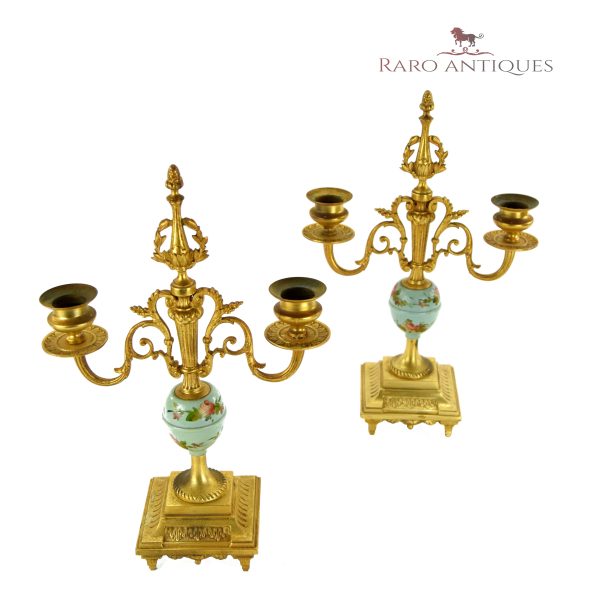
ANTIQUE CANDLESTICK
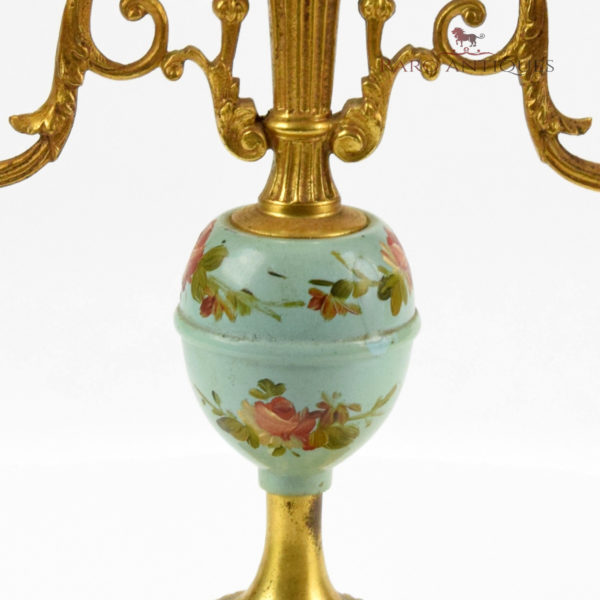
Antique candlestick from the 19th century.
A pair of exquisite candlesticks. The central part is hand-painted. Candlesticks are a welcome decoration in any home. They can be placed in the dining room to illuminate a festive dinner, or in the bedroom to create a romantic atmosphere. Regardless of how they are used, a candlestick is certainly one of those items that comes in handy on every occasion. Dimensions: 30 x 20 cm Weight: 690 g The candlesticks are in excellent condition. Price is for one.
ANTIQUE WALL BASKET
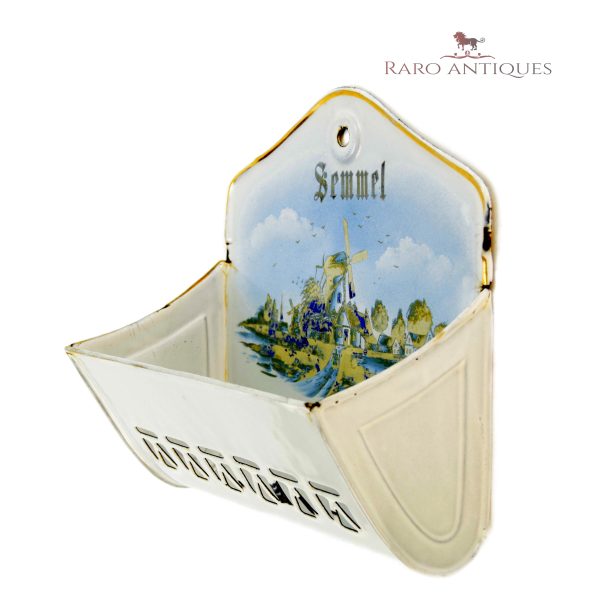
Wall basket, early 20th century, Germany.
An enameled wall basket featuring the German inscription "Semmel," meaning "roll," hinting that it was used for storing bread rolls. In addition to the inscription, the basket displays a charming depiction of Dutch windmills. Such enameled baskets were also commonly used for storing vegetables, like onions and garlic. Today, it can serve as a perfect vintage addition to your kitchen or bathroom. Whether used for its original purpose or creatively repurposed, this piece is both practical and decorative. Dimensions: 23.5 x 23.5 x 12 cm Weight: 0.8 kg The wall basket is in excellent condition.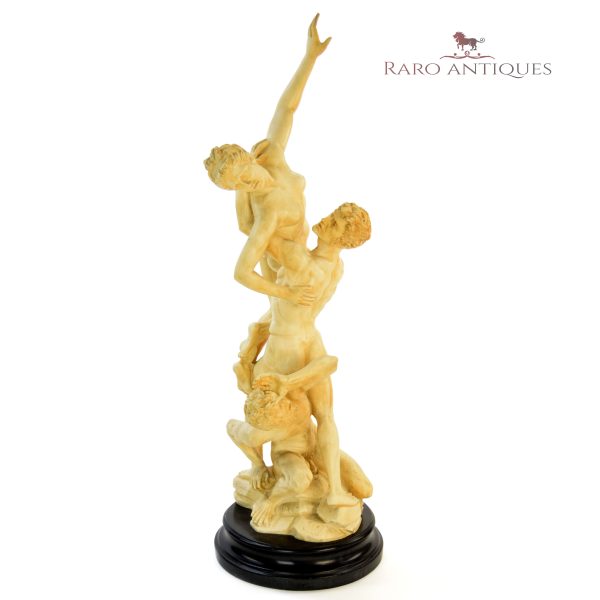
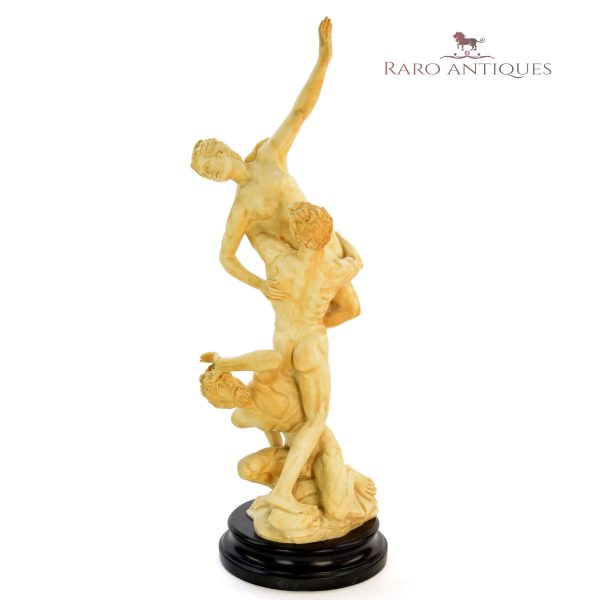
THE RAPE OF THE SABINE WOMAN, AMILCARE SANTINI, ITALY, CCA. 1960s
The Rape of the Sabine Women sculpture by Amilcare Santini, made in Italy, circa 1960
This beautiful reproduction of The Rape of the Sabine Women was created by Amilcare Santini (1910–1975) after the masterpiece by the renowned Renaissance sculptor Giambologna, originally executed between 1579 and 1583. It is considered one of the most important Mannerist sculptures, celebrated for its remarkable spiral composition, dynamic movement, and extraordinary technical mastery. The original was carved from a single block of marble and is displayed in the Loggia dei Lanzi in Florence.
The present sculpture was produced using a technique that Santini himself helped to develop. It was created by combining marble powder, alabaster, and resin into a specially formulated composite material, which was then poured into molds prepared by the artist. Once the material had hardened at room temperature, the sculpture was removed from the mold and carefully finished by hand. Santini was particularly renowned for producing faithful reproductions of masterpieces from Greek, Roman, and Renaissance art. His sculptures are regarded among the finest museum-quality reproductions ever made, admired for their exceptional craftsmanship and remarkable fidelity to the original works.
This sculpture offers a wonderful opportunity to bring both the beauty of classical art and the artistry of Amilcare Santini into your home.
Dimensions: 69 × 24 × 22 cm
Weight: 8.4 kg
The sculpture is in excellent vintage condition.
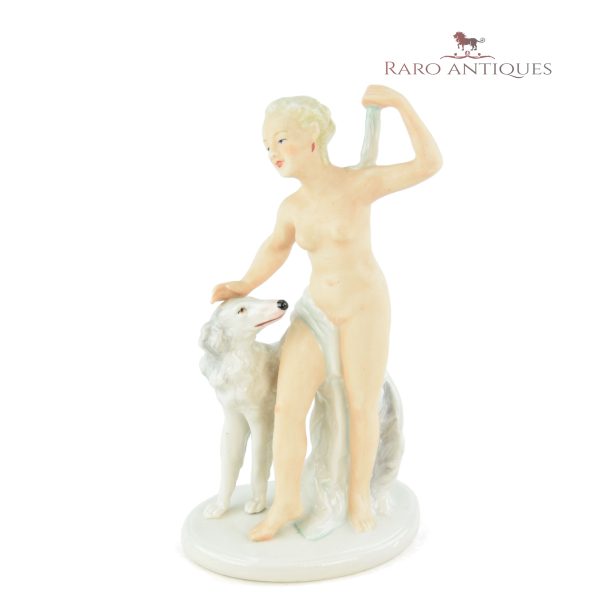

ANTIQUE PORCELAIN FIGURINE
Antique porcelain figurine from the early 20th century, manufactured by the German company Grafenthal.
An intriguing, decorative porcelain figurine depicting a bather and a dog. A beautiful piece, expertly crafted and hand-painted. Dimensions: 20 x 11 x 8.5 cm Weight: 0.4 kg The porcelain figurine is in excellent condition.

VINTAGE NEON SIGN
Vintage neon sign "Apollo11", from the early 1970s.
A rare neon sign with original working neon tubes. Want something extraordinary in your home? Something out of this world? Then this is the perfect decorative piece for you. It will stand out in any home or establishment, captivating everyone with its size and neon lights in three colors. Due to its association with the first manned Moon landing, it's not just a collector's item but also a reminder of a historic event that will remain in the collective memory of humanity and an unforgettable moment in global culture. Apollo 11 was the first manned space mission to land on the Moon. In 1969, when the landing occurred, millions of people were glued to their television screens, as the Moon landing had been a subject of fascination for years. People were anxious, not knowing what might befall the first astronauts. Would they encounter extraterrestrials? Would harmful radioactive rays kill them? There were more questions than answers, but people were still more curious and excited than frightened, thrilled that humanity could land on the moon and even travel through space. The successful landing and subsequent return to Earth thrilled humanity and inspired the imagination for years to come. It was and will forever be a story of what is possible with science, technology, and the will to achieve the impossible. Therefore, it's not surprising that during that time, people almost worshipped the Apollo 11 mission and produced items with a space theme. The first neon lights appeared as early as 1890, but they were used exclusively for industrial purposes, such as by miners in France who had neon lamps. Neon lights as we know them today appeared around 1910 when they were invented by French innovator Georges Claude. The first neon sign was created in 1915 for a Parisian hair salon. In 1923, the motor company Packard Motors purchased two neon signs for advertising in Los Angeles, bringing neon signs to America for the first time, where their popularity soared. Claude held a patent on neon lights, giving him a monopoly on them in the 1920s. Only after the patent expired and the secret of making these bright lights was revealed did others have the opportunity to start manufacturing them. That's when their popularity skyrocketed. In the 1930s, neon lights could be found in the Moulin Rouge in Paris, on the Las Vegas Strip, and in New York's Times Square. Over the next few decades, neon provided vibrant light, transforming ordinary buildings into continuous advertising displays for all types of businesses. Neon lights were even used for political purposes. In communist countries, buildings were decorated with them to give city residents the glamorous feel of Western metropolises. However, making neon lights was quite time-consuming and complex, as they had to be hand-blown and shaped, and then filled with gas. They also began to lose their futuristic charm in the 1960s, leading to a decline in their popularity, as they were replaced by more modern and cheaper lighting products. Today, they are a popular home decoration, rarely used for advertising purposes like in their early days. Dimensions: 156 x 34.5 x 9 cm Weight: 16 kg The neon sign is in excellent condition. The neon tubes are original and working.

ANTIQUE PHOTO FRAME
Photo frame, made in Argentor company, circa 1910.
An exceptional silver-plated frame with golden floral details and a medallion depicting a lady. This frame is perfect for showcasing a photograph of great personal significance. Founded in 1863, Argentor was renowned for its silver and gold plating of metal items using a galvanic process. The company operated factories in Berlin, Vienna, and Paris. Argentor was one of the key manufacturers of metalwork during the Viennese Secession period and was a significant supplier to the Austro-Hungarian imperial court. Dimensions: 25 x 15 x 2 cm Weight: 0.8 kg The frame is in good condition.

TRAMP ART FRAME
A Tramp art frame, crafted between 1900 and 1910.
This exceptional wooden frame accommodates 6 smaller pictures. You can frame your family, ancestors, or leave original photographs inside. Alternatively, let your imagination run wild and use it for other pictures or small mirrors. The photographs already inside depict a Slovenian family from the early 20th century, signed on the back, accompanied by a letter, adding an extra charm that transports us to the past. Tramp art, also known as "whittled art," was popular from the 1870s to the 1940s. Its origins are somewhat unclear, but it is believed to have evolved from the folk art tradition of carving. Cigar boxes and pieces of wood from dismantled crates were carved and assembled into picture frames, decorated boxes, and even pieces of furniture. The style is thought to have originated in Germany and Scandinavia but can be found in many industrialized countries. While there is some truth to the myth that tramp art was created by hobos who traded their creations for food and lodging, many of its craftsmen were skilled artisans who dedicated much time to their creative endeavors. Most tramp art pieces are unsigned and undated, adding to the mystique that surrounds them. You can read more about Tramp art in our blog post: https://raroantiques.com/tramp-art-potepuska-umetnost Dimensions: 67.5 x 42.5 x 5 cm Weight: 2 kg The frame is excellently preserved.

ANTIQUE VISITING CARD TRAY
Antique visiting card tray from the Art Nouveau period.
The tray is intended for visiting cards, which were used in the 19th century as a kind of antique social network. You can read more about it here: [Link to: https://raroantiques.com/socialno-omrezje-viktorijanske-dobe] Featuring an image of a lady writing her message with a quill, this tray will be a beautiful decorative piece that you can place on your desk in the office and use it for business cards, or you can place it in the hallway, where it used to belong. Dimensions: 24.5 x 15.5 x 2.5 cm Weight: 0.6 kg The visiting card tray is well-preserved.
CANDLESTICK
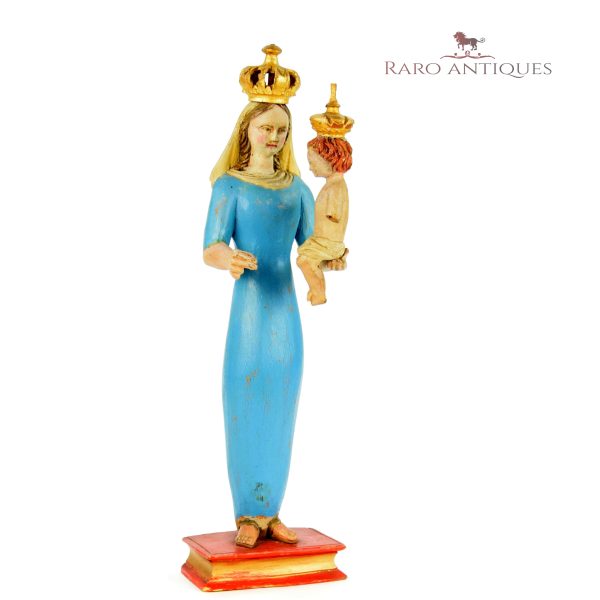
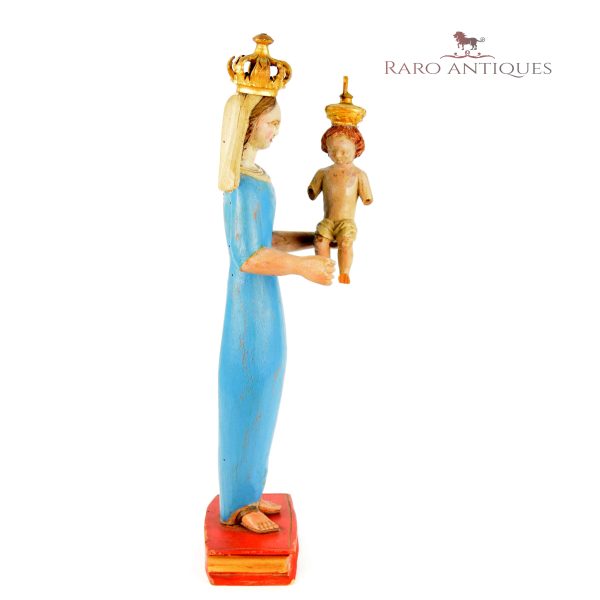
ANTIQUE STATUE OF VIRGIN MARY WITH BABY JESUS
Statue of the Virgin Mary with baby Jesus, from the late 19th century.
This beautiful depiction of the Virgin Mary with baby Jesus is made of wood, gilded, and painted. The crown worn by the Virgin Mary signifies that she was crowned by God and is the queen of all humanity. The Christ Child is also crowned with an imperial crown, symbolizing his authority. Such figures are a staple of the Christian faith, providing a central point for worship and contemplation, both in public religious institutions and in the home. The statue is missing some parts, most notably the legs and arms of Jesus. Dimensions: 42 x 14 x 12 cm Weight: 0.4 kg The statue is well-preserved.

ART NOUVEAU CENTERPIECE
Art Nouveau centerpiece.
This exceptional piece will be a great addition to your table. Perfect for creating arrangements with flowers and fruits, but the possibilities are endless with your imagination. Certainly, it will always attract attention. Dimensions: 44 cm Weight: 2.30 kg Crystal dish and vase are in excellent condition.
CANDLESTICK
Candlestick made in Italy in the 1970s.
Candlesticks are a welcome decoration in any home. They can be used in the dining room to illuminate festive dinners or in the bedroom to create a romantic atmosphere. Regardless of how they are used, candlesticks are certainly one of those items that come in handy on every occasion. Dimensions: 11 x 7 cm Weight: 213 g The candlestick is in excellent condition.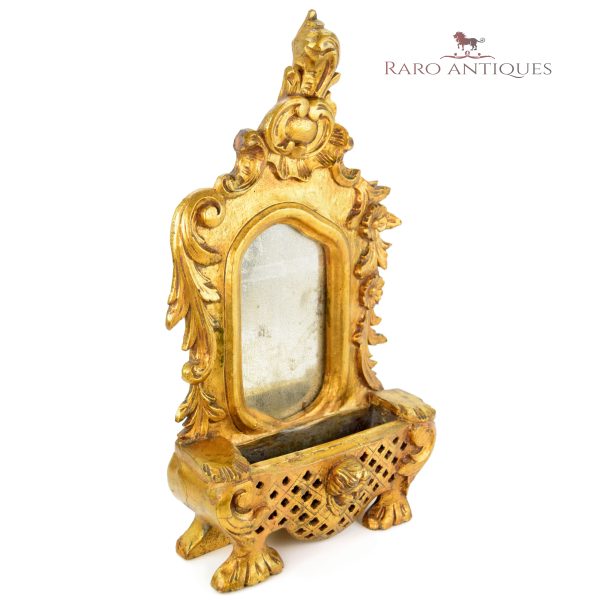
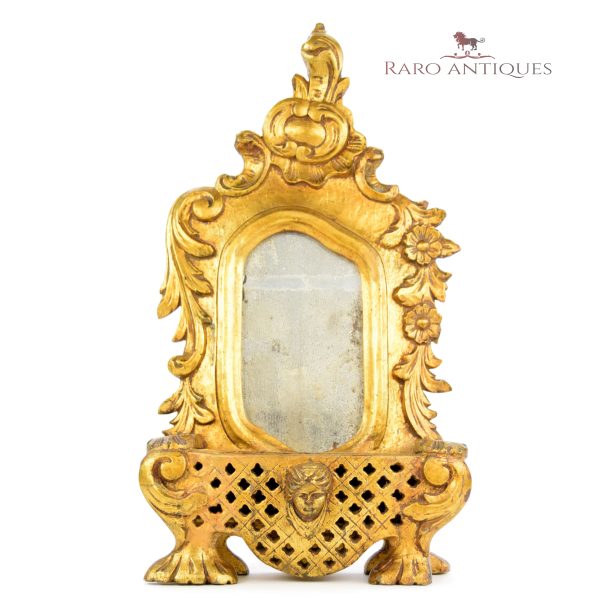
ANTIQUE TABLE MIRROR
Table mirror, made in early 19th century.
A beautiful gilded and carved wooden tabletop mirror crafted in the Rococo style.
Its standout feature is a decorative front drawer, lined with metal on the inside – a remarkable technical detail that reflects the craftsmanship and refined attention to form and function. The mirror and its ornate frame are adorned with a delicate patina of time, which only enhances the overall charm of the piece.
A rare and striking object, ideal for collectors, lovers of decorative arts, or as a unique interior accent with historical flair.
Dimensions: 55 x 30,5 x 13 cm
Weight: 2 kg
The mirror is in good, well-preserved condition.


ANTIQUE FOUNTAIN
Antique fountain.
Handcrafted, welded, and painted sculpture that was once part of a fountain. This unusual creature will be a great addition to your garden and outdoor decoration, as it is now mounted on a stand made of anchor, allowing you to place it wherever you desire. It still has all the inlets, so you can reintegrate it into a fountain design. Certainly one of the more unusual garden sculptures that will transform your garden into a fairyland. Dimensions: 98 x 90 x 48 cm Weight: 14 kg The sculpture is in excellent condition.

ANTIQUE FRAME
Frame from the Art Nouveau period.
Double wall wooden frame with beautiful inlay. It can be used for paintings or photographs. Dimensions: 48 x 32.5 cm Weight: 1220 g The frame is in excellent condition.

L. VIDAL ABUNDANTIA
Statue of the Goddess Abundantia, created by French sculptor Louis Vidal, second half of the 19th century.
A beautiful bronze sculpture depicting Abundantia, the Roman goddess of abundance, prosperity, and wealth. She holds a basket filled with grapes and fish, symbolizing the cornucopia – the horn of plenty – while she is accompanied by two cherubs and a swan, representing the richness of earth and water, fertility, nourishment, happiness, and protection of the home.
Such figures were often placed near entrance doors to invite abundance into the household and were also commonly positioned near safes or cash registers, as Abundantia was believed to protect wealth and bring prosperity.
The sculptor himself is equally fascinating: Louis Vidal (1831–1892), also known as dit Vidal le Borgne ("Vidal the Blind"), was a visually impaired French sculptor who trained himself to sculpt through touch alone. Despite his physical limitation, he created works of remarkable anatomical precision and expressive detail, becoming a respected and admired artist of the 19th century. He is best known for his realist and neoclassical style, as well as his animal sculptures (notably bulls and horses) and collaborations with greats such as Auguste Rodin.
This statue is therefore an exceptional collector's piece, rich in symbolism and offering the rare chance to own a work by one of the most intriguing French artists of the 19th century.
Dimensions: 34 × 21 × 18 cm
Weight: 5,8 kg
Excellent condition, signed by the artist