


BRONZE FAUN AFTER THE POMPEII ORIGINAL, 19TH CENTURY
Bronze figure of a faun, made in the 19th century.
This fine bronze figure of a faun is a high-quality historical replica of the famous antique bronze Faun from Pompeii, discovered in the House of the Faun (Casa del Fauno), after which the house itself was named. The sculpture closely follows the ancient original; however, the genitalia, which are exposed on the original, are here discreetly covered with a leaf, a feature characteristic of the moral and aesthetic norms of the 19th century.
The replica presented here was almost certainly produced in the 19th century primarily as a souvenir for affluent travelers undertaking the so-called “Grand Tour” — the traditional educational journey across Europe, in which Italy, owing to its rich history and culture, was a key destination.
In ancient symbolism, the faun represents nature in its untamed state, fertility, eroticism, freedom, as well as dance and joy. This gives the sculpture additional depth, making it not only a decorative and collectible object but also a symbolic piece that brings classical charm and meaning into an interior.
Dimensions: 37 × 14,5 × 13 cm
Weight: 1,8 kg
The bronze sculpture of the faun is in good condition.


ROCOCO MIRROR
Mirror, second half of the 18th century.
An exceptional wooden and gilded frame, in the typical style of the Rococo period. The frame features intricate carvings, indicating it was crafted by a highly skilled master. The gilding has worn and patinated over the years. The mirror itself was replaced in later years. Dimensions: 57 x 35 x 7 cm Weight: 1.7 kg The mirror is in good condition.

ANTIQUE COLONIAL FIGURINE
Portuguese colonial figurine, late 1600s.
An interesting and beautifully patinated wooden figurine, whose depiction remains unidentified. The base was added in later years to provide stability to the figurine. Dimensions: 13.5 x 8 x 5 cm Weight: 0.1 kg The figurine is well preserved.

ANTIQUE SAINT BARBARA STATUE
Saint Barbara Statue from the 19th century.
An exceptionally well-carved statue of Saint Barbara. Saint Barbara is the patron saint of all those whose work is threatened by sudden death. In our region, she is best known as the patron saint of miners. However, she is also the patron saint of farmers, architects, construction workers, roofers, masons, foundry workers, blacksmiths, stonemasons, artillerymen, carpenters, gravediggers, bell-ringers, cooks, butchers, prisoners, firefighters, the dying, as well as protection against storms and fire. She is also the patron saint of tunnels, so there is a custom to create a small altar with Saint Barbara before the construction of a tunnel, as an invocation for the safety of all involved in the construction. Dimensions: 40 x 15 x 9 cm Weight: 1.15 kg The statue is well-preserved, featuring a hook on the back for wall mounting if desired.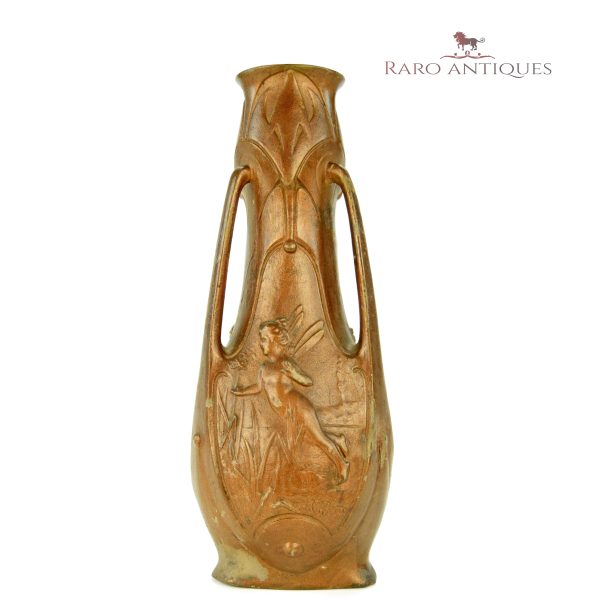
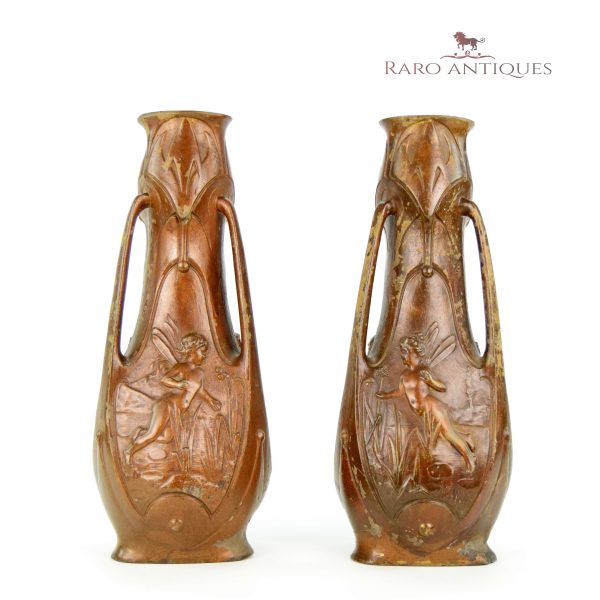
JEAN GARNIER VASE
Vase by French designer Jean Garnier, late 19th century.
An extraordinary metal vase crafted in the Art Nouveau period, as evidenced by its design, which perfectly embodies the style of the era. The vase features enchanting depictions of fairies and water nymphs, making it exceptionally magical and captivating. Over the years, its patina has enhanced its mystique. The vase is divided into three panels, each showcasing a unique mythical creature. Additionally, the piece is signed, highlighting its authenticity. This vase is an exquisite decorative piece that brings the essence of this remarkable design period into your home. Jean Garnier, a 19th-century French sculptor, was renowned for his bronze figures and decorative vessels. His works often depicted allegorical and historical themes, such as Pierrot the clown, Joan of Arc, and Salammbô, as well as everyday characters like musicians, dancers, and peasants. Garnier also created vases and pitchers with sculptural elements, blending figural forms seamlessly into the vessels' surfaces—much like the present vase, where figures seem to emerge from its structure. Born in 1853 in Mouzeuil, France, Garnier exhibited at the Salon of French Artists and earned an honorable mention in 1892. He passed away in 1910 in Paris. Dimensions: 30.5 x 15 cm Weight: 0.4 kg The vases are in excellent condition. Price is per piece.

STATUE OF IMMACULATE VIRGIN MARY “CAP I POTA”
Statue of the Immaculate Virgin Mary, made in Spain in the 19th century.
This beautiful statue of the Immaculate Virgin Mary is an exceptional work crafted by Catalan artists in the 19th century. The statue is wooden and polychromed. Such statues of saints were primarily made for processions, and since naturalism has been highly desirable for religious images since the Baroque period, they were made for the purpose of dressing, as clothing adds a level of realism that is difficult to achieve solely through carving. The Catalan term for this type of statue is "Cap i Pota," which means "head and feet," as in such statues, the head, feet, and hands are intricately crafted, while the torso is not as much, as it was covered by clothing. This particular statue of the Immaculate Virgin Mary was likely intended for home worship, as indicated by its size. The symbolism of the statue represents the Virgin Mary standing on a shining sphere – the moon, which symbolizes heavenly glory, while her foot rests on the head of a serpent, symbolizing sin over which Mary prevails. Dimensions: 44 x 16 x 13 cm Weight: 1.5 kg The statue of the Immaculate Virgin Mary is well-preserved.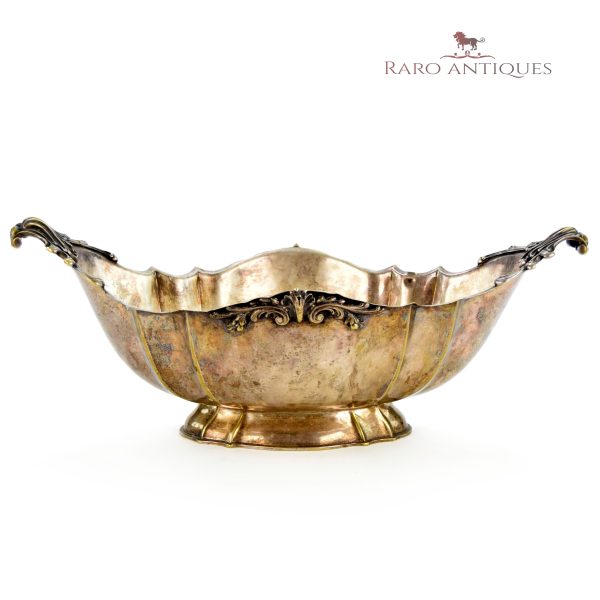
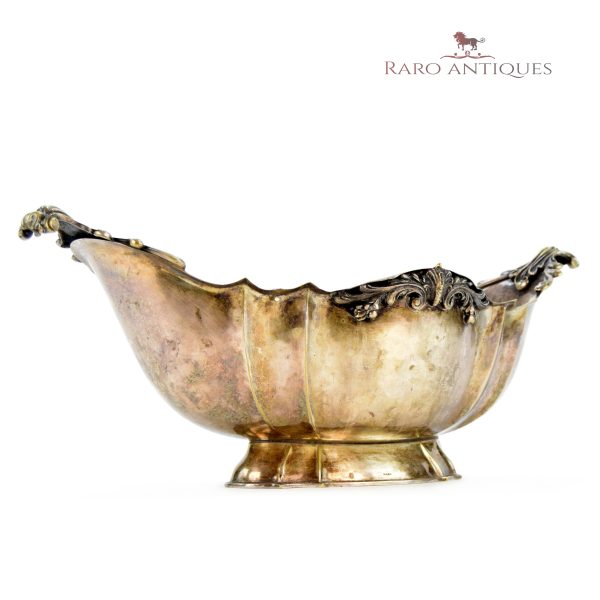
MID CENTURY FRUIT BOWL
Fruit bowl from the mid-20th century.
A large and luxurious fruit bowl, originally silver-plated, now adorned with a beautiful patina developed over time. This exceptional and functional piece will make a stunning addition to your table or countertop. Its striking presence ensures it will be the centerpiece of your gatherings, while adding a vintage charm to any space where it is displayed. Dimensions: 50 x 22 x 19 cm Weight: 1.2 kg The fruit bowl is in excellent condition.

FORGED CANDLESTICK
Forged candlestick.
An interesting hand-forged freestanding candlestick. It will add charm to your terrace, balcony, garden, or any of your indoor spaces. Certainly, a candlestick that will catch everyone's eye. Dimensions: 77 x 29 cm Weight: 5.4 kg The candlestick is in excellent condition.

ANTIQUE VIRGIN MARY AND JEZUS STATUE
Wooden statue of Virgin Mary with Jesus, 19th century.
This 19th-century wooden statue is an excellent example of folk art. The carving is simple yet demonstrates the care and attention to detail of the artist. The statue is polychromed in colors traditionally associated with the Virgin Mary: white and blue.
Such a statue would once have adorned a home altar or a village chapel, and now it can beautifully grace your own space dedicated to contemplation.
Dimensions: 33 x 14,5 x 7 cm
Weight: 0,4 kg
The statue is in good condition.


CARVED WOODEN STATUE OF JESUS, CCA.1900
Carved wooden statue of Jesus, made around 1900.
Carved from a single piece of wood, this sculpture depicts Jesus Christ after being taken down from the Cross. Such figures were intended for placement in the Holy Sepulchre during the Easter season, for Good Friday processions, or as part of larger Passion displays. The statue is finely carved, reflecting the hand of an experienced craftsman. The original polychromy, with a visible patina of age, further emphasizes the authenticity and historical character of the piece.
The figure is suitable for placement in a chapel or on a domestic altar and represents a fine example of sacral art from the turn of the 19th to the 20th century. It will surely attract the interest of collectors and admirers of religious heritage.
Dimensions: 51 × 18,5 × 15,5 cm
Weight: 3,8 kg
The statue is in good condition.


ANTIQUE ELEPHANT SCULPTURE
Antique elephant, a large wooden sculpture from the first half of the 20th century.
This elephant sculpture will be an exceptional addition to any home due to its size and beautiful details. Also, because of the symbolism associated with elephants, there should be at least one representation of an elephant in every home. Elephants have always been regarded as bearers of wisdom, happiness, and positive energy. In Hinduism, elephants symbolize integrity and strength. According to Vastu Shastra (traditional Indian architectural system), placing an elephant sculpture near the entrance door can help protect your home from negative energies and invite luck inside. You can place it in the marital bedroom, as the elephant symbol is believed to strengthen relationships, enhance fertility, and prevent infidelity. To aid a child in their studies, place the elephant sculpture on their study desk, as it is said to enhance knowledge and improve concentration. For business success, position the elephant sculpture near the main entrance, as its presence will energize your business. Although elephants with raised trunks are believed to bring luck, the symbolism of an elephant with a lowered trunk is also considered auspicious. A lowered trunk is said to represent longevity and the ability to overcome challenges. The black color of the elephant represents prosperity and success. Therefore, this beautiful elephant sculpture, handcrafted from exotic hardwood, can be the perfect gift for yourself and your home. Dimensions: 47 x 35.5 x 22 cm Weight: 11 kg The elephant is excellently preserved.
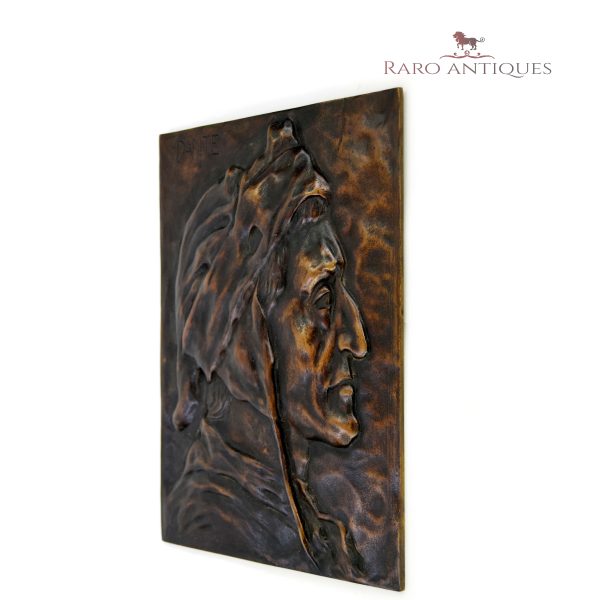
BRONZE RELIEF DANTE ALIGHIERI
Bronze relief depicting Dante Alighieri, made in the first half of the 20th century.
A large wall-mounted relief portraying the great Italian poet Dante Alighieri. The relief is exceptionally well crafted, and over the decades the bronze has developed a rich patina that further enhances its character and artistic appeal. It was most likely produced in 1921 to commemorate the 600th anniversary of Dante's death.
Today, this bronze relief makes a wonderful decorative piece for a library, reading nook, or any interior where an artwork with a touch of history and classical culture is desired.
Dimensions: 29 x 22,5 x 2 cm
Weight: 3 kg
The relief is in excellent condition.


TRAMP ART MIRROR
Tramp art mirror.
An exceptional tramp art frame with a mirror. It is crafted from wooden cigarette boxes, which can be seen in the background of the frame, confirming its authenticity. The romantic touch to the frame is the heart at the top. An intriguing addition to your bathroom, hallway, or foyer. Tramp art, also known as "hobo art," was popular from around the 1870s to the 1940s. Nobody knows exactly when it began, but the materials used, especially wooden cigarette boxes, became standard around the 1850s. Smoking cigarettes was very popular at the time, and by law, cigarette manufacturers couldn't reuse the boxes, making them an excellent source of material. Tramp art is believed to have evolved from the folk art tradition of carving. Cigar boxes and pieces of wood from dismantled wooden crates were carved and pieced together, creating picture frames, decorated boxes, and even items of furniture. The style is said to have originated from Germany and Scandinavia but can be found in all industrialized countries. The name comes from the myth that tramp art was created by hobos and that they would typically exchange their creations for food and shelter. Although there is some truth to this myth, many tramp art creators were skilled artisans who devoted much time to their creative endeavors. Most tramp art pieces are not signed or dated, adding to the mystique surrounding them. Dimensions: 64.5 x 45 x 2.5 cm Weight: 2.8 kg The mirror is excellently preserved.
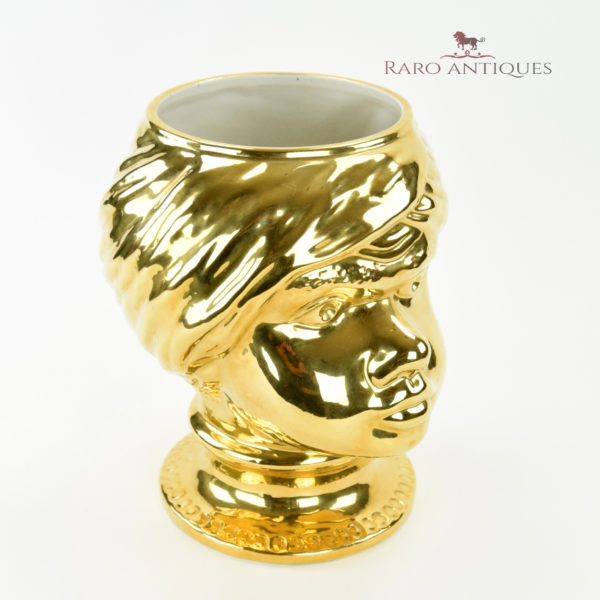
VASE PIERO FORNASETTI
Vase, by Piero Fornasetti, from the 1960s.
A gilded porcelain vase depicting the head of a Moor, by the renowned Italian artist Piero Fornasetti. This beautifully elegant and highly decorative piece will proudly draw attention in your home, adding a touch of sophistication to any space. Truly exceptional, it will serve as the perfect finishing touch to any room. At the base, you'll find the inscription "Galerie Schöninger München," indicating that it was once in their possession. Piero Fornasetti (1913-1988) was a versatile Italian artist whose work transcends categorization within any specific period. He operated according to his own principles, disregarding the norms and designs of his time. Engaging in various aesthetic disciplines including painting, drawing, graphic design, and product design, his creativity peaked in the 1950s. At the behest of Gio Ponti, he opened his studio in Milan, where he designed and created everyday objects enriched with decoration that brought art into the homes of ordinary people. As an artist ahead of his time, Fornasetti's work significantly influenced contemporary culture, reshaping taste and creating a unique and instantly recognizable style. Dimensions: 26 x 25 x 24 cm Weight: 1800 g The vase is in excellent condition.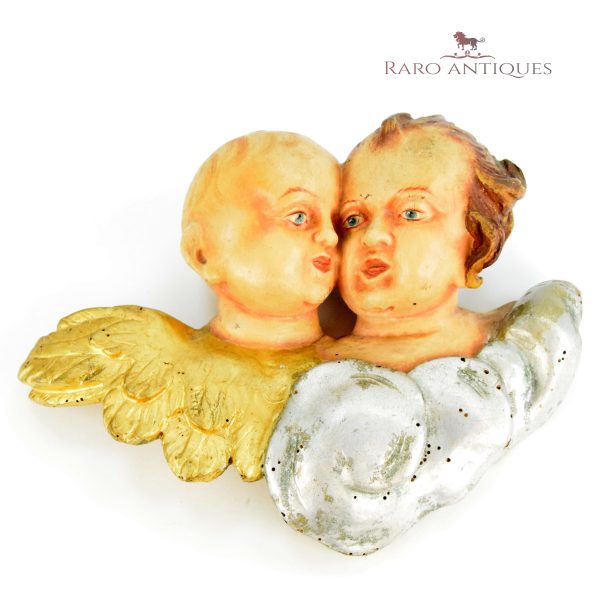

ANTIQUE ANGELS
Angels, crafted in the 18th century.
A pair of intricately carved wooden angels, showcasing masterful attention to detail and exquisite hand-painting. The delicate expressions and fine details on their faces are truly remarkable. The left angel features gilded wings, while the right one is enveloped in silver clouds. These angels make for a stunning decorative piece, imbued with deep symbolism. Dimensions: 30 x 23 x 10 cm Weight: 800 g The angels are well-preserved.

VINTAGE DALMATIAN PORCELAIN SCULPTURE
Vintage Dalmatian Porcelain sculpture. Made in Italy in the 1970s.
A realistic sculpture of a Dalmatian, crafted from porcelain and hand-painted. These intriguing black and white dogs have been popular for centuries, living alongside the ancient Egyptians and serving as companions to carriage drivers and firefighters in the 17th century. In modern times, they are remembered through books and animated films. Surely, this will be a unique addition to any space or an interesting gift for a Dalmatian enthusiast. Dimensions: 51.5 x 33 x 22 cm Weight: 3.7 kg The Dalmatian figurine is excellently preserved.
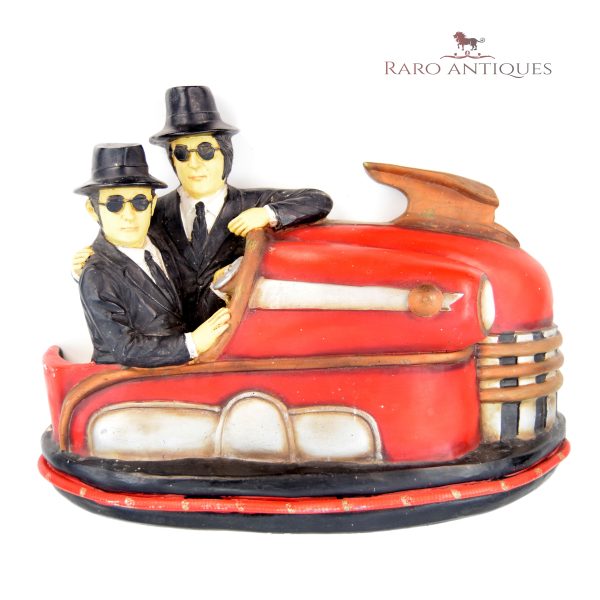
BLUES BROTHERS
Wall decoration – The Blues Brothers.
This iconic and comedic duo, The Blues Brothers – created by John Belushi (as "Joliet" Jake Blues) and Dan Aykroyd (as Elwood Blues) – played a major role in popularizing classic blues artists. They are especially known for the 1980 film named after their act.
This unusual wall decoration, made of epoxy, is ideal for decorating the wall of a blues or film enthusiast. It can also serve as a great decorative piece in a themed bar or restaurant.
Dimensions: 46,5 x 32 x 16 cm
Weight: 2,2 kg
The wall decoration is in good condition.
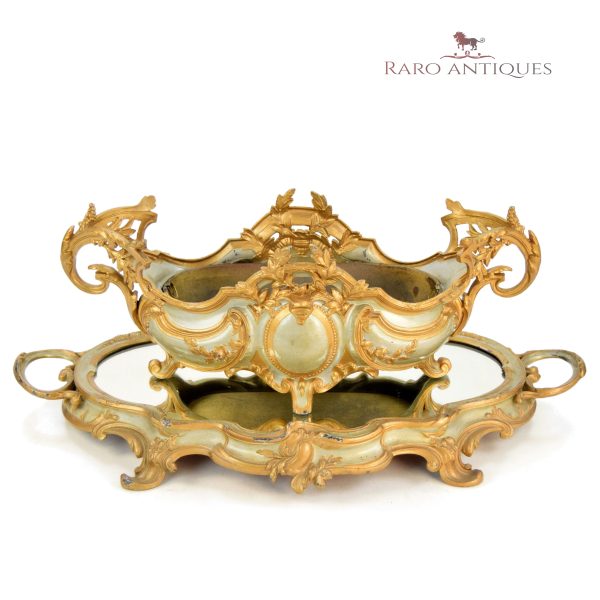

JARDINIERE WITH STAND, CCA. 1900
Jardiniere with stand, made in France, circa 1900.
This jardiniere with its original stand is richly decorated in a lavish Rococo Revival style. The stand features a mirrored surface, which further enhances the dramatic visual effect of the piece. The underside of the stand bears the mark “Déposé”, confirming a registered industrial design and the authenticity of its origin.
A beautiful statement centerpiece for a table or shelf. Due to the rarity of this model, its generous size, and the fact that it comes as a complete set, it is ideal for collectors and all lovers of fine decorative arts.
Dimensions: 52,5 × 29,5 × 21 cm
Weight: 5,5 kg
The jardiniere is in excellent condition. There is a small crack on the stand (shown in the last image), which does not affect the appearance or functionality of the piece.


ANTIQUE ADVERTISING SIGN
Advertising sign from 1939.

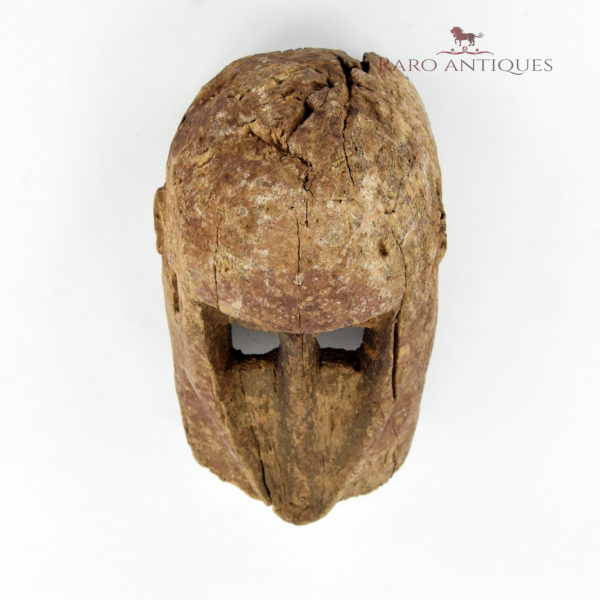
DEGE MASK
Dege Mask.
An African mask depicting the black monkey "Dege," from the Dogon people. The Dogon are an ethnic group in Mali. Masks crafted by this African tribe come in various styles, employing different geometric shapes in their designs, depending on the animal the mask is meant to represent. Most masks feature large eyes and stylized features, often painted or colored with various substances. The Dogon have been using masks since ancient times, particularly during the Dama ceremony, a memorial ritual for the deceased, believed to guide them to the realm of ancestors and restore order in the universe. These ceremonies often require a large attendance, with several hundred accompanying the deceased. Masks also appear in "baga-bundo" rites, performed before the burial of a Dogon male, which typically involve fewer participants. Inspiration for the masks comes from the animals found in their region, with common depictions including antelopes, rabbits, lions, hyenas, cows, birds, and monkeys. The specific mask represents the black monkey Dege. The Dogon typically use three types of monkey masks, distinguished only by color rather than shape. The black monkey is known as Dege, the white monkey as Omono, and the red monkey as Ko. Dimensions: 33.5 x 18.5 x 16 cm Weight: 1 kg The mask is in excellent condition.

GIOVANNI DE MARTINO, STATUE OF A FISHERMAN
Bronze sculpture of a fisherman boy by the Italian sculptor Giovanni de Martino, circa 1910.
An expressive sculpture of a boy holding a fish, a characteristic subject of the sculptor de Martino (1870–1935). He was best known for his depictions of Neapolitan life, most frequently portraying young fishermen, although each sculpture was uniquely composed and modeled.
Now, a work by this prolific artist can become part of your art collection or serve as a distinctive artistic accent in any interior.
Dimensions: 47 × 16 × 13 cm
Weight: 4,8 kg
The sculpture is in excellent condition.
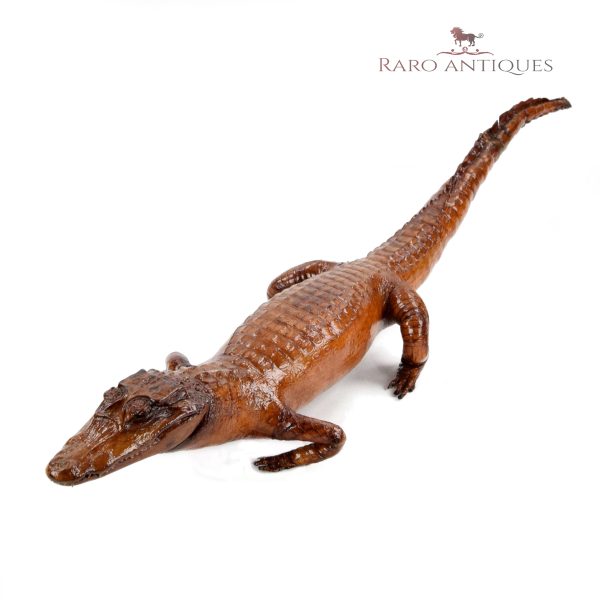
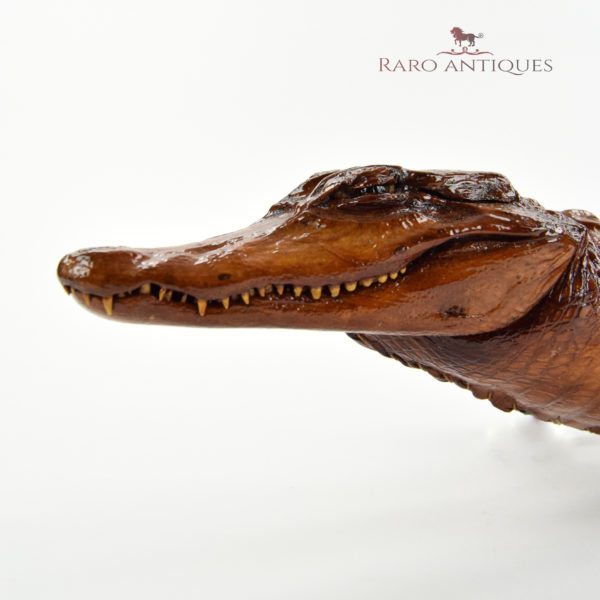
CAIMAN
Caiman from the early 20th century.
A stuffed caiman that traveled to Europe from South America during a time when there was great interest in exotic animals not commonly seen locally, and technology did not provide the opportunity to witness them firsthand. People could see with their own eyes the existence of some unusual creatures. Today, taxidermy has acquired a different, somewhat negative connotation, but it remains an extremely interesting and exotic ornament that often becomes a central topic of many conversations. Dimensions: 90 x 20 cm Weight: 900 g The caiman is excellently preserved.
COURTING CANDLE HOLDER
Courting Candle Holder.
Legend has it that between the 17th and 18th centuries, fathers used this type of candle holder when suitors came to court their daughters. It served as a boundary between the lovers. When the candle burned down to the top of the holder, it was time for the suitor to leave immediately. However, the father could adjust the height of the candle based on his feelings towards the suitor. He could extinguish the candle immediately or add a new one, depending on what he deemed necessary. Thus, the candle served as a silent but clear reminder to the suitor of when the date should end. This practice aimed to teach daughters to respect their parents' judgment and encourage suitors to respond to the father's discretion. An interesting example of a candle holder that not only serves as a decorative piece but also carries a story and a connection to the past. Dimensions: 16 x 12 cm Weight: 132.3 g The candle holder is in excellent condition.

BAROQUE ANGEL
Angel, made in the 18th century.
An exceptional pair of hand-carved angels with original polychromy. The figures are surrounded by characteristic Baroque clouds. Particularly notable is the fact that they form a matched pair, with one designed for the left and the other for the right side, allowing for a balanced and symmetrical wall display. As such, these angels represent a rare and high-quality example of Baroque sculpture, serving as both a decorative and symbolic object.
Dimensions:
left: 22 × 21 × 9 cm
right: 23 × 17 × 10 cm
Weight: 0,5 kg
Angels are well preserved. Price per angel.