The spaces in which we spend the most time reflect our style, our taste, and in a way, our personality. We can make a space our own with small details that reflect our desires and interests. This is most easily achieved with decorative objects. We are confident that you will find the piece here that represents you, inspires you, and transforms the space into your home.


ANTIQUE INKWELL
Inkwell from the Jugendstil period.
Beautiful inkwell with delicate violet decoration. Oh, the times when everything was written with a quill, and desks were stained with ink! Now you can adorn your own desk with this wonderful inkwell. Even if you may not use it, it will surely stimulate your imagination every day and transport you to another time. Perhaps you engage in calligraphy or simply love the old-fashioned way of writing. In that case, it will undoubtedly come in handy and, in addition to being a beautiful decoration on your desk, it will also be an excellent tool for writing. Dimensions: 28 x 16 x 6 cm Weight: 1.2 kg The inkwell is well-preserved, with traces of ink that can be easily cleaned, but these stains add even more charm. Without the original containers.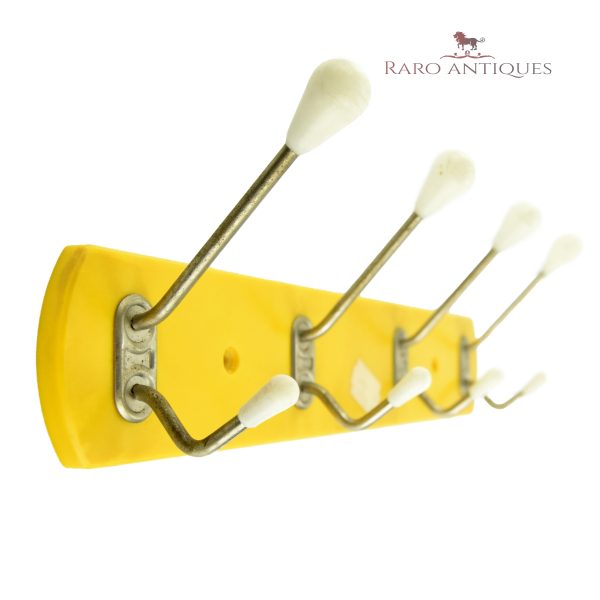
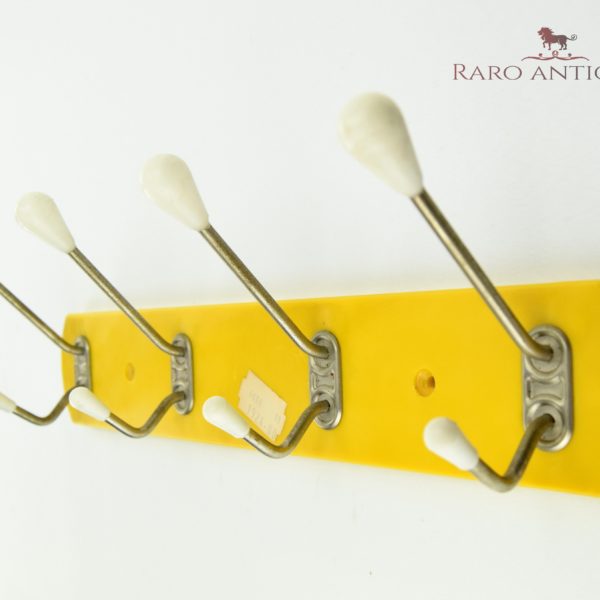
VINTAGE HANGER
Vintage coat hanger from the 80s.
A colorful coat hanger that will add a touch of nostalgia to the hallway or kitchen wall. Definitely a nostalgic piece, and it still retains its original price tag. Dimensions: 36.5 x 11 x 9 cm Weight: 220 g The coat hanger is in excellent condition.

VINTAGE NEON SIGN
Vintage neon sign "Apollo11", from the early 1970s.
A rare neon sign with original working neon tubes. Want something extraordinary in your home? Something out of this world? Then this is the perfect decorative piece for you. It will stand out in any home or establishment, captivating everyone with its size and neon lights in three colors. Due to its association with the first manned Moon landing, it's not just a collector's item but also a reminder of a historic event that will remain in the collective memory of humanity and an unforgettable moment in global culture. Apollo 11 was the first manned space mission to land on the Moon. In 1969, when the landing occurred, millions of people were glued to their television screens, as the Moon landing had been a subject of fascination for years. People were anxious, not knowing what might befall the first astronauts. Would they encounter extraterrestrials? Would harmful radioactive rays kill them? There were more questions than answers, but people were still more curious and excited than frightened, thrilled that humanity could land on the moon and even travel through space. The successful landing and subsequent return to Earth thrilled humanity and inspired the imagination for years to come. It was and will forever be a story of what is possible with science, technology, and the will to achieve the impossible. Therefore, it's not surprising that during that time, people almost worshipped the Apollo 11 mission and produced items with a space theme. The first neon lights appeared as early as 1890, but they were used exclusively for industrial purposes, such as by miners in France who had neon lamps. Neon lights as we know them today appeared around 1910 when they were invented by French innovator Georges Claude. The first neon sign was created in 1915 for a Parisian hair salon. In 1923, the motor company Packard Motors purchased two neon signs for advertising in Los Angeles, bringing neon signs to America for the first time, where their popularity soared. Claude held a patent on neon lights, giving him a monopoly on them in the 1920s. Only after the patent expired and the secret of making these bright lights was revealed did others have the opportunity to start manufacturing them. That's when their popularity skyrocketed. In the 1930s, neon lights could be found in the Moulin Rouge in Paris, on the Las Vegas Strip, and in New York's Times Square. Over the next few decades, neon provided vibrant light, transforming ordinary buildings into continuous advertising displays for all types of businesses. Neon lights were even used for political purposes. In communist countries, buildings were decorated with them to give city residents the glamorous feel of Western metropolises. However, making neon lights was quite time-consuming and complex, as they had to be hand-blown and shaped, and then filled with gas. They also began to lose their futuristic charm in the 1960s, leading to a decline in their popularity, as they were replaced by more modern and cheaper lighting products. Today, they are a popular home decoration, rarely used for advertising purposes like in their early days. Dimensions: 156 x 34.5 x 9 cm Weight: 16 kg The neon sign is in excellent condition. The neon tubes are original and working.

ANTIQUE WALL CANDLEHOLDER


19TH CENTURY MIRROR
19th Century Mirror
A gilded frame with the original mirror, which has patina and painted decorations as an interesting method of "repairing" a crack that appeared on it. A mirror is not just a beautiful wall decoration but also a fundamental element in a home. Consider their presence in hallways, by entrance doors, in bedrooms, and, of course, in bathrooms as an aid for personal grooming. Mirrors can also beautifully transfer light, so they can be hung in rooms where they are not usually needed, thereby visually enhancing the space and adding some light. With old mirrors, where you can also find a wonderful patina, you bring uniqueness into your home that will inspire you for years. Dimensions: 110 x 77 x 12.5 cm Weight: 10 kg The mirror is well-preserved.
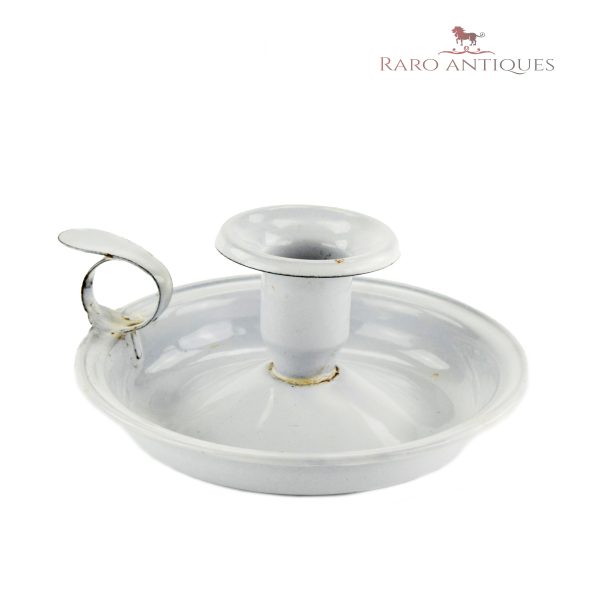
CANDLESTICK
Enamel candlestick
Candlesticks are a welcome decoration in any home. Whether placed in the dining room to illuminate a festive dinner or in the bedroom to create a romantic atmosphere, candlesticks are undoubtedly one of those items that come in handy on every occasion. Dimensions: 15.5 x 4.5 cm Weight: 97 g The candlestick is well-preserved, showing some signs of use, which only adds to its charm.

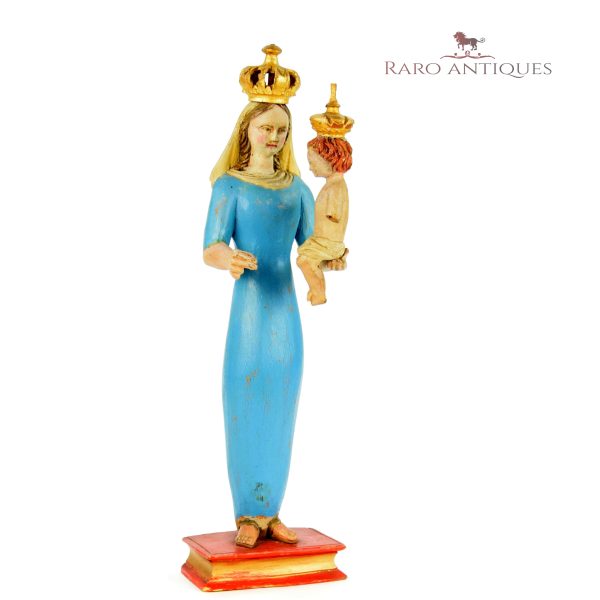
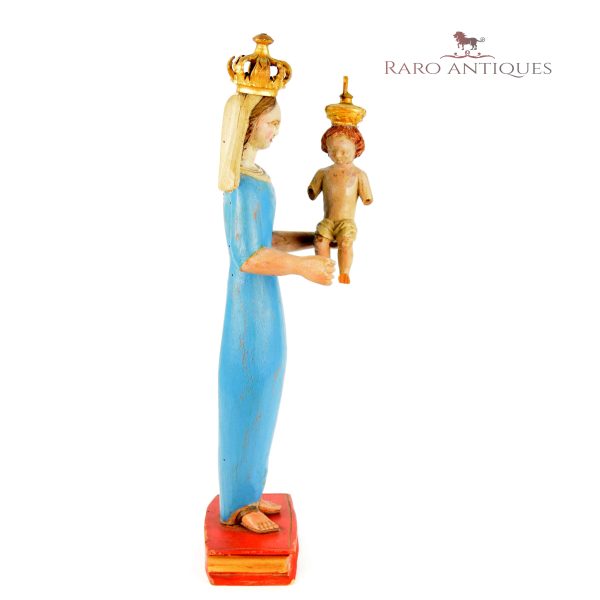
ANTIQUE STATUE OF VIRGIN MARY WITH BABY JESUS
Statue of the Virgin Mary with baby Jesus, from the late 19th century.
This beautiful depiction of the Virgin Mary with baby Jesus is made of wood, gilded, and painted. The crown worn by the Virgin Mary signifies that she was crowned by God and is the queen of all humanity. The Christ Child is also crowned with an imperial crown, symbolizing his authority. Such figures are a staple of the Christian faith, providing a central point for worship and contemplation, both in public religious institutions and in the home. The statue is missing some parts, most notably the legs and arms of Jesus. Dimensions: 42 x 14 x 12 cm Weight: 0.4 kg The statue is well-preserved.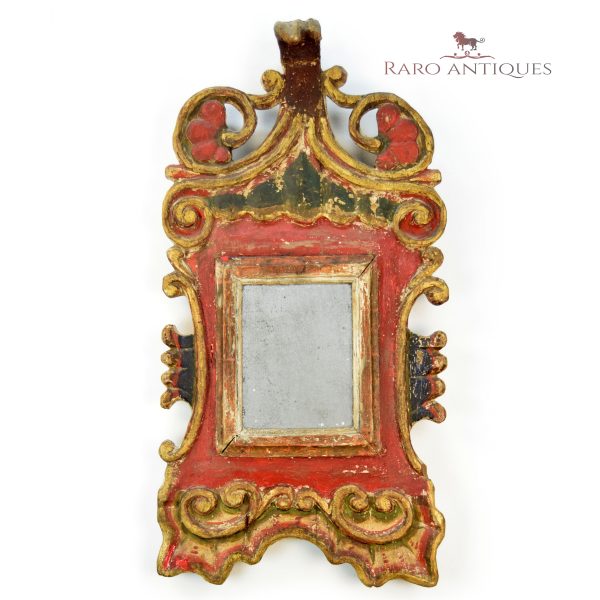
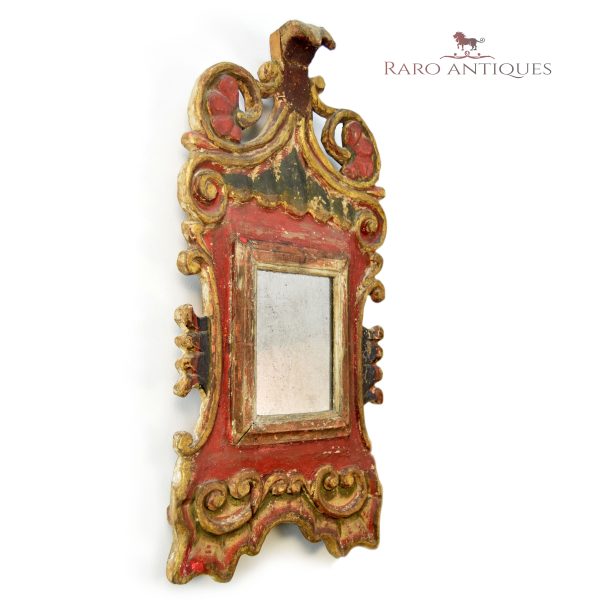
BAROCCHETTO MIRROR, 18TH CENTURY
Barocchetto mirror, made in the 18th century.
This mirror features an exceptional frame, hand-carved from wood and richly decorated with scrolls, foliate motifs and openwork carving. Particularly beautiful is the original polychrome decoration in shades of red, green and gold, now covered with a wonderful aged patina. Numerous losses to the paint and gilding reveal the different layers of the original finish and form part of the authentic appearance and history of the piece.
The mirror has a highly distinctive and decorative design, characteristic of 18th-century Northern Italian Barocchetto art.
Dimensions: 64,5 x 33,5 x 9 cm
Weight: 1,7 kg
The mirror is in good antique condition, with visible signs of age and wear consistent with its age.


GIOVANNI VARLESE, STATUE OF A FISHERMAN
A fisherman sculpture, made in the early 20th century.
This metal sculpture on a marble base depicts a young boy fishing. It was created by the Italian sculptor Giovanni Varlese (1888–1922), as confirmed by the signature on the piece.
Dimensions: 38 × 20 × 13 cm
Weight: 2,8 kg
The sculpture is in good condition.

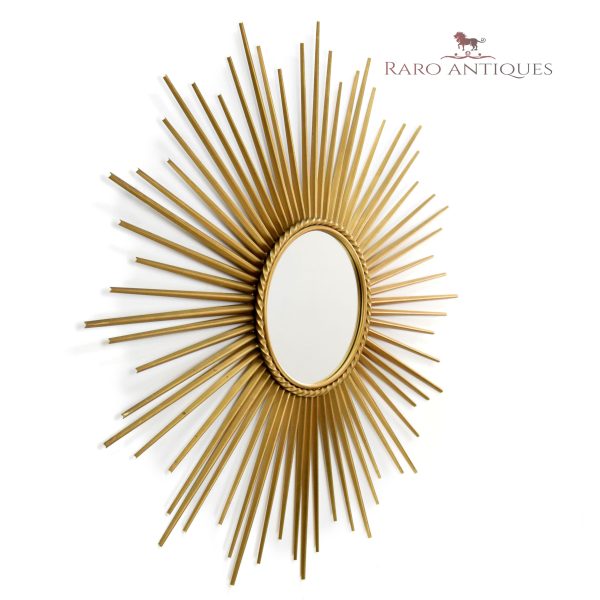
SUNBURST MIRROR, CHATY VALLAURIS
Sunburst mirror, produced in the prestigious French design studio Chaty Vallauris in the 1950s.
An iconic sunburst mirror, entirely made of metal and gilded. This mirror represents a timeless mid-century design that combines sculptural form and elegance.
Its authenticity is confirmed by the original studio stamp on the back of the mirror.
Chaty Vallauris was founded by François Chaty in the French town of Vallauris. The studio became known precisely for these types of mirrors, which are today considered legendary examples of mid-century French design and a highly sought-after collector’s item.
Today, this mirror is not only an exceptional decorative accent but a true work of art that brings warmth into any space on a daily basis.
Dimensions: 70,5 x 70,5 x 2,5 cm
Weight: 1,6 kg
The mirror is in excellent preserved condition.


ANTIQUE FRAME
Frame from the Art Nouveau period.
Double wall wooden frame with beautiful inlay. It can be used for paintings or photographs. Dimensions: 48 x 32.5 cm Weight: 1220 g The frame is in excellent condition.

ANTIQUE CANDLEHOLDER
Candleholder, 19th century.
A massive brass candleholder depicting a water creature, possibly a sea serpent or koi carp. The candleholder features beautiful details and is of exceptionally high quality. Candleholders are a welcome decoration in any home. They can be placed in the dining room to illuminate a festive dinner, in the bedroom to create a romantic atmosphere, or used in any other way—candleholders are certainly one of those items that come in handy on many occasions. Dimensions: 25 x 18 x 9 cm Weight: 1.2 kg The candleholder is well preserved.

PLANTER, CCA. 1900
Planter, made in France, circa 1900.
This planter is crafted from metal and adorned with beautiful decorative details, reflecting a high level of craftsmanship and quality. The naturally developed patina enhances its historical character, making it a unique decorative piece.
Dimensions: 24 x 10 x 10 cm
Weight: 1 kg
The planter is in good condition.

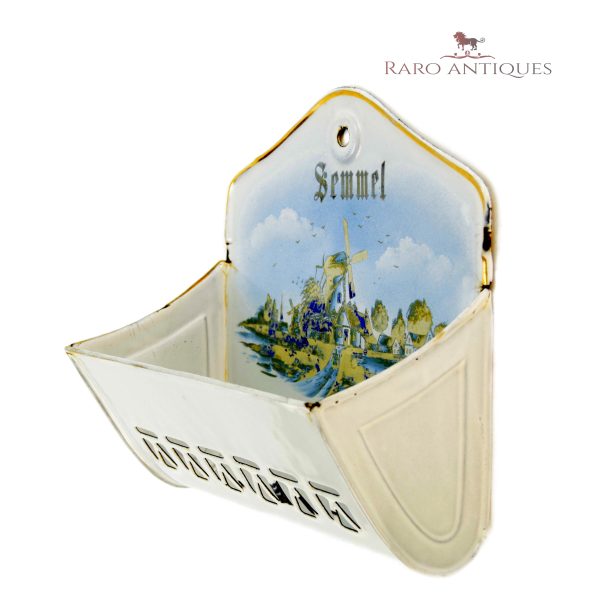
ANTIQUE WALL BASKET
Wall basket, early 20th century, Germany.
An enameled wall basket featuring the German inscription "Semmel," meaning "roll," hinting that it was used for storing bread rolls. In addition to the inscription, the basket displays a charming depiction of Dutch windmills. Such enameled baskets were also commonly used for storing vegetables, like onions and garlic. Today, it can serve as a perfect vintage addition to your kitchen or bathroom. Whether used for its original purpose or creatively repurposed, this piece is both practical and decorative. Dimensions: 23.5 x 23.5 x 12 cm Weight: 0.8 kg The wall basket is in excellent condition.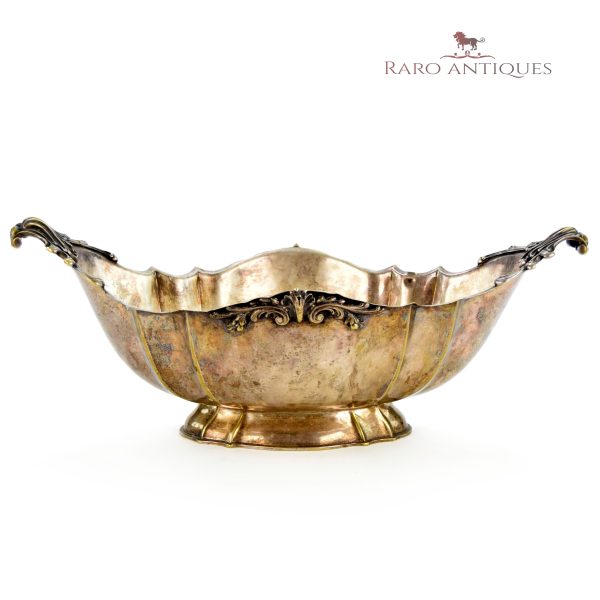
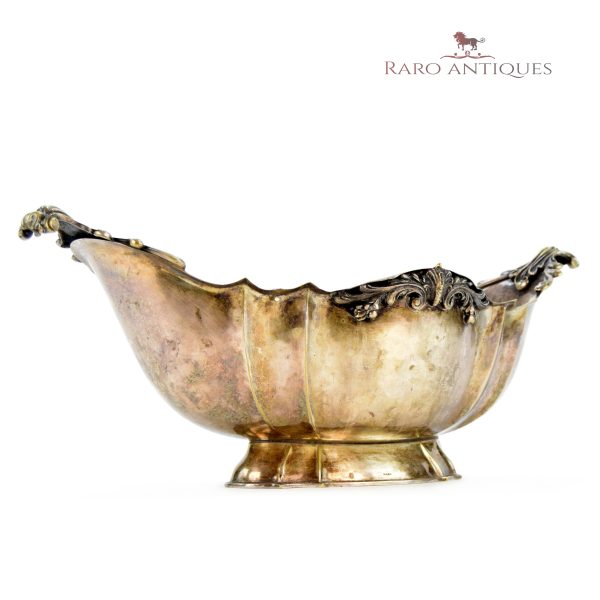
MID CENTURY FRUIT BOWL
Fruit bowl from the mid-20th century.
A large and luxurious fruit bowl, originally silver-plated, now adorned with a beautiful patina developed over time. This exceptional and functional piece will make a stunning addition to your table or countertop. Its striking presence ensures it will be the centerpiece of your gatherings, while adding a vintage charm to any space where it is displayed. Dimensions: 50 x 22 x 19 cm Weight: 1.2 kg The fruit bowl is in excellent condition.

TEA AND COFFEE SET, CCA. 1900
Tea and coffee set, made in America, circa 1900.
This set was produced by the American company American Silver Plate Company and includes one coffee pot, one tea pot, and a matching milk jug. The inscription “quadruple”, found on the underside of the pots and the milk jug, indicates a four-times-thick silver plating, which signifies the high quality of this set. Over time, the silver plating has developed a beautiful iridescent patina, which is an important part of the character and authenticity of such pieces.
Today, this set is ready to serve as a striking decorative accent in the kitchen, while still being perfectly suitable for hosting a memorable tea gathering and delighting your guests.
Dimensions:
large pot (coffee): 24,5 × 23 × 12 cm
small pot (tea): 23,5 × 21 × 13 cm
milk jug: 15 × 14 × 9,5 cm
Weight: 1,7 kg (entire set)
The set is in good condition.


VINTAGE MIRROR
Vintage mirror made in 1970s.
A mirror in a beautiful brass frame. The mirror is not just a lovely decoration for the wall but also a key component of any home. Think about it – we have mirrors in hallways, by entry doors, in bedrooms, and, of course, in bathrooms as a tool for personal grooming. However, mirrors can also be wonderful light transmitters, so they can be hung in rooms where they are not typically needed to visually enhance the space and add some light. With old mirrors, which often exhibit a beautiful patina, we bring uniqueness into our homes that will inspire us for years to come. Dimensions: 71 x 37 x 3 cm Weight: 4.3 kg The mirror is in excellent condition.

SIGNED BRONZE SCULPTURE OF JESUS
Bronze sculpture of Jesus Christ, signed, created in the second half of the 20th century.


VINTAGE SATSUMA VASE
Vintage satsuma vase, from the 20th century.
Satsuma is a type of Japanese pottery originating from the Satsuma province. Today, it can be divided into two different categories: the original plain dark clay from early Satsuma, produced in Satsumi around 1600, and elaborately decorated export Satsuma in ivory tones, which began production in the nineteenth century in various Japanese cities. This vase is an excellent example from the early 20th century and will be a wonderful decorative piece with a rich history. Dimensions: 76 x 32 cm Weight: 7.2 kg The vase is well-preserved.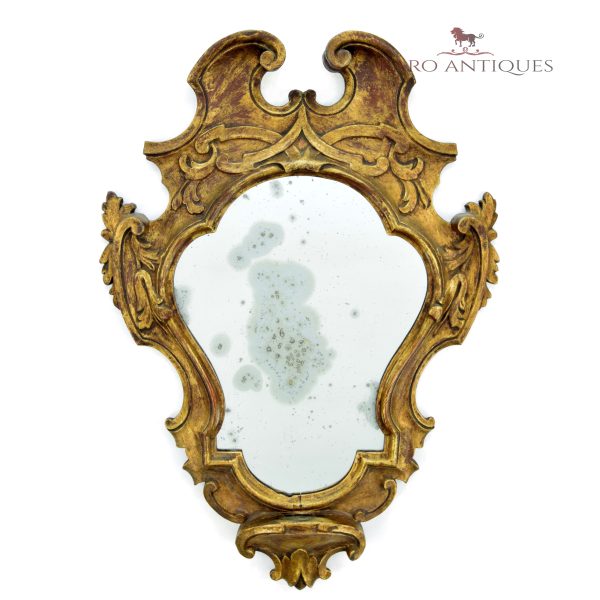
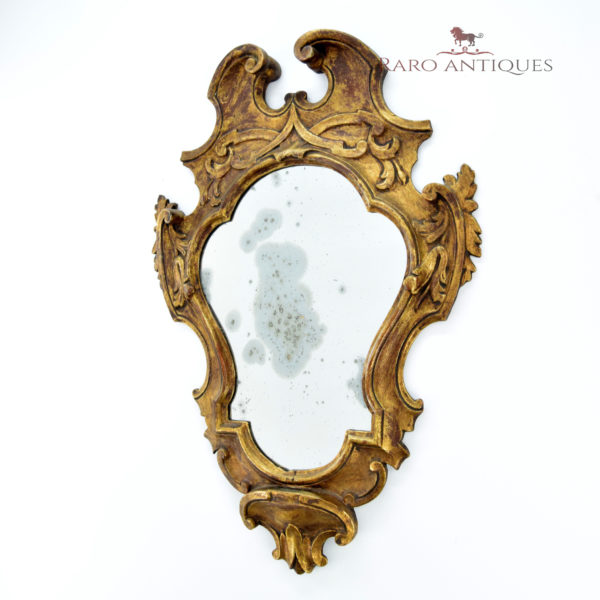
MIRROR
Mirror from the 20th Century.
A mirror with exceptional patina. Set in a stunning wooden frame, it will be a beautiful detail on any wall. The mirror is not just a beautiful decoration for the wall, but a key element in any home. Think about it, we have them in hallways, at entrance doors, in bedrooms, and ultimately in bathrooms, serving as a tool for personal grooming. Mirrors can also be wonderful light transmitters, so we can hang them in rooms where we don't usually need them, adding visual interest and some light to the room. With old mirrors, adorned with beautiful patina, we bring uniqueness into our home, inspiring us for years to come. Dimensions: 70 x 48.5 x 6.5 cm Weight: 1.8 kg The mirror is in excellent condition.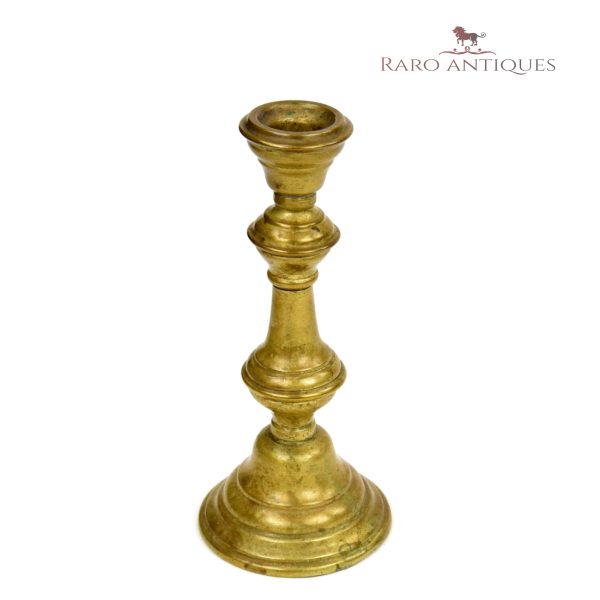
ANTIQUE CANDLESTICK
Candlestick from the 19th century.
Candlesticks are a welcome decoration in any home. Whether placed in the dining room to illuminate a festive dinner or in the bedroom to create a romantic atmosphere, candlesticks are undoubtedly one of those items that come in handy on every occasion. Dimensions: 19 x 8.5 cm Weight: 200 g The candlestick is excellently preserved.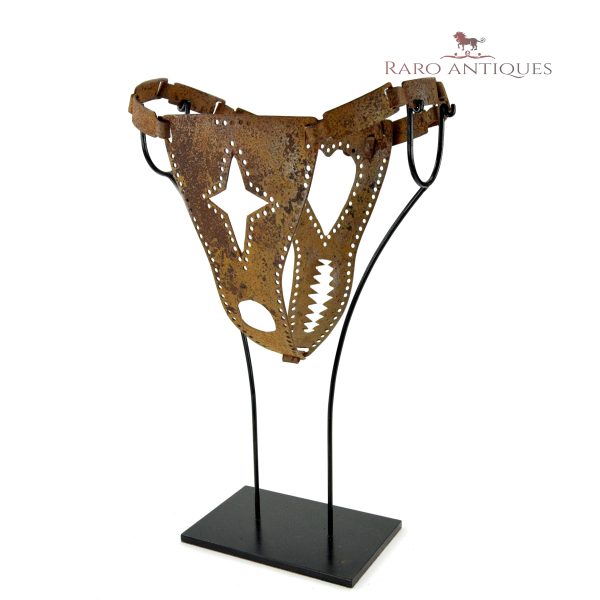
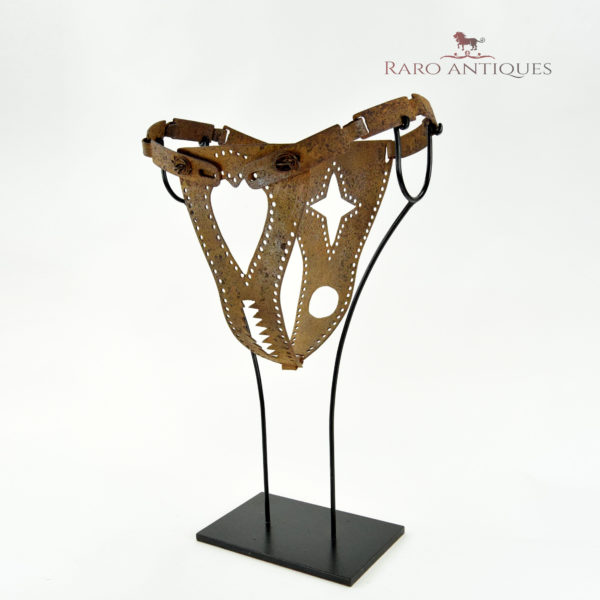
CHASTITY BELT
The chastity belt.
Who hasn't heard of the chastity belt? A device that supposedly helped husbands and fathers ensure that their wives and daughters remained untouched and "pure" as far back as the Middle Ages. This was said to be a metal belt tightened around a woman's waist, locked by the man with a large padlock. This medieval man could then be free of worries that his chosen one would engage in sexual relations with someone else, despite their prolonged absence due to wars. How barbaric and unhygienic, isn't it? At least that's the story that has been told for centuries. Simple, shocking, and somewhat amusing, as it portrays past people as extremely backward, contrasting with our enlightened and better selves. However, this is not the true story of the chastity belt. The truth is, there is no physical evidence that chastity belts existed in those times, at least not in a physical form. They are mentioned a few times in literature and depicted in artworks, albeit more in an allegorical and satirical sense. The earliest evidence of a chastity belt can be found in a book by military engineer von Eichstadt from 1405, which described catapults, armor, and torture devices, including a sketch of a chastity belt. Historians are convinced that this was just one of the humorous inventions he included in the book, similar to a device for becoming invisible or a fart-propelled contraption, which further solidifies the fact that chastity belts were not used in the Middle Ages. The surviving examples of chastity belts found today are believed to have been made in the 19th century. With the advent of industrialization in Europe, materials such as iron and steel became more accessible, and soon blacksmiths realized there was a particular market they could tap into. Puritanical masses of that time were willing to pay a lot of money to view medieval torture devices in museums and exhibitions, satisfying their craving for their own judgment of medieval barbarism. Thus, blacksmiths of that time made several torture devices, including chastity belts, and sold them to museums and collections. Interestingly, the chastity belt probably was never in widespread use in the past, but its use has spread precisely in modern times, in BDSM and fetish communities. Thus, the chastity belt is an urban legend of the Middle Ages that has survived to this day. Now it can be an interesting addition to any historical collection or a fascinating ornament to spark debates. Certainly, one of those pieces that tell a story and stimulate our imagination. Dimensions: 55 x 35 x 25 cm Weight: 4 kg The chastity belt is in excellent condition.