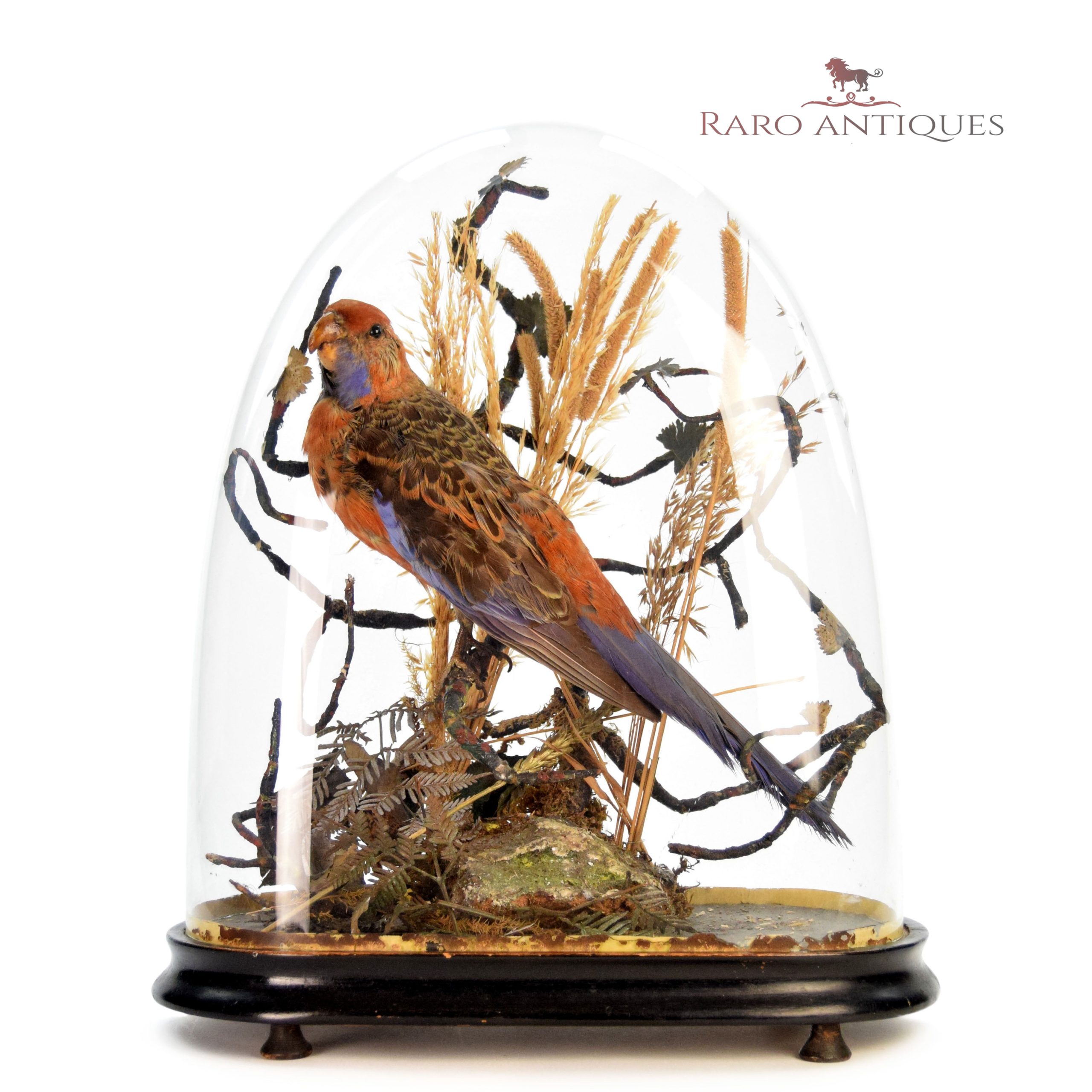
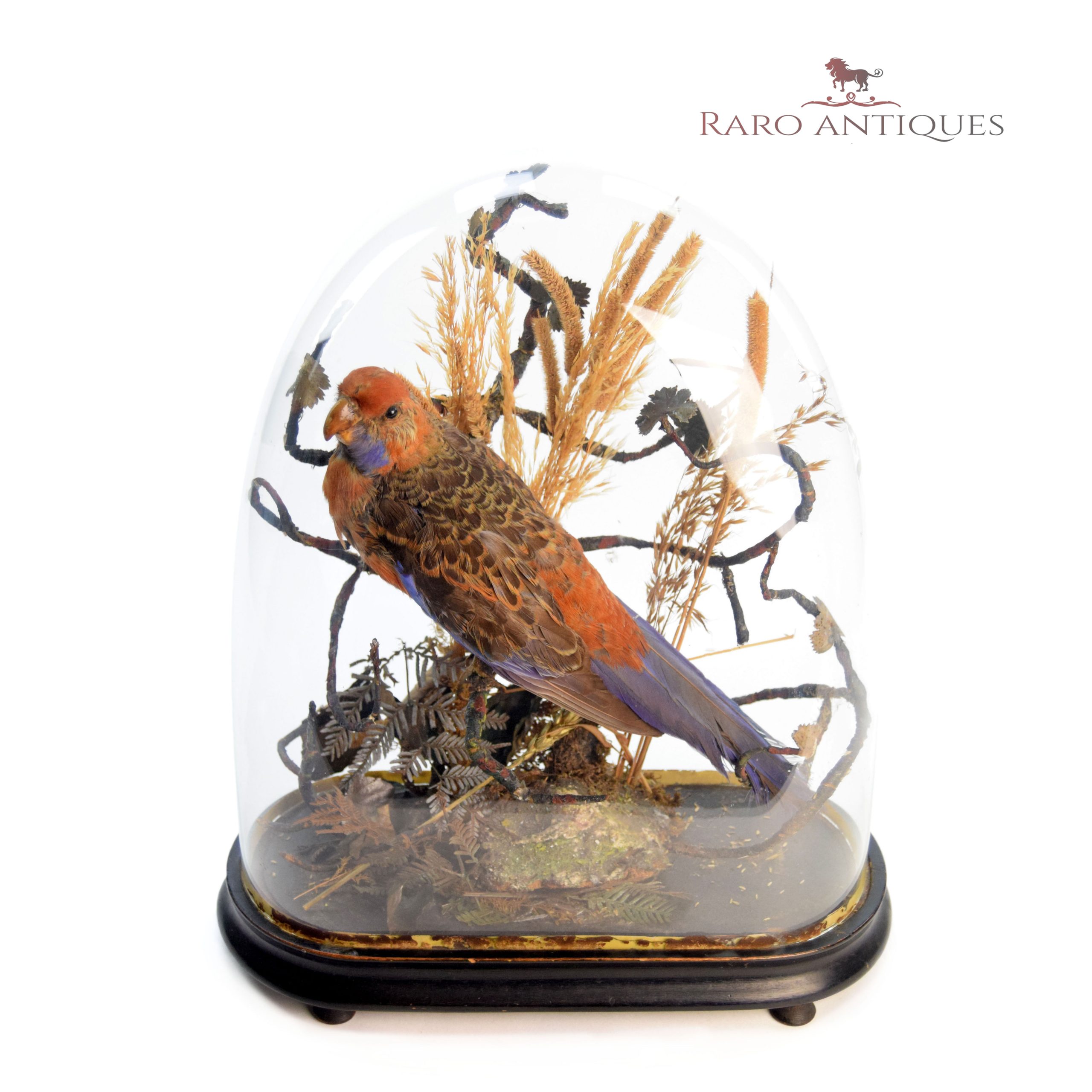
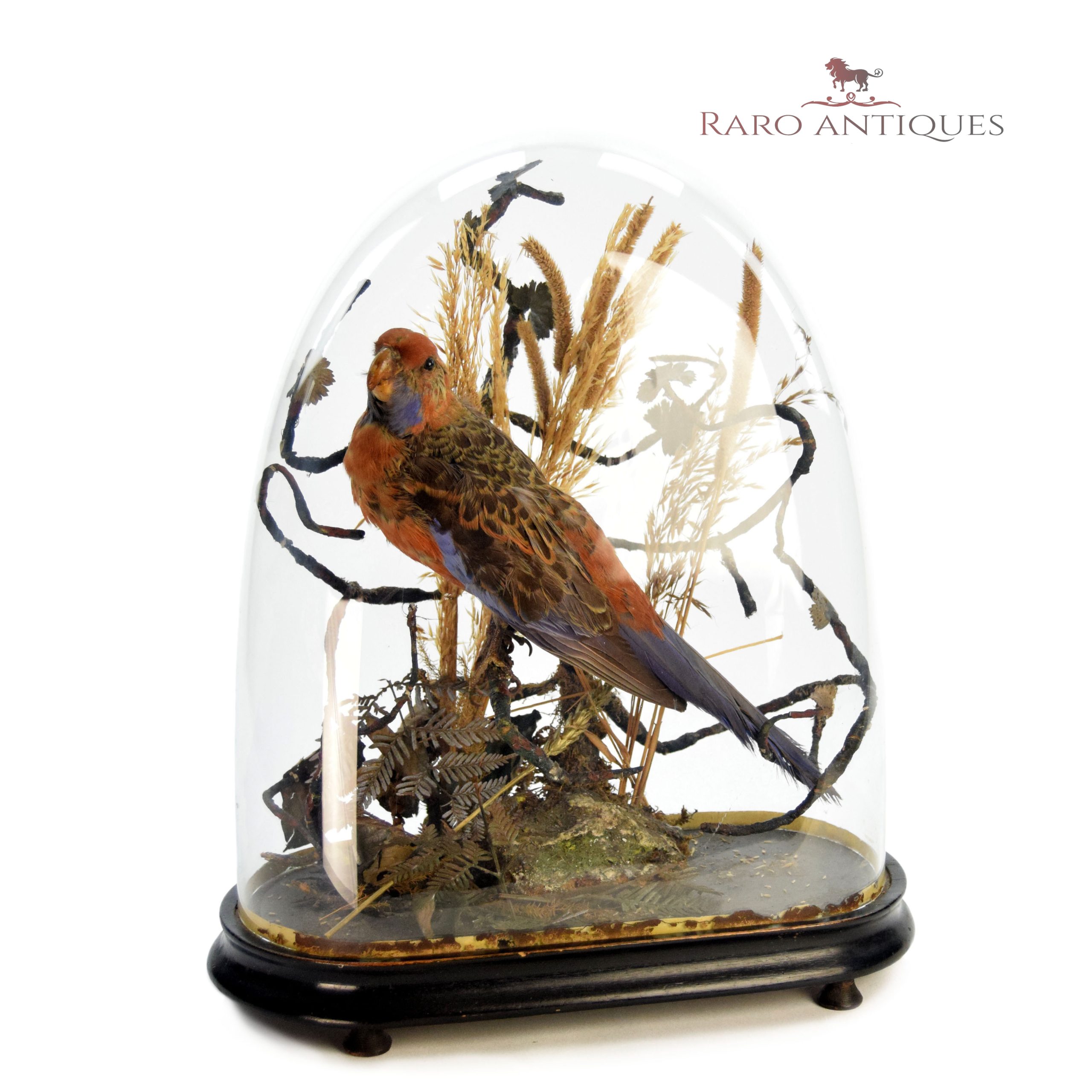
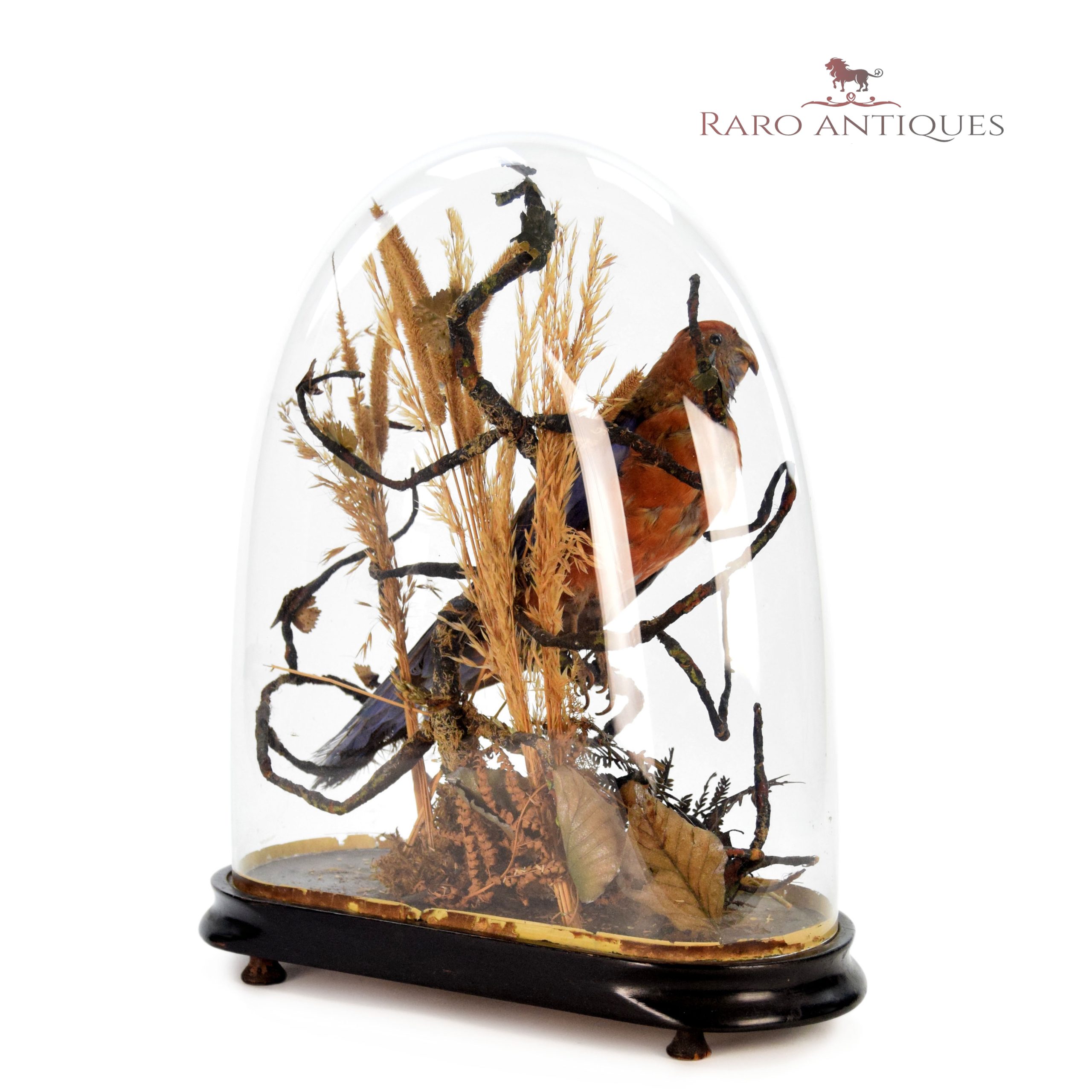
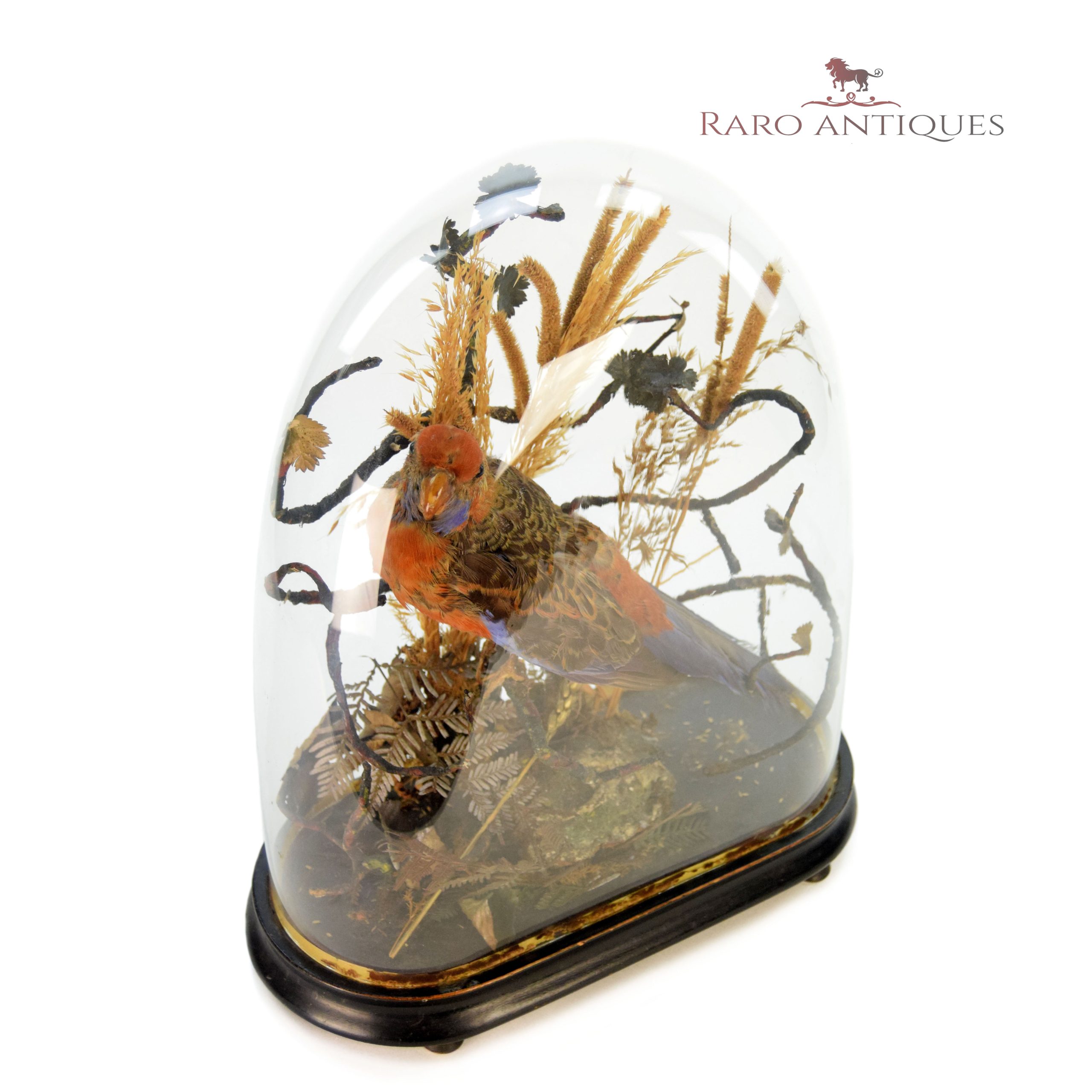
Rosella parrot under a glass dome, circa 1880.
The presented rosella parrot comes from the 19th century, a time when placing taxidermied animals under glass domes was a popular practice, particularly during the Victorian era. This tradition stemmed from a passion for natural history collections known as “cabinets of curiosities,” where people would gather and display natural wonders such as minerals, exotic plants, and animals. Glass domes were often used to protect and showcase these collectible items, especially taxidermied animals.
The popularity of this practice grew alongside a rising interest in natural sciences, fueled by major scientific discoveries and expeditions to exotic lands, which introduced new animal species. These collections reflected a sense of awe and fascination with nature, and they were part of the Victorian obsession with documenting and classifying the world.
Taxidermy during this period was not only a scientific practice but also became a form of home decoration. Taxidermied animals under glass domes were displayed in homes as symbols of refined taste and education. The domes were designed to protect the specimens from dust and damage, allowing for long-term preservation. Within these glass enclosures, taxidermied animals were often arranged in elaborate scenes that could depict them in their natural habitats – as with the presented rosella parrot – or sometimes in purely artistic or imaginative settings.
These exhibits were intricately crafted and carefully arranged to create the illusion of realism. However, by the end of the 19th century, this trend gradually faded as aesthetic tastes changed, as did the relationship with nature and animals.
Dimensions: 40 x 34 x 16 cm
Weight: 1.5 kg
The rosella parrot exhibit under the glass dome is in excellent condition.






Reviews
There are no reviews yet.