RaroAntiques RaroAntiques
  • Offers
  • Shipping
  • ABOUT US
    • Frequently asked questions
  • Contact
49 items / 17.440,00 €
Login / Register

Sign inCreate an Account

Lost your password?
Menu
RaroAntiques RaroAntiques
49 items / 17.440,00 €
View cart “SPRING-LOADED CANDLE HOLDER DITMAR” has been added to your cart.
360 product view
    0%
    HomePremium VASE PIERO FORNASETTI

    VASE PIERO FORNASETTI

    440,00 €

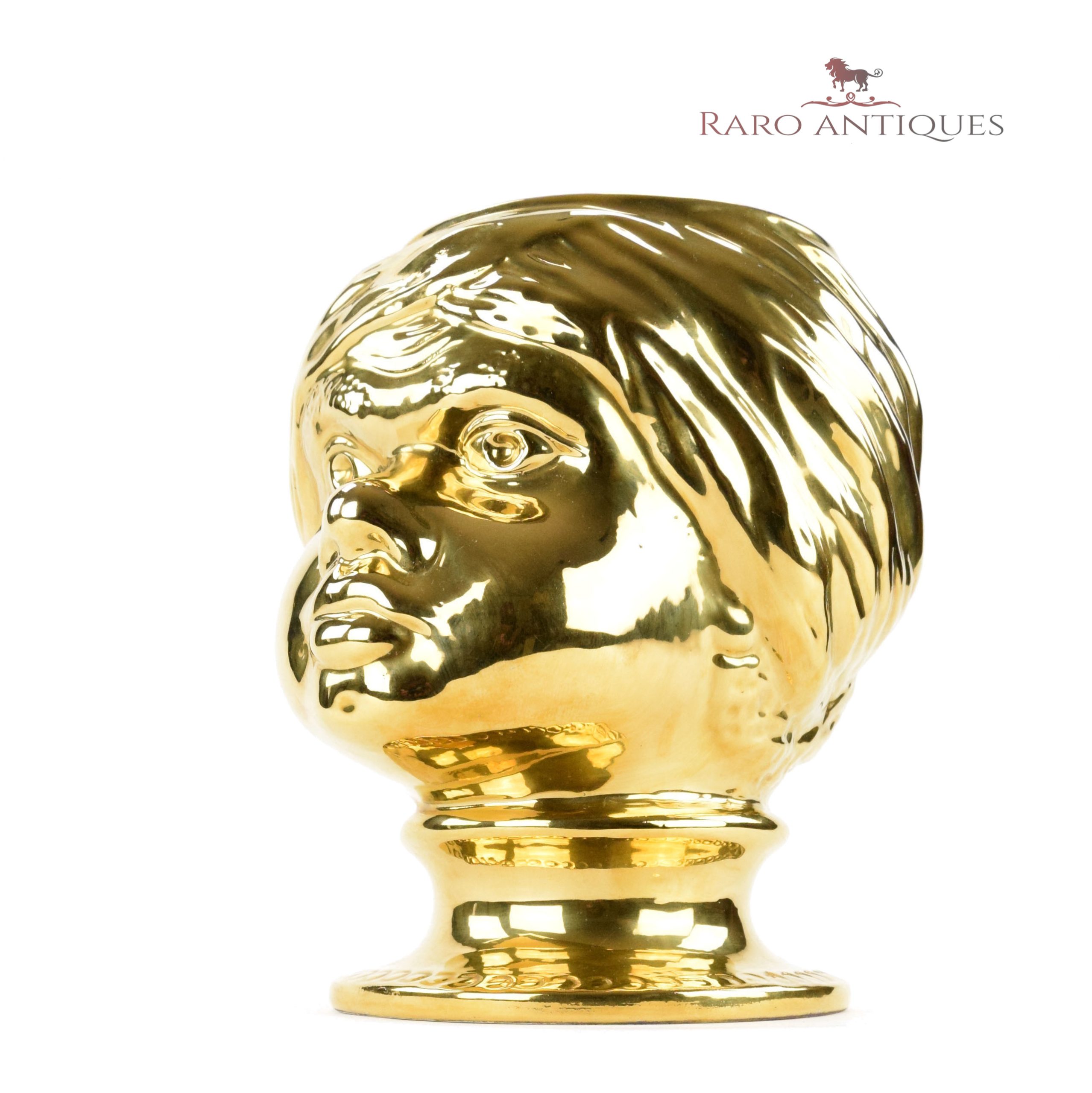
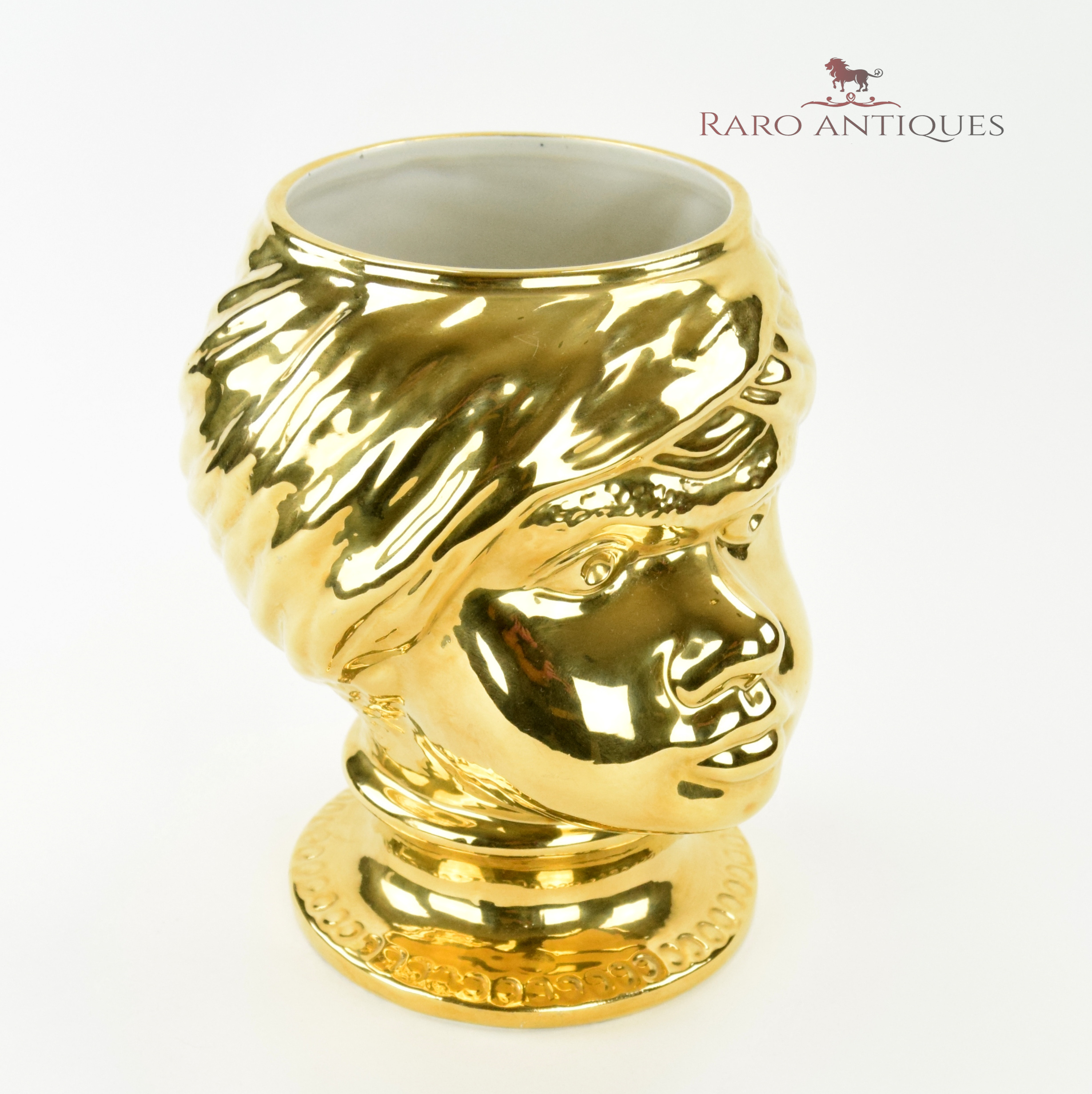
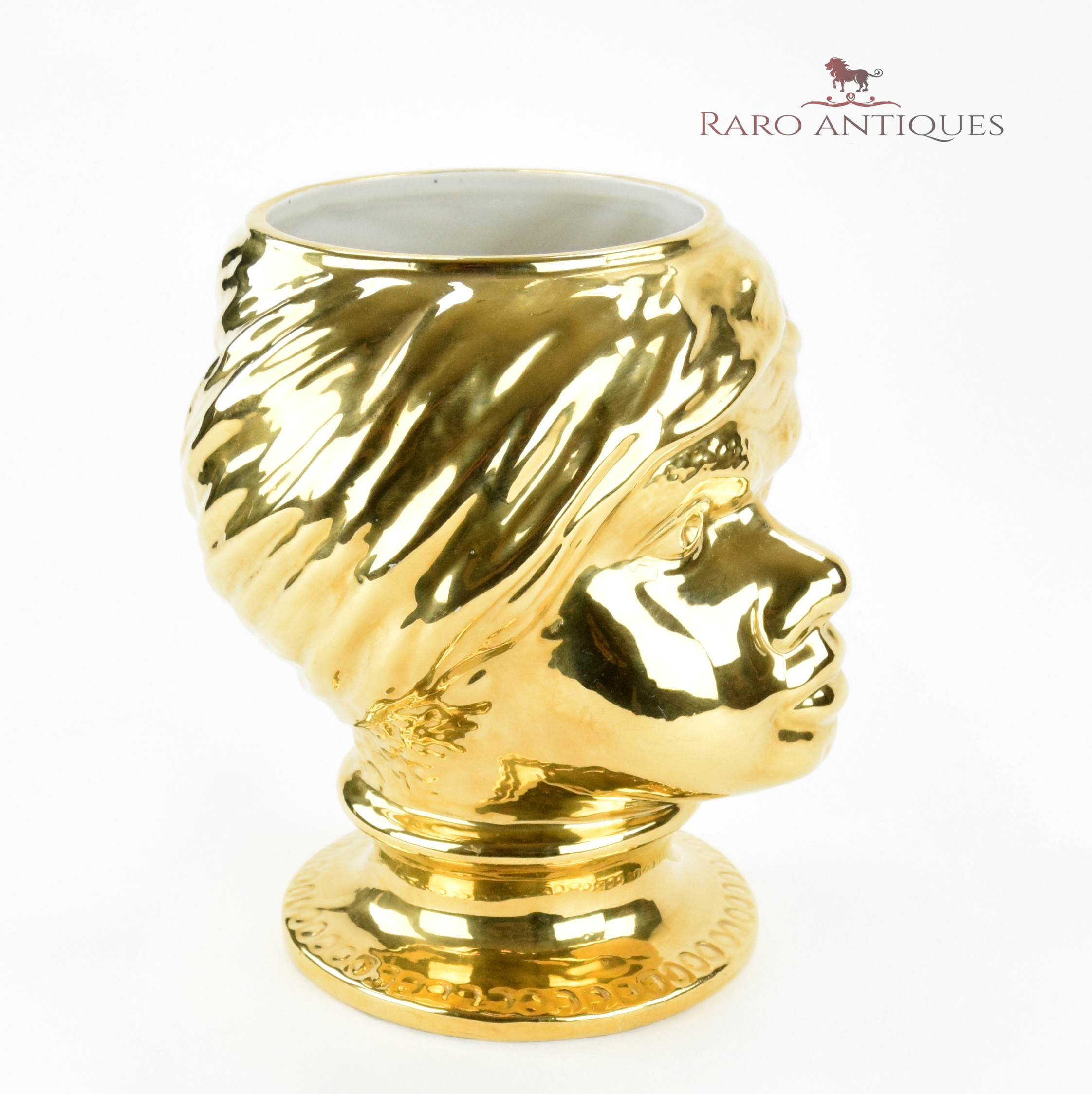
    Vase, by Piero Fornasetti, from the 1960s.

    A gilded porcelain vase depicting the head of a Moor, by the renowned Italian artist Piero Fornasetti. This beautifully elegant and highly decorative piece will proudly draw attention in your home, adding a touch of sophistication to any space. Truly exceptional, it will serve as the perfect finishing touch to any room. At the base, you’ll find the inscription “Galerie Schöninger München,” indicating that it was once in their possession.

    Piero Fornasetti (1913-1988) was a versatile Italian artist whose work transcends categorization within any specific period. He operated according to his own principles, disregarding the norms and designs of his time. Engaging in various aesthetic disciplines including painting, drawing, graphic design, and product design, his creativity peaked in the 1950s. At the behest of Gio Ponti, he opened his studio in Milan, where he designed and created everyday objects enriched with decoration that brought art into the homes of ordinary people. As an artist ahead of his time, Fornasetti’s work significantly influenced contemporary culture, reshaping taste and creating a unique and instantly recognizable style.

    Dimensions: 26 x 25 x 24 cm

    Weight: 1800 g

    The vase is in excellent condition.

    1 in stock

    Add to wishlist
    SKU: A862 Categories: Decor, New Stock, Premium
    Share
    Facebook Email linkedin WhatsApp WhatsApp Viber
    • Additional information
    • Reviews (0)
    • Delivery
    Additional information
    Weight 1,8 kg
    Dimensions 26 × 25 × 24 cm
    Reviews (0)

    Reviews

    There are no reviews yet.

    Be the first to review “VASE PIERO FORNASETTI” Cancel reply

    Your email address will not be published. Required fields are marked *

    Delivery

    Shipping Information for International Orders:

    For deliveries, please contact us prior to your purchase or immediately after placing your order to arrange shipping options, costs, and delivery timelines.

    We work with trusted and reliable shipping partners to ensure your order is delivered safely and on time. Since shipping costs and options vary depending on the location and type of item, we will work with you to find the best solution.

    Important: For purchases outside of Europe, the buyer is responsible for any applicable import duties, customs fees, or other local taxes as required by the laws of the destination country.

    For more information or inquiries, please contact us.

    Related products

    Close

    VINTAGE SATSUMA VASE

    580,00 €

    Vintage satsuma vase, from the 20th century.

    Satsuma is a type of Japanese pottery originating from the Satsuma province. Today, it can be divided into two different categories: the original plain dark clay from early Satsuma, produced in Satsumi around 1600, and elaborately decorated export Satsuma in ivory tones, which began production in the nineteenth century in various Japanese cities. This vase is an excellent example from the early 20th century and will be a wonderful decorative piece with a rich history. Dimensions: 76 x 32 cm Weight: 7.2 kg The vase is well-preserved.
    Add to wishlist
    Buy
    Quick view
    Close

    ANTIQUE CANDLESTICK

    340,00 €

    Antique candlestick from the late 19th century.

    A pair of candlesticks for four candles, typically found on mantelpieces, will now be a rich ornament on your table or shelf, yet you can still use them as fireplace candlesticks. Candlesticks are a welcome decoration in any home. We can have them in the dining room to illuminate a festive dinner, or in the bedroom to create a romantic atmosphere. However we use them, a candlestick is certainly one of those items that comes in handy on every occasion. Dimensions: 35 x 18 cm Weight: 1.1 kg The candlesticks are in excellent condition. Price is for one.
    Add to wishlist
    Buy
    Quick view
    Close

    CHANDELIER J. T. KALMAR “SONNE”

    950,00 €

    Chandelier flush mount, designed by the Austrian designer J.T. Kalmar.

    The "Sonne" chandelier, meaning "sun" in German, is an interesting modernist fixture whose design seamlessly integrates into any contemporary space. With its simple yet sophisticated lines, this light fixture is not just for illumination; it adds a touch of style to your space. The small glass flowers at the tips further emphasize the opulence of this chandelier, which can also be used as a wall light. Austrian designer and entrepreneur Julius Theodor Kalmar was born in 1884 in Vienna to Julius August Kalmar, the founder of the eponymous company specializing in chandeliers and other objects made of cast bronze. Growing up surrounded by design due to his father and their company, Julius Theodor gained rich design knowledge from an early age. His educational journey led him to the Birmingham School of Art and the University of Applied Arts in Vienna, where he studied under the mentorship of the Secessionist architect Josef Hoffmann. After completing his studies, Julius Theodor joined his father's company in 1906 and took it over in 1913. Under his leadership, the company shifted away from the classical design of the time. Kalmar developed his distinctive design aesthetic, emphasizing the integration of form and function and combining classical traditions with innovative ideas. By the mid-1920s, his products were among the most sought after. In the 1930s, Kalmar began collaborating with the Austrian Werkbund, creating a series of glass lights with a purist aesthetic. Throughout his career, he collaborated with renowned architects such as Oskar Strnad, Josef Frank, and Oskar Wlach. In the last decade of his life, he designed numerous light collections, including the popular Atomic collection. Kalmar passed away in 1968, but the Kalmar company continues to create luxury lighting to this day. Kalmar lights can be found in prestigious locations like the Kremlin Presidential Palace and the Burj Tower in Dubai. Dimensions: 49 x 14 cm Weight: 1 kg The light fixture is in good condition, showing patina on the brass. Compatible with E14 bulbs.
    Add to wishlist
    Buy
    Quick view
    Close

    TABLE LAMP TITANIC

    1.100,00 €

    Table lamp Titanic - White Star Line.

    We have all heard the story of the famous unsinkable luxury steamship Titanic, which was considered a pinnacle of technological development and progress in its time. Even more well-known is its tragic fate, as its sinking remains one of the most famous maritime disasters of all time. Surely, you never thought that a part of this intriguing history could come alive in your own home. This table lamp is an accurate replica of the lamps passengers had in the first-class cabins – a detail seen in original photographs taken on the Titanic. It will undoubtedly attract significant interest when displayed in your home, becoming the centerpiece of many discussions. Therefore, it is not just a lamp but an exceptional decorative piece with an interesting background. The engraving on the lamp reads - Titanic White Star Line - further ensuring its authenticity as a reproduction of the famous ship's lamps. Dimensions: 46 x 29 cm Weight: 1.6 kg The lamp is well-preserved. For E27 bulb.
    Add to wishlist
    Buy
    Quick view
    Close

    ERGONOMIC CHAIR TAN SAD

    320,00 €

    Ergonomic chair "Do More," manufactured by Tan Sad in England for Ahrend around 1920.

    A special, rare, vintage ergonomic chair in its original condition. It was used by employees of the Opcina tramway in Opicina, making it not only an interesting industrial chair but also one with a fascinating history and story. Ahrend introduced itself to the Dutch market with a series of chairs and tables called "doe meer" (do more). They were manufactured in the Tan Sad factory in England, known for producing the first ergonomic chairs. In 1920, comfort was a significant luxury, and factory workers often sat on benches without backrests. The "Do More" chair was, therefore, far ahead of its time. As seen in advertisements from that era, it promised workers: "The ideal chair for the working person. For use in offices, drafting rooms, laboratories, for operating office machines and telephones, etc. The right support for your work." Due to its specially designed frame – the seat is adjustable in height, and the backrest can be adjusted in height and angle – it is a chair on which you can sit for hours without any issues, while also encouraging proper posture. Dimensions: 82 x 54 x 46 cm Weight: 9.2 kg The chair is in good condition, and although it could be reupholstered, the original cover adds to its sentimental value.
    Add to wishlist
    Buy
    Quick view
    Close

    SCOLD’S BRIDLE

    820,00 €

    The scold's bridle.

    The scold's bridle or brank, originating from Scotland in the 16th century, was a horrific device designed to cause shame, discomfort, and pain to its wearer. Its usage spread from Scotland to England, Germany, and other European countries. Its purpose was to shame, silence, and physically discomfort individuals who were deemed unruly or outspoken, particularly women who challenged authority or societal norms. Often, these bridles were crafted to resemble masks with distorted facial features, such as large ears, noses, or horns. Some even had bells attached to them, further humiliating the wearer and drawing attention to their presence. The bridle, worn for a minimum of several hours, prevented its wearer from eating, drinking, and most importantly, speaking. It consisted of a metal part inserted into the mouth, similar to a bit in a horse's harness, which held the tongue in place. In more severe cases, these metal mouthpieces had spikes, causing additional pain. The bridle was predominantly used as a punishment for women who were considered too vocal or contentious in public, especially widows or older women who were not under male control. It was also known as a "witch's bridle," indicating its use during witch trials to prevent accused witches from casting spells on their captors or communities. Additionally, disobedient wives could be subjected to this punishment at their husbands' request. While men could also face this punishment if perceived as a threat to the common good, it was primarily reserved for women deemed gossips, adulterers, prostitutes, or witches, as well as those who defied societal norms. The bridle served as a stark reminder of the oppression women faced and the consequences of expressing dissent in conservative societies. Remarkably, this punishment was not abolished in England until 1967, reflecting the enduring legacy of patriarchal control and the gradual progress towards women's rights. The scold's bridle serves as a poignant relic of the past, prompting reflection on the darker aspects of human history. Dimensions: 26 x 25.5 x 21 cm Weight: 3.2 kg The scold's bridle is in excellent condition, complete with a lock and accompanying key.
    Add to wishlist
    Buy
    Quick view
    Close

    VASE DERUTA

    850,00 €

    Vase made in the Italian town of Deruta, in the first half of the 20th century.

    An extremely interesting, large Deruta vase. Such large ceramic pieces require special attention in the creation process, as they are very delicate in the initial stages. This attention is strongly felt when examining its precise craftsmanship, with carefully added decorations such as flowers and leaves. This exceptional piece will be ideal for decorating both indoor and outdoor spaces in homes or business environments. Because this is not just an ordinary decorative item but also a part of the art and history of Deruta, it will be an outstanding addition that enriches and enhances the places where it is displayed. Deruta, located in the hills of Umbria, has been globally renowned for the production of artistic ceramics since the Middle Ages. Deruta is still today the center of Italy's largest production of artistic majolica. Artistic production had exceptional opportunities to showcase its pottery masterpieces from the earliest periods: in the Assisi monastery. In the Franciscan archives in Assisi, documents from 1358 and 1359 were found, mentioning the potter and wholesale merchant Cecce d'Alessandro, who sold hundreds of ceramic pieces to monasteries. Dimensions: 80.5 x 27 cm Weight: 8.7 kg The vase is in excellent condition, with slight chipping on some parts of the decorations, which does not detract from its overall appearance.
    Add to wishlist
    Buy
    Quick view
    Close

    DEATH MASK

    750,00 €

    The creation of death masks is one of the oldest sculptural techniques, serving as a memory of the deceased or as a model for creating portraits. They are made by taking an impression of the face of the deceased in wax or plaster, usually a few hours after death.

    The particular death mask you have is original and made of plaster, depicting an unknown man. It is an unusual addition to any room, carrying significant symbolic meaning (Memento mori). Death masks are undoubtedly one of the most intriguing traditions of humanity, a way for people to preserve the memory of the deceased. The most famous death masks come from Egypt, where they were buried with the deceased. Similarly, ancient Roman masks made of wax are known, used as a model for carving into tombstones. This tradition continues for centuries until the end of the Middle Ages when there was a shift in the material used, and masks began to be made of plaster. During this time, masks started to be used in funeral ceremonies and were later kept in libraries, museums, and universities. Death masks were not only made for royal and noble figures but also for prominent individuals such as poets, philosophers, and playwrights. Similar to ancient Rome, these death masks were often used as references for portraits, sculptures, busts, or engravings depicting the deceased. Dimensions: 26 x 22 cm Weight: 780 g The mask is in excellent condition and has an iron hook for wall mounting.
    Add to wishlist
    Buy
    Quick view

    Sign up to be among the first to be notified of new discoveries

    Facebook Twitter Instagram Pinterest
    • About us
    • Blog
    • Contact
    • My account
    • Frequently asked questions
    • Privacy Policy
    • General Terms and Conditions
    • Decor
    • New Stock
    • Other
    • Furniture
    • Premium
    • Lights
    • Sold
    Raro Antiques All rights reserved; 2024

    Shopping cart

    close
    close
    Start typing to see products you are looking for.
    • Offers
    • ABOUT US
    • Contact
    • Login / Register
    Scroll To Top
    The online store uses certain cookies that are necessary for the proper functioning of the site.
    More info Accept