RaroAntiques RaroAntiques
  • Offers
  • Shipping
  • ABOUT US
    • Frequently asked questions
  • Contact
1 item / 3.700,00 €
Login / Register

Sign inCreate an Account

Lost your password?
Menu
RaroAntiques RaroAntiques
1 item / 3.700,00 €
View cart “BIEDERMEIER CHANDELIER” has been added to your cart.
neonski znak
HomePremium VINTAGE NEON SIGN

VINTAGE NEON SIGN

3.900,00 €

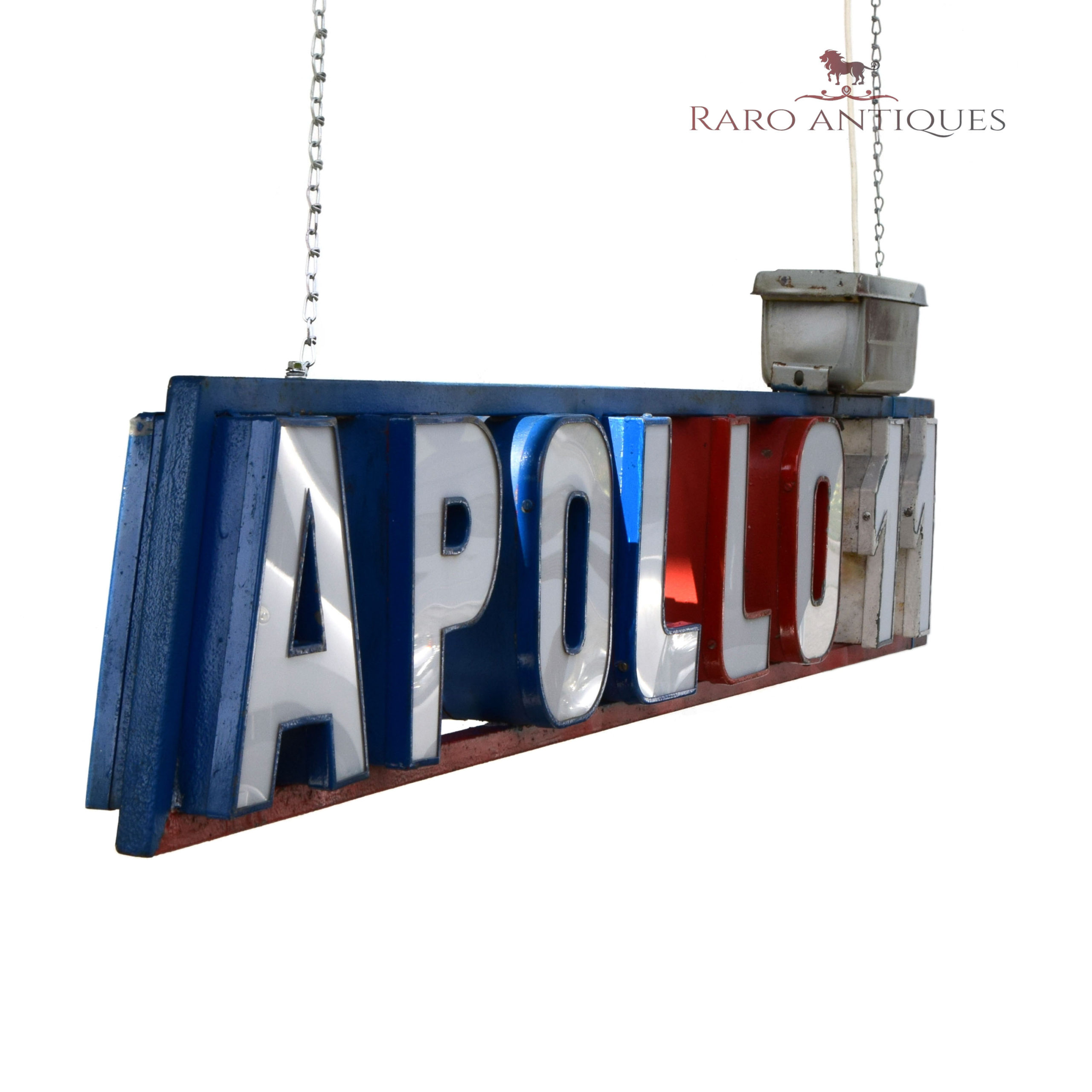
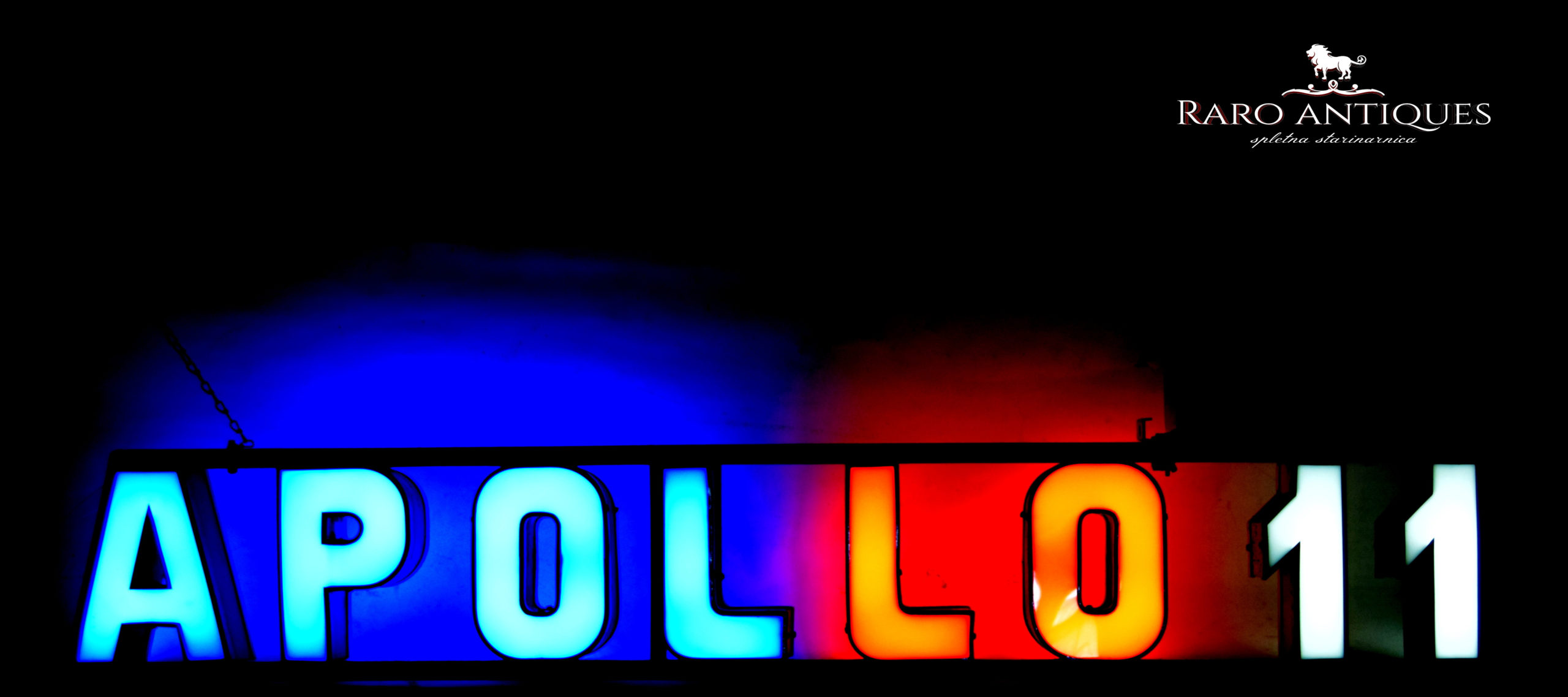
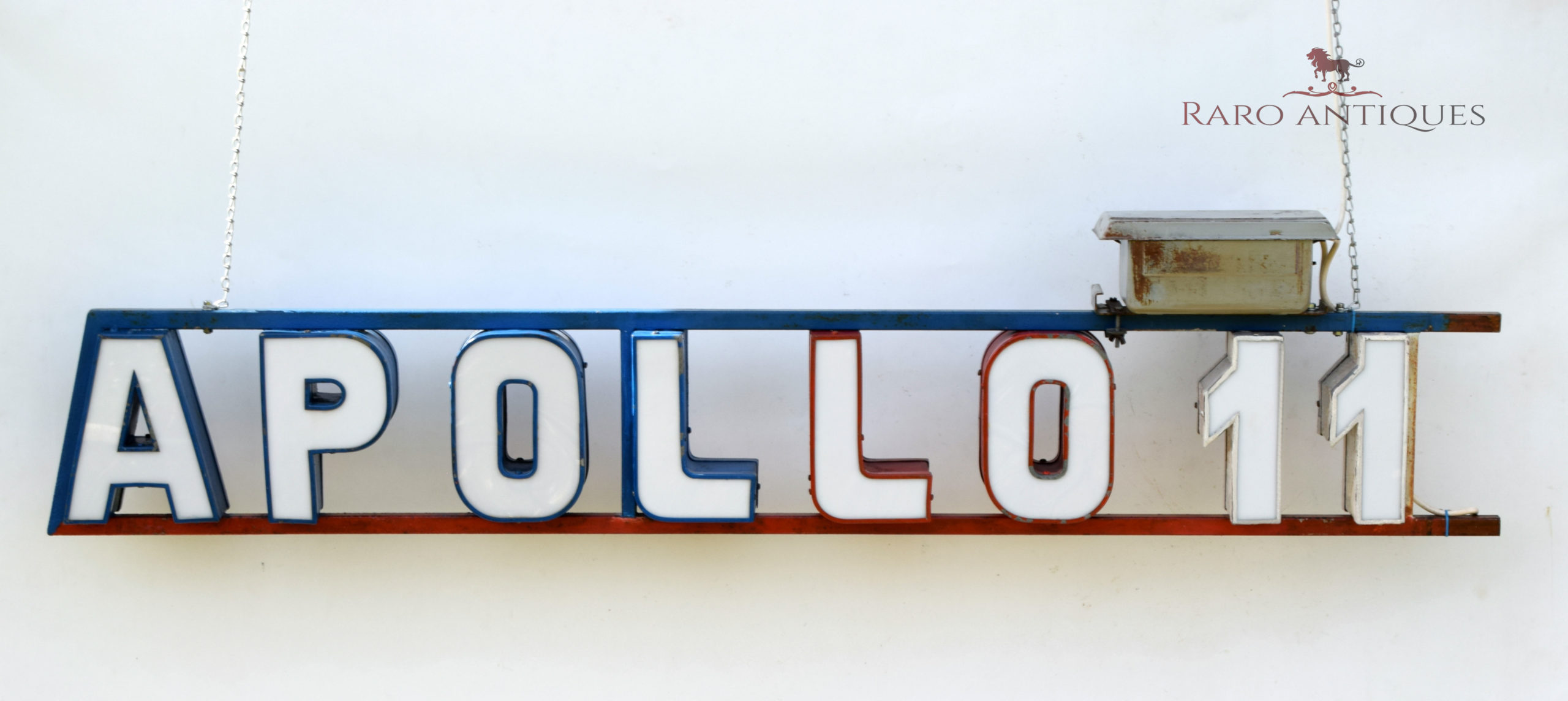
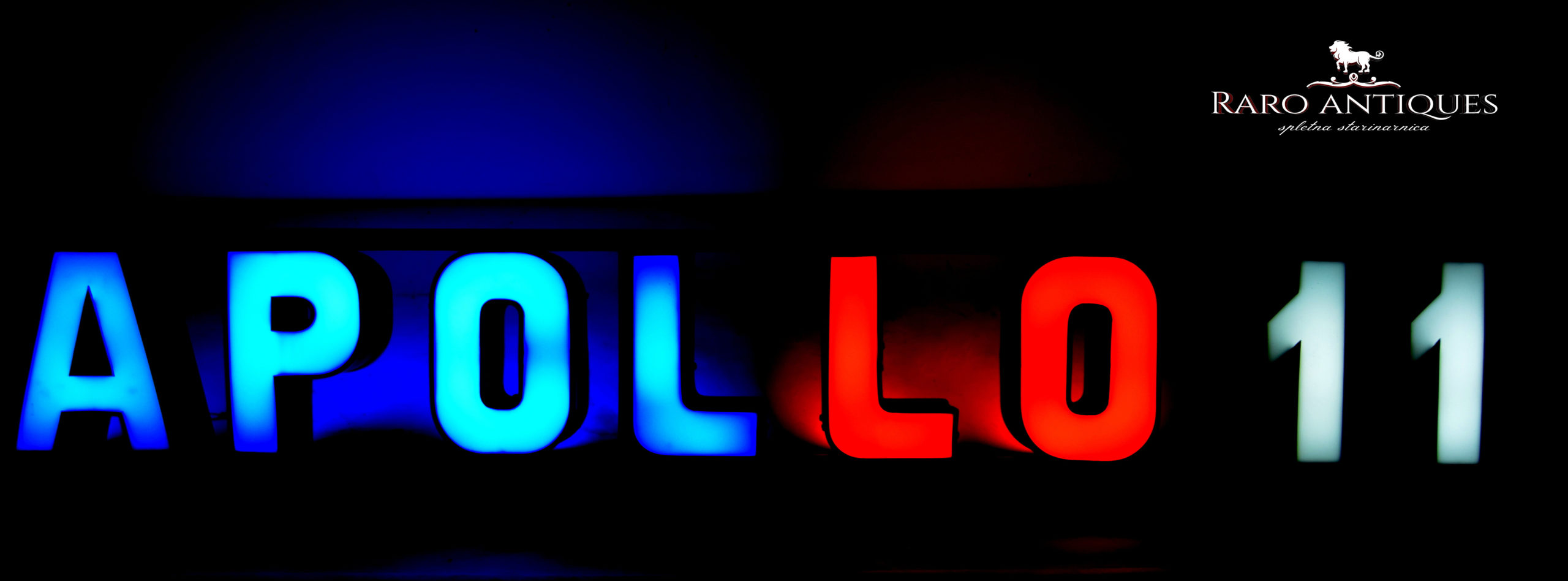
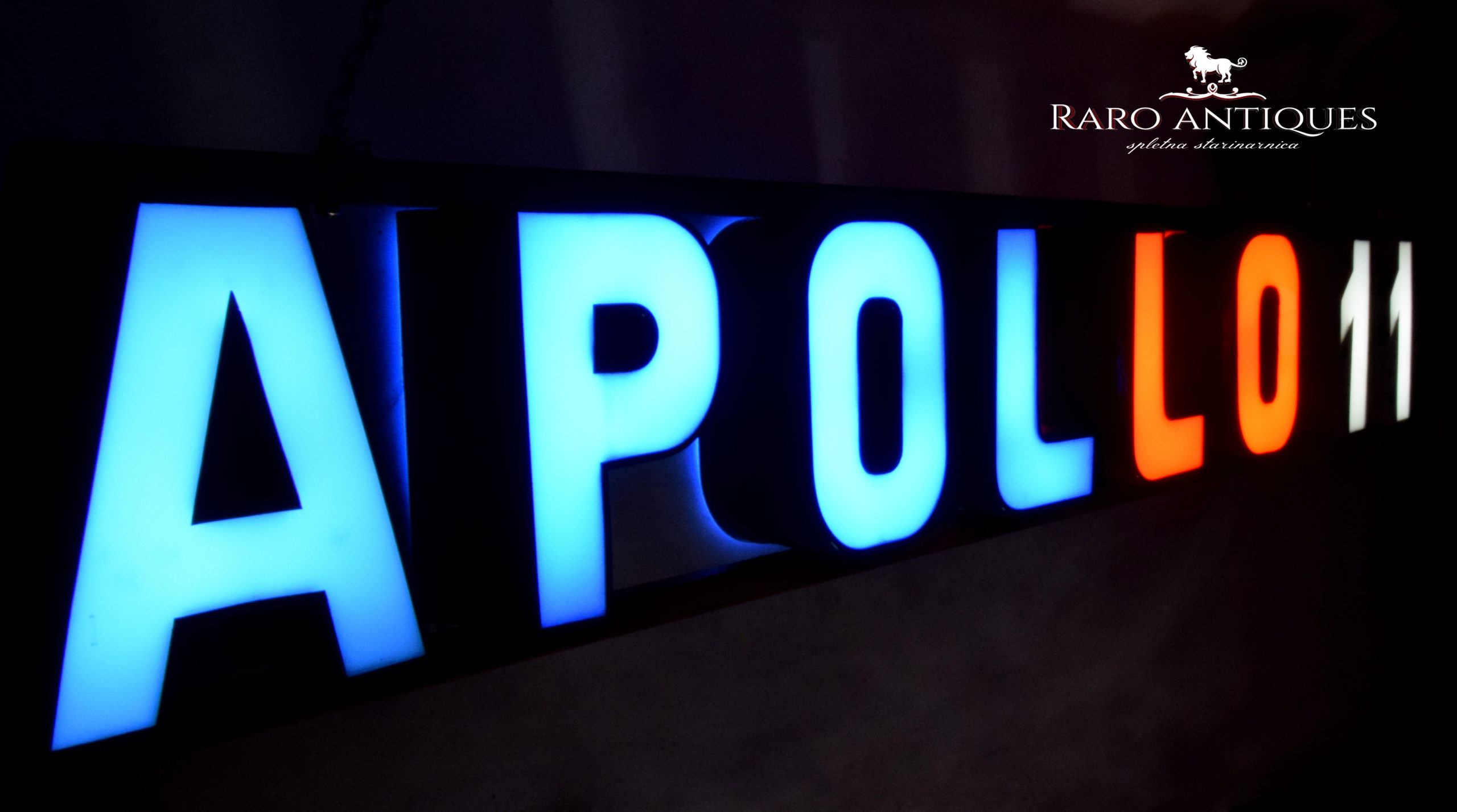
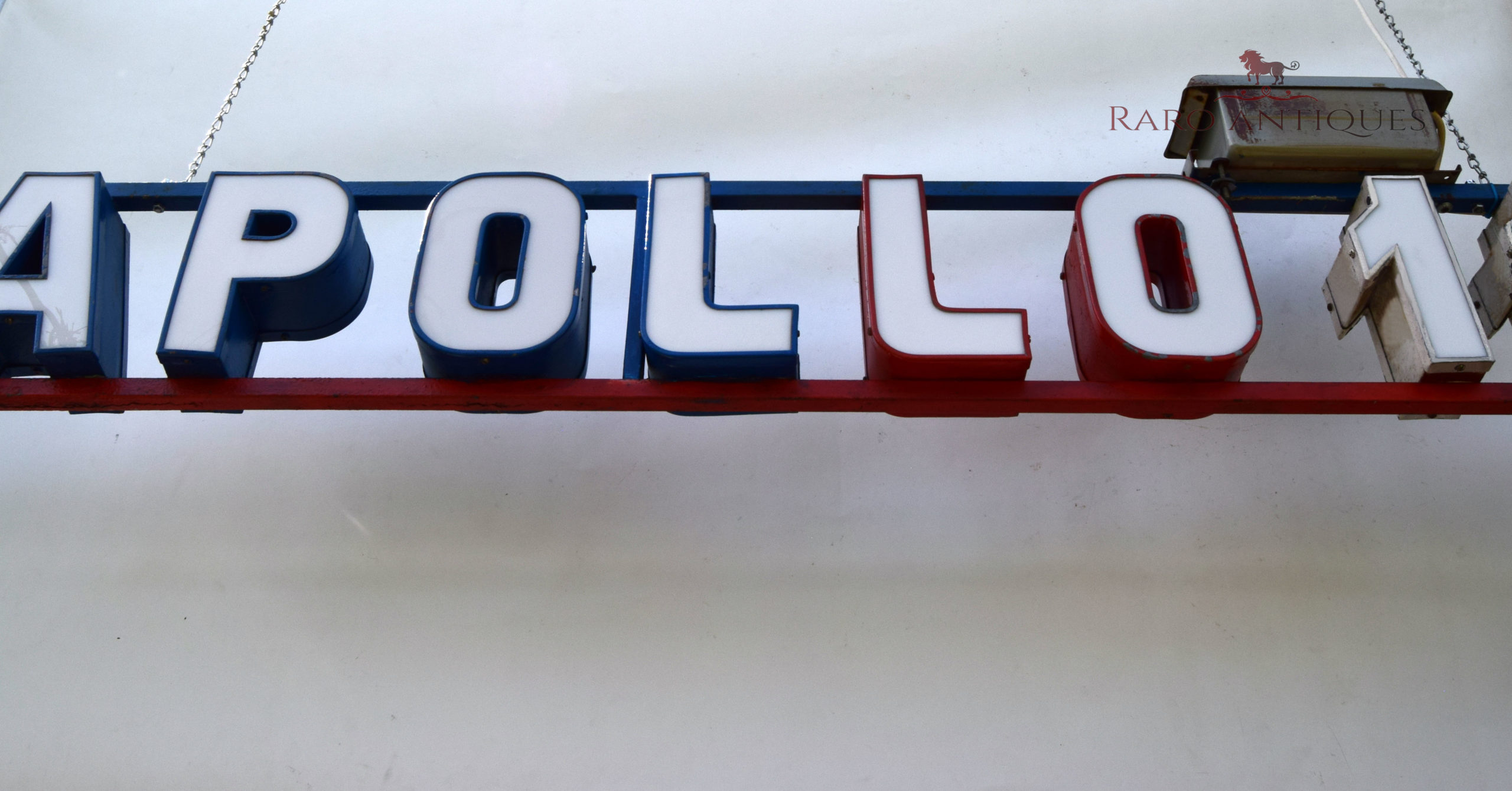
Vintage neon sign “Apollo11”, from the early 1970s.

A rare neon sign with original working neon tubes. Want something extraordinary in your home? Something out of this world? Then this is the perfect decorative piece for you. It will stand out in any home or establishment, captivating everyone with its size and neon lights in three colors. Due to its association with the first manned Moon landing, it’s not just a collector’s item but also a reminder of a historic event that will remain in the collective memory of humanity and an unforgettable moment in global culture.

Apollo 11 was the first manned space mission to land on the Moon. In 1969, when the landing occurred, millions of people were glued to their television screens, as the Moon landing had been a subject of fascination for years. People were anxious, not knowing what might befall the first astronauts. Would they encounter extraterrestrials? Would harmful radioactive rays kill them? There were more questions than answers, but people were still more curious and excited than frightened, thrilled that humanity could land on the moon and even travel through space. The successful landing and subsequent return to Earth thrilled humanity and inspired the imagination for years to come. It was and will forever be a story of what is possible with science, technology, and the will to achieve the impossible. Therefore, it’s not surprising that during that time, people almost worshipped the Apollo 11 mission and produced items with a space theme.

The first neon lights appeared as early as 1890, but they were used exclusively for industrial purposes, such as by miners in France who had neon lamps. Neon lights as we know them today appeared around 1910 when they were invented by French innovator Georges Claude. The first neon sign was created in 1915 for a Parisian hair salon. In 1923, the motor company Packard Motors purchased two neon signs for advertising in Los Angeles, bringing neon signs to America for the first time, where their popularity soared. Claude held a patent on neon lights, giving him a monopoly on them in the 1920s. Only after the patent expired and the secret of making these bright lights was revealed did others have the opportunity to start manufacturing them. That’s when their popularity skyrocketed. In the 1930s, neon lights could be found in the Moulin Rouge in Paris, on the Las Vegas Strip, and in New York’s Times Square. Over the next few decades, neon provided vibrant light, transforming ordinary buildings into continuous advertising displays for all types of businesses. Neon lights were even used for political purposes. In communist countries, buildings were decorated with them to give city residents the glamorous feel of Western metropolises. However, making neon lights was quite time-consuming and complex, as they had to be hand-blown and shaped, and then filled with gas. They also began to lose their futuristic charm in the 1960s, leading to a decline in their popularity, as they were replaced by more modern and cheaper lighting products. Today, they are a popular home decoration, rarely used for advertising purposes like in their early days.

Dimensions: 156 x 34.5 x 9 cm

Weight: 16 kg

The neon sign is in excellent condition. The neon tubes are original and working.

1 in stock

Add to wishlist
SKU: A943 Categories: Lights, Decor, New Stock, Premium
Share
Facebook Email linkedin WhatsApp WhatsApp Viber
  • Additional information
  • Reviews (0)
  • Delivery
Additional information
Weight 16 kg
Dimensions 156 × 34,5 × 9 cm
Reviews (0)

Reviews

There are no reviews yet.

Be the first to review “VINTAGE NEON SIGN” Cancel reply

Your email address will not be published. Required fields are marked *

Delivery

Shipping Information for International Orders:

For deliveries, please contact us prior to your purchase or immediately after placing your order to arrange shipping options, costs, and delivery timelines.

We work with trusted and reliable shipping partners to ensure your order is delivered safely and on time. Since shipping costs and options vary depending on the location and type of item, we will work with you to find the best solution.

Important: For purchases outside of Europe, the buyer is responsible for any applicable import duties, customs fees, or other local taxes as required by the laws of the destination country.

For more information or inquiries, please contact us.

Related products

Close

VASE PIERO FORNASETTI

380,00 €

Vase by Piero Fornasetti from the 1960s.

A vase depicting the face of a Moor, created by the renowned Italian artist Piero Fornasetti. An elegant and highly decorative addition. Piero Fornasetti (1913-1988) was a versatile Italian artist who is challenging to categorize within a specific period. He operated based on his principles, without adhering to the norms and designs of his time. Engaging in various aesthetic disciplines, including painting, drawing, graphic design, and product design, Fornasetti reached the height of his creativity in the 1950s. Encouraged by Gia Ponti, he opened his studio in Milan, where he designed and crafted everyday objects enriched with decorations that brought art into the homes of ordinary people. Recognized as an artist ahead of his time, Piero Fornasetti made a significant contribution to the renewal of taste and the creation of a unique and immediately recognizable visual language in contemporary culture. Dimensions: 27 x 21 cm Weight: 2.1 kg The vase is in excellent condition, with some minor wear on the gold color in certain areas.
Add to wishlist
Buy
Quick view
Close

SPRING-LOADED CANDLE HOLDER DITMAR

330,00 €

Spring-loaded candle holder made by the Ditmar company, produced between 1895 and 1907.

A rare example of a perfectly preserved spring-loaded candle holder. The candle holder, with its spring, allows you to adjust the height of the candle so that, regardless of the candle's length, it always stays at the same height. An interesting addition to a festive table or a shelf where you can always admire it. Karl Rudolf Ditmar, the founder of the Ditmar company, was born on May 3, 1818, in Prenzlau - Brandenburg. He came to Vienna in 1839. During a business trip to Paris, he is said to have encountered the still-controversial, heavy-working moderator lamp. Improving these lamps soon became his main concern. On August 5, 1840, Ditmar founded a trading company dealing with oil lamps, cups, and lacquered tin. The next step was establishing a workshop for lamp repairs, followed by an attempt at in-house production. Together with his brother Friedrich, whom he invited to Vienna, Rudolf led the company as "Gebrüder Ditmar" in 1841. For this purpose, a "state permit for the production of lacquered tin and zinc composite goods" was issued, creating a legal basis for the first lamp factory in Vienna and Austria. During this time, the brothers succeeded in developing the "Viennese moderator lamp," a spring-loaded lamp that was both inexpensive and reliable due to its adjustable oil supply. After the death of his brother Friedrich in 1858, "Gebrüder" was removed from the company's name, and it became Lampen Fabrik R. Ditmar. Even after his death in 1895, the company retained his name and tradition. Dimensions: 41 x 11.5 cm Weight: 510 g The spring-loaded candle holder is in excellent condition.
Add to wishlist
Buy
Quick view
Close

ANTIQUE PENDANT LIGHT

530,00 €

Antique pendant light fixture from the 1920s.

An intriguing pendant light made of mercury glass, which was once used above counters in goldsmiths' and jewelers' shops to accentuate the sparkle of diamonds, precious stones, and noble metals. Now it will be an exceptional decoration above your counter or table. Due to the relief shapes on the glass itself, it is highly decorative, and it also emits beautiful light as the mercury reflects it nicely. Such lights are, of course, extremely rare and therefore highly sought after due to their fragility. Dimensions: 47 x 10.5 cm Weight: 350 g The ceiling light fixture is in excellent condition. Uses an E27 bulb.
Add to wishlist
Buy
Quick view
Close

DEATH MASK

750,00 €

The creation of death masks is one of the oldest sculptural techniques, serving as a memory of the deceased or as a model for creating portraits. They are made by taking an impression of the face of the deceased in wax or plaster, usually a few hours after death.

The particular death mask you have is original and made of plaster, depicting an unknown man. It is an unusual addition to any room, carrying significant symbolic meaning (Memento mori). Death masks are undoubtedly one of the most intriguing traditions of humanity, a way for people to preserve the memory of the deceased. The most famous death masks come from Egypt, where they were buried with the deceased. Similarly, ancient Roman masks made of wax are known, used as a model for carving into tombstones. This tradition continues for centuries until the end of the Middle Ages when there was a shift in the material used, and masks began to be made of plaster. During this time, masks started to be used in funeral ceremonies and were later kept in libraries, museums, and universities. Death masks were not only made for royal and noble figures but also for prominent individuals such as poets, philosophers, and playwrights. Similar to ancient Rome, these death masks were often used as references for portraits, sculptures, busts, or engravings depicting the deceased. Dimensions: 26 x 22 cm Weight: 780 g The mask is in excellent condition and has an iron hook for wall mounting.
Add to wishlist
Buy
Quick view
Close

PERSIAN CAVIAR BOWL

385,00 €

Persian caviar bowl from the mid-20th century.

Serve caviar in the most suitable way with this handmade caviar bowl. A handmade brass cup with a round dome, adorned with a Persian design featuring scenes in the Mameluke style, will be excellent for a royal presentation of caviar. The most prestigious caviar comes from Persia, modern-day Iran, where they call it the black pearls of the Caspian Sea. Caviar is obtained from the beluga fish, which is extremely rare and reproduces slowly, making this caviar exceptionally expensive and suitable for special occasions. That's why these bowls were created – to elevate the enjoyment of caviar to an even higher level. Dimensions: 20 x 14 cm Weight: 350 g The caviar bowl is excellently preserved.
Add to wishlist
Buy
Quick view
Close

SCOLD’S BRIDLE

820,00 €

The scold's bridle.

The scold's bridle or brank, originating from Scotland in the 16th century, was a horrific device designed to cause shame, discomfort, and pain to its wearer. Its usage spread from Scotland to England, Germany, and other European countries. Its purpose was to shame, silence, and physically discomfort individuals who were deemed unruly or outspoken, particularly women who challenged authority or societal norms. Often, these bridles were crafted to resemble masks with distorted facial features, such as large ears, noses, or horns. Some even had bells attached to them, further humiliating the wearer and drawing attention to their presence. The bridle, worn for a minimum of several hours, prevented its wearer from eating, drinking, and most importantly, speaking. It consisted of a metal part inserted into the mouth, similar to a bit in a horse's harness, which held the tongue in place. In more severe cases, these metal mouthpieces had spikes, causing additional pain. The bridle was predominantly used as a punishment for women who were considered too vocal or contentious in public, especially widows or older women who were not under male control. It was also known as a "witch's bridle," indicating its use during witch trials to prevent accused witches from casting spells on their captors or communities. Additionally, disobedient wives could be subjected to this punishment at their husbands' request. While men could also face this punishment if perceived as a threat to the common good, it was primarily reserved for women deemed gossips, adulterers, prostitutes, or witches, as well as those who defied societal norms. The bridle served as a stark reminder of the oppression women faced and the consequences of expressing dissent in conservative societies. Remarkably, this punishment was not abolished in England until 1967, reflecting the enduring legacy of patriarchal control and the gradual progress towards women's rights. The scold's bridle serves as a poignant relic of the past, prompting reflection on the darker aspects of human history. Dimensions: 26 x 25.5 x 21 cm Weight: 3.2 kg The scold's bridle is in excellent condition, complete with a lock and accompanying key.
Add to wishlist
Buy
Quick view
Close

TABLE LAMP TOMOS1

520,00 €

Table lamp, model Tomos1 by designer Kazuhide Takahama, made in Italy in the 1970s at Sirrah.

A solid table lamp that will be an excellent choice for any table, allowing you to adjust its height and thus ensure excellent lighting in any position. Kazuhide Takahama (1930–2010) was born on the Japanese island of Kyushu. In 1953, he graduated in architecture from the Tokyo Institute of Technology.At the age of 27, he became a lecturer at the same university and got his first job as a designer: he was responsible for setting up the Japanese pavilion for the XI Triennale in Milan in 1957. On this occasion, he met Dino Gavina. This first meeting was a turning point in his career and the beginning of a fruitful collaboration and deep friendship. Before returning to Japan, Kazuhide Takahama designed Dino Gavina's Naeko sofa. While staying in Japan, he was a professor at the university and curator for architectural and design projects, but still maintained contacts with Gavina, who finally persuaded him to move to Italy. There were numerous collaborations with Italian design companies such as Gavina, Simon, Paradisoterrestre, B&B, Sirrah (later incorporated by Guzzini), to name just a few. His professional activity was not limited to designing furniture and lighting: he designed interior and exterior spaces and oversaw the renovation of private residences and public works. Among them, the facade and VIP lounge of the Guglielmo Marconi airport, and the canopies of the bus station in Bologna. Dimensions: 80 x 16.5 cm Weight: 6.1 kg Both lamps are in excellent condition, with visible wear on the lacquered paint. For E27 light bulbs. Price is for one.
Add to wishlist
Buy
Quick view
Close

VINTAGE SATSUMA VASE

580,00 €

Vintage satsuma vase, from the 20th century.

Satsuma is a type of Japanese pottery originating from the Satsuma province. Today, it can be divided into two different categories: the original plain dark clay from early Satsuma, produced in Satsumi around 1600, and elaborately decorated export Satsuma in ivory tones, which began production in the nineteenth century in various Japanese cities. This vase is an excellent example from the early 20th century and will be a wonderful decorative piece with a rich history. Dimensions: 76 x 32 cm Weight: 7.2 kg The vase is well-preserved.
Add to wishlist
Buy
Quick view

Sign up to be among the first to be notified of new discoveries

Facebook Twitter Instagram Pinterest
  • About us
  • Blog
  • Contact
  • My account
  • Frequently asked questions
  • Privacy Policy
  • General Terms and Conditions
  • Decor
  • New Stock
  • Other
  • Furniture
  • Premium
  • Lights
  • Sold
Raro Antiques All rights reserved; 2024

Shopping cart

close
close
Start typing to see products you are looking for.
  • Offers
  • ABOUT US
  • Contact
  • Login / Register
Scroll To Top
The online store uses certain cookies that are necessary for the proper functioning of the site.
More info Accept