RaroAntiques RaroAntiques
  • Offers
  • Shipping
  • ABOUT US
    • Frequently asked questions
  • Contact
1 item / 446,00 €
Login / Register

Sign inCreate an Account

Lost your password?
Menu
RaroAntiques RaroAntiques
1 item / 446,00 €
View cart “WALL LIGHT BAROVIER & TOSO” has been added to your cart.
360 product view
    0%
    HomeDecor CHASTITY BELT

    CHASTITY BELT

    580,00 €

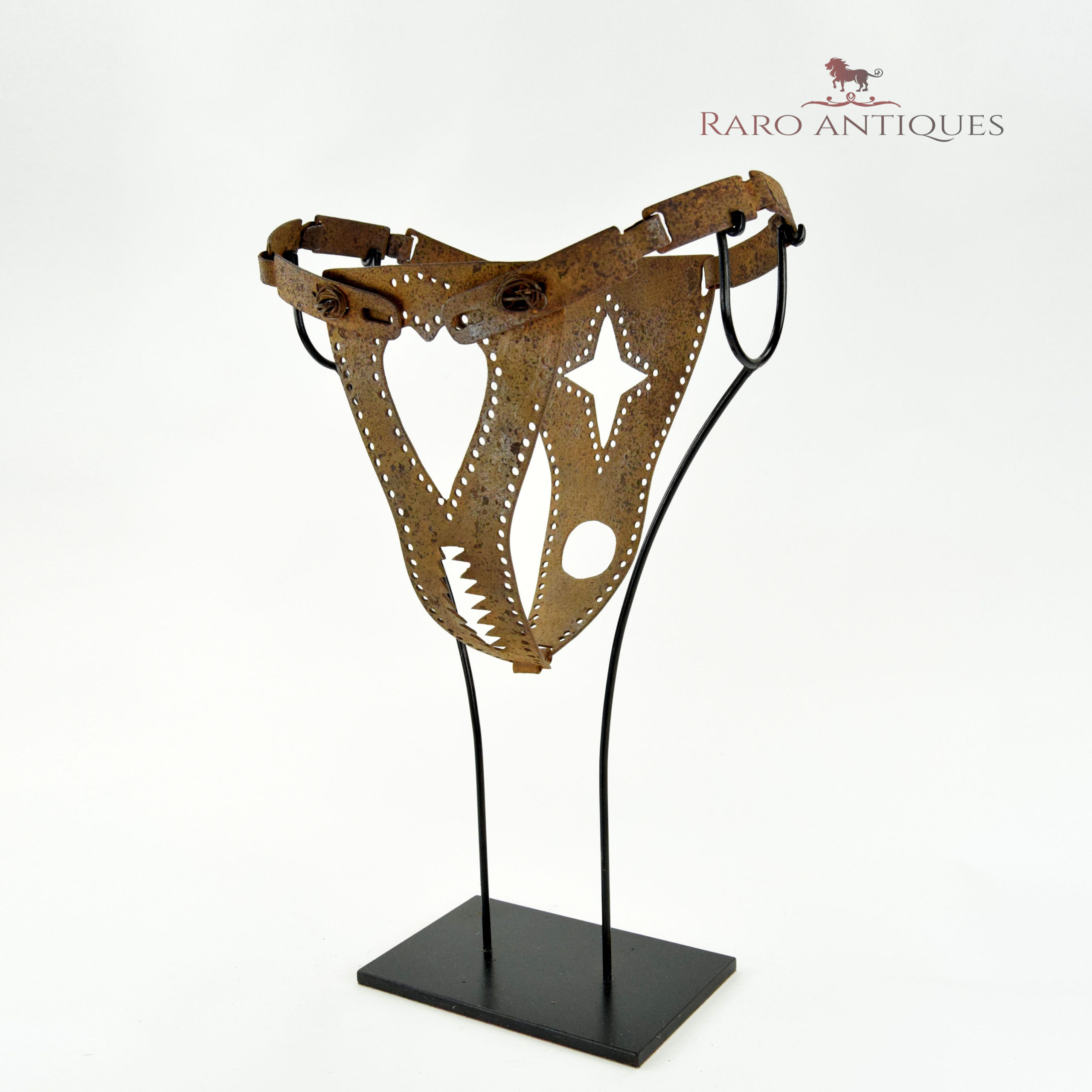
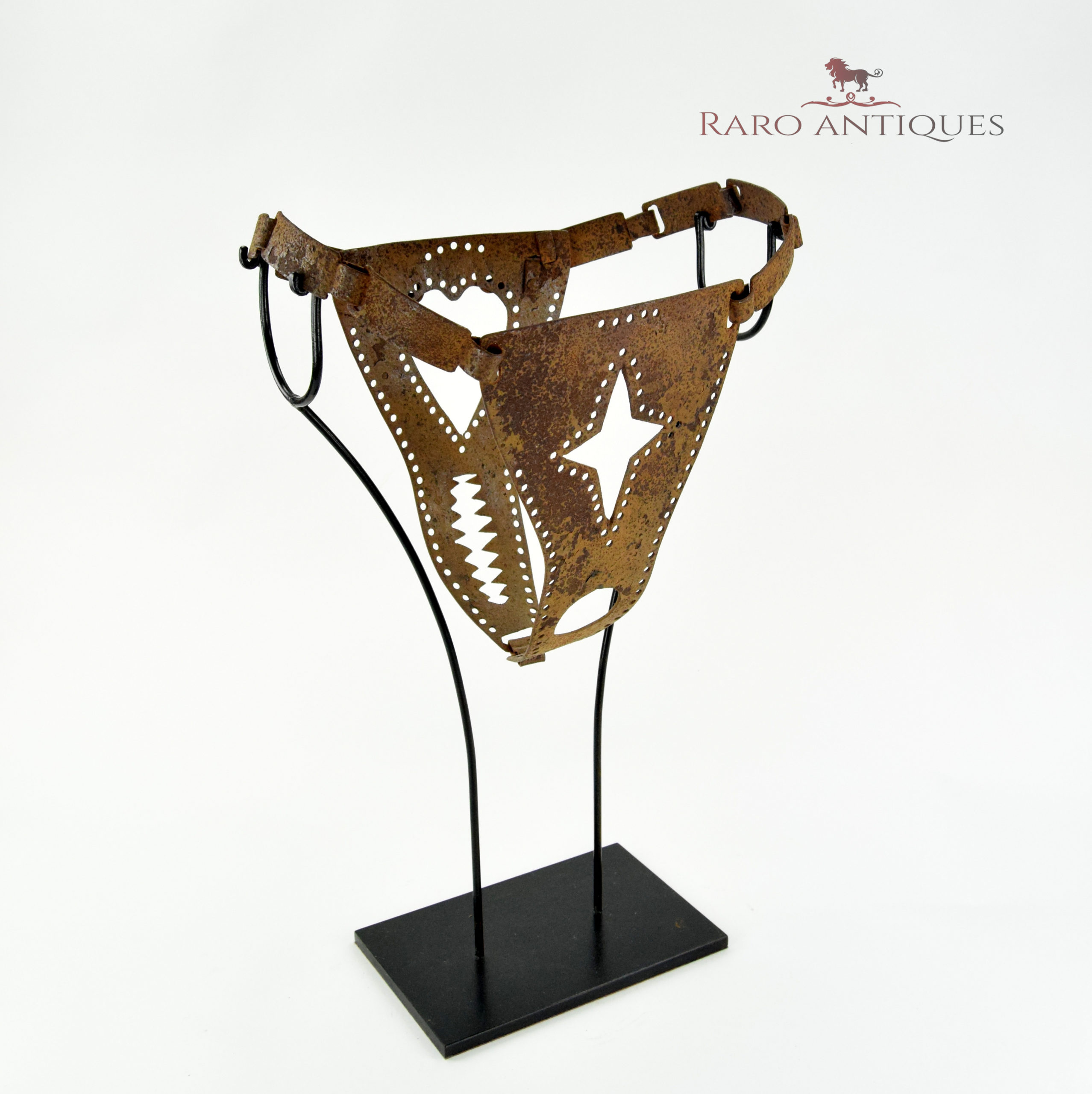
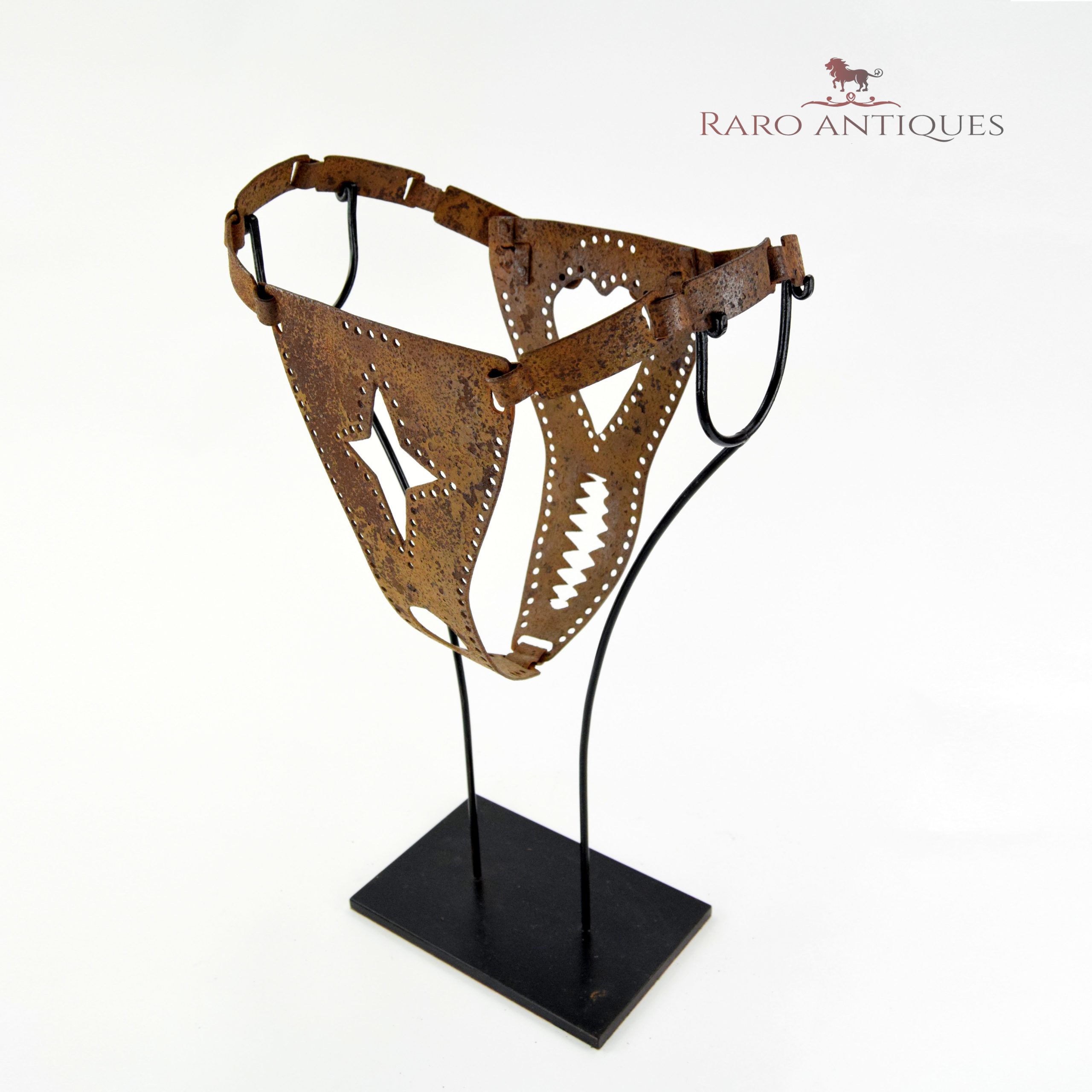
    The chastity belt.

    Who hasn’t heard of the chastity belt? A device that supposedly helped husbands and fathers ensure that their wives and daughters remained untouched and “pure” as far back as the Middle Ages. This was said to be a metal belt tightened around a woman’s waist, locked by the man with a large padlock. This medieval man could then be free of worries that his chosen one would engage in sexual relations with someone else, despite their prolonged absence due to wars. How barbaric and unhygienic, isn’t it? At least that’s the story that has been told for centuries. Simple, shocking, and somewhat amusing, as it portrays past people as extremely backward, contrasting with our enlightened and better selves. However, this is not the true story of the chastity belt. The truth is, there is no physical evidence that chastity belts existed in those times, at least not in a physical form. They are mentioned a few times in literature and depicted in artworks, albeit more in an allegorical and satirical sense. The earliest evidence of a chastity belt can be found in a book by military engineer von Eichstadt from 1405, which described catapults, armor, and torture devices, including a sketch of a chastity belt. Historians are convinced that this was just one of the humorous inventions he included in the book, similar to a device for becoming invisible or a fart-propelled contraption, which further solidifies the fact that chastity belts were not used in the Middle Ages. The surviving examples of chastity belts found today are believed to have been made in the 19th century. With the advent of industrialization in Europe, materials such as iron and steel became more accessible, and soon blacksmiths realized there was a particular market they could tap into. Puritanical masses of that time were willing to pay a lot of money to view medieval torture devices in museums and exhibitions, satisfying their craving for their own judgment of medieval barbarism. Thus, blacksmiths of that time made several torture devices, including chastity belts, and sold them to museums and collections. Interestingly, the chastity belt probably was never in widespread use in the past, but its use has spread precisely in modern times, in BDSM and fetish communities. Thus, the chastity belt is an urban legend of the Middle Ages that has survived to this day. Now it can be an interesting addition to any historical collection or a fascinating ornament to spark debates. Certainly, one of those pieces that tell a story and stimulate our imagination.

    Dimensions: 55 x 35 x 25 cm

    Weight: 4 kg

    The chastity belt is in excellent condition.

    1 in stock

    Add to wishlist
    SKU: A963 Categories: Decor, New Stock, Premium
    Share
    Facebook Email linkedin WhatsApp WhatsApp Viber
    • Additional information
    • Reviews (0)
    • Delivery
    Additional information
    Weight 4 kg
    Dimensions 55 × 35 × 25 cm
    Reviews (0)

    Reviews

    There are no reviews yet.

    Be the first to review “CHASTITY BELT” Cancel reply

    Your email address will not be published. Required fields are marked *

    Delivery

    Shipping Information for International Orders:

    For deliveries, please contact us prior to your purchase or immediately after placing your order to arrange shipping options, costs, and delivery timelines.

    We work with trusted and reliable shipping partners to ensure your order is delivered safely and on time. Since shipping costs and options vary depending on the location and type of item, we will work with you to find the best solution.

    Important: For purchases outside of Europe, the buyer is responsible for any applicable import duties, customs fees, or other local taxes as required by the laws of the destination country.

    For more information or inquiries, please contact us.

    Related products

    Close

    CHANDELIER J. T. KALMAR “SONNE”

    950,00 €

    Chandelier flush mount, designed by the Austrian designer J.T. Kalmar.

    The "Sonne" chandelier, meaning "sun" in German, is an interesting modernist fixture whose design seamlessly integrates into any contemporary space. With its simple yet sophisticated lines, this light fixture is not just for illumination; it adds a touch of style to your space. The small glass flowers at the tips further emphasize the opulence of this chandelier, which can also be used as a wall light. Austrian designer and entrepreneur Julius Theodor Kalmar was born in 1884 in Vienna to Julius August Kalmar, the founder of the eponymous company specializing in chandeliers and other objects made of cast bronze. Growing up surrounded by design due to his father and their company, Julius Theodor gained rich design knowledge from an early age. His educational journey led him to the Birmingham School of Art and the University of Applied Arts in Vienna, where he studied under the mentorship of the Secessionist architect Josef Hoffmann. After completing his studies, Julius Theodor joined his father's company in 1906 and took it over in 1913. Under his leadership, the company shifted away from the classical design of the time. Kalmar developed his distinctive design aesthetic, emphasizing the integration of form and function and combining classical traditions with innovative ideas. By the mid-1920s, his products were among the most sought after. In the 1930s, Kalmar began collaborating with the Austrian Werkbund, creating a series of glass lights with a purist aesthetic. Throughout his career, he collaborated with renowned architects such as Oskar Strnad, Josef Frank, and Oskar Wlach. In the last decade of his life, he designed numerous light collections, including the popular Atomic collection. Kalmar passed away in 1968, but the Kalmar company continues to create luxury lighting to this day. Kalmar lights can be found in prestigious locations like the Kremlin Presidential Palace and the Burj Tower in Dubai. Dimensions: 49 x 14 cm Weight: 1 kg The light fixture is in good condition, showing patina on the brass. Compatible with E14 bulbs.
    Add to wishlist
    Buy
    Quick view
    Close

    SCOLD’S BRIDLE

    820,00 €

    The scold's bridle.

    The scold's bridle or brank, originating from Scotland in the 16th century, was a horrific device designed to cause shame, discomfort, and pain to its wearer. Its usage spread from Scotland to England, Germany, and other European countries. Its purpose was to shame, silence, and physically discomfort individuals who were deemed unruly or outspoken, particularly women who challenged authority or societal norms. Often, these bridles were crafted to resemble masks with distorted facial features, such as large ears, noses, or horns. Some even had bells attached to them, further humiliating the wearer and drawing attention to their presence. The bridle, worn for a minimum of several hours, prevented its wearer from eating, drinking, and most importantly, speaking. It consisted of a metal part inserted into the mouth, similar to a bit in a horse's harness, which held the tongue in place. In more severe cases, these metal mouthpieces had spikes, causing additional pain. The bridle was predominantly used as a punishment for women who were considered too vocal or contentious in public, especially widows or older women who were not under male control. It was also known as a "witch's bridle," indicating its use during witch trials to prevent accused witches from casting spells on their captors or communities. Additionally, disobedient wives could be subjected to this punishment at their husbands' request. While men could also face this punishment if perceived as a threat to the common good, it was primarily reserved for women deemed gossips, adulterers, prostitutes, or witches, as well as those who defied societal norms. The bridle served as a stark reminder of the oppression women faced and the consequences of expressing dissent in conservative societies. Remarkably, this punishment was not abolished in England until 1967, reflecting the enduring legacy of patriarchal control and the gradual progress towards women's rights. The scold's bridle serves as a poignant relic of the past, prompting reflection on the darker aspects of human history. Dimensions: 26 x 25.5 x 21 cm Weight: 3.2 kg The scold's bridle is in excellent condition, complete with a lock and accompanying key.
    Add to wishlist
    Buy
    Quick view
    Close

    VASE DERUTA

    850,00 €

    Vase made in the Italian town of Deruta, in the first half of the 20th century.

    An extremely interesting, large Deruta vase. Such large ceramic pieces require special attention in the creation process, as they are very delicate in the initial stages. This attention is strongly felt when examining its precise craftsmanship, with carefully added decorations such as flowers and leaves. This exceptional piece will be ideal for decorating both indoor and outdoor spaces in homes or business environments. Because this is not just an ordinary decorative item but also a part of the art and history of Deruta, it will be an outstanding addition that enriches and enhances the places where it is displayed. Deruta, located in the hills of Umbria, has been globally renowned for the production of artistic ceramics since the Middle Ages. Deruta is still today the center of Italy's largest production of artistic majolica. Artistic production had exceptional opportunities to showcase its pottery masterpieces from the earliest periods: in the Assisi monastery. In the Franciscan archives in Assisi, documents from 1358 and 1359 were found, mentioning the potter and wholesale merchant Cecce d'Alessandro, who sold hundreds of ceramic pieces to monasteries. Dimensions: 80.5 x 27 cm Weight: 8.7 kg The vase is in excellent condition, with slight chipping on some parts of the decorations, which does not detract from its overall appearance.
    Add to wishlist
    Buy
    Quick view
    Close

    VINTAGE CONSOLE TABLE

    820,00 €

    Vintage console table from the 1950s, made in Italy.

    This table is wooden, with glass shelves and brass details on the legs and drawers, while its extravagance is accentuated by the back covered in artificial snakeskin. As a console table, it is truly something special and suitable for almost any space, particularly living rooms, hallways, foyers, as well as commercial spaces and restaurants. Its narrow design means it will fit easily into any space, while offering excellent storage with two shelves and two drawers. An excellent example of Italian design, timeless and versatile regardless of space or time. Dimensions: 109 x 93.5 x 32 cm Weight: 19 kg The console table is in excellent condition.
    Add to wishlist
    Buy
    Quick view
    Close

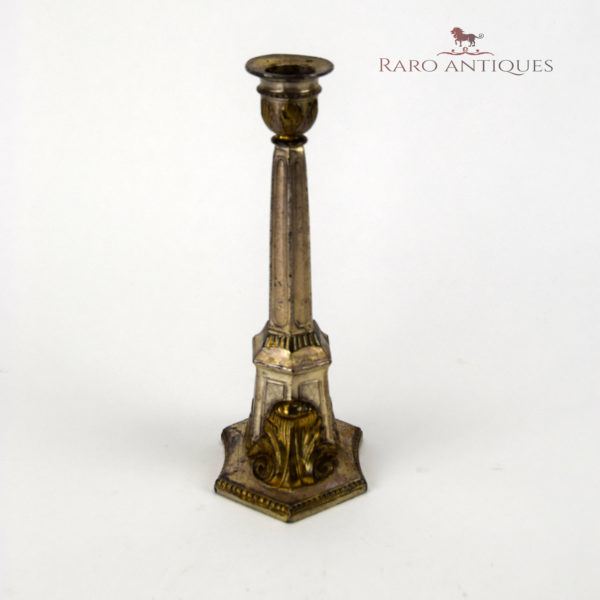
    ANTIQUE CANDLESTICK

    700,00 €

    Very interesting and decorative candlestick.

    It has ink traces on it, which especially captivate us, as we can imagine someone writing a letter by candlelight, and such a simple detail immediately transports us into the past. Candlesticks are a welcome decoration in any home. They can be placed in the dining room to brighten up a festive dinner, or in the bedroom to create a romantic atmosphere. However they are used, candlesticks are undoubtedly one of those items that come in handy on every occasion. Dimensions: 21.5 x 11 cm Weight: 560 g The candlestick is in excellent condition."
    Add to wishlist
    Buy
    Quick view
    Close

    VINTAGE SATSUMA VASE

    580,00 €

    Vintage satsuma vase, from the 20th century.

    Satsuma is a type of Japanese pottery originating from the Satsuma province. Today, it can be divided into two different categories: the original plain dark clay from early Satsuma, produced in Satsumi around 1600, and elaborately decorated export Satsuma in ivory tones, which began production in the nineteenth century in various Japanese cities. This vase is an excellent example from the early 20th century and will be a wonderful decorative piece with a rich history. Dimensions: 76 x 32 cm Weight: 7.2 kg The vase is well-preserved.
    Add to wishlist
    Buy
    Quick view
    Close

    SPRING-LOADED CANDLE HOLDER DITMAR

    330,00 €

    Spring-loaded candle holder made by the Ditmar company, produced between 1895 and 1907.

    A rare example of a perfectly preserved spring-loaded candle holder. The candle holder, with its spring, allows you to adjust the height of the candle so that, regardless of the candle's length, it always stays at the same height. An interesting addition to a festive table or a shelf where you can always admire it. Karl Rudolf Ditmar, the founder of the Ditmar company, was born on May 3, 1818, in Prenzlau - Brandenburg. He came to Vienna in 1839. During a business trip to Paris, he is said to have encountered the still-controversial, heavy-working moderator lamp. Improving these lamps soon became his main concern. On August 5, 1840, Ditmar founded a trading company dealing with oil lamps, cups, and lacquered tin. The next step was establishing a workshop for lamp repairs, followed by an attempt at in-house production. Together with his brother Friedrich, whom he invited to Vienna, Rudolf led the company as "Gebrüder Ditmar" in 1841. For this purpose, a "state permit for the production of lacquered tin and zinc composite goods" was issued, creating a legal basis for the first lamp factory in Vienna and Austria. During this time, the brothers succeeded in developing the "Viennese moderator lamp," a spring-loaded lamp that was both inexpensive and reliable due to its adjustable oil supply. After the death of his brother Friedrich in 1858, "Gebrüder" was removed from the company's name, and it became Lampen Fabrik R. Ditmar. Even after his death in 1895, the company retained his name and tradition. Dimensions: 41 x 11.5 cm Weight: 510 g The spring-loaded candle holder is in excellent condition.
    Add to wishlist
    Buy
    Quick view
    Close

    BIEDERMEIER CHANDELIER

    3.700,00 €

    Biedermeier chandelier from the early 19th century.

    An exceptional wooden chandelier, originally designed for candles, has been electrified to illuminate your home or business space. This chandelier is a true representation of the luxury of bygone times. With wooden details on both the chain and the frame, it is a timeless piece that complements almost any style. Dimensions: 95 x 85 cm Weight: 3.2 kg The chandelier is in excellent condition. Suitable for six E14 light bulbs.
    Add to wishlist
    Buy
    Quick view

    Sign up to be among the first to be notified of new discoveries

    Facebook Twitter Instagram Pinterest
    • About us
    • Blog
    • Contact
    • My account
    • Frequently asked questions
    • Privacy Policy
    • General Terms and Conditions
    • Decor
    • New Stock
    • Other
    • Furniture
    • Premium
    • Lights
    • Sold
    Raro Antiques All rights reserved; 2024

    Shopping cart

    close
    close
    Start typing to see products you are looking for.
    • Offers
    • ABOUT US
    • Contact
    • Login / Register
    Scroll To Top
    The online store uses certain cookies that are necessary for the proper functioning of the site.
    More info Accept