RaroAntiques RaroAntiques
  • Offers
  • Shipping
  • ABOUT US
    • Frequently asked questions
  • Contact
1 item / 580,00 €
Login / Register

Sign inCreate an Account

Lost your password?
Menu
RaroAntiques RaroAntiques
1 item / 580,00 €
View cart “VINTAGE SATSUMA VASE” has been added to your cart.
HomePremium ANTIQUE BUST SCULPTURE

ANTIQUE BUST SCULPTURE

1.460,00 €

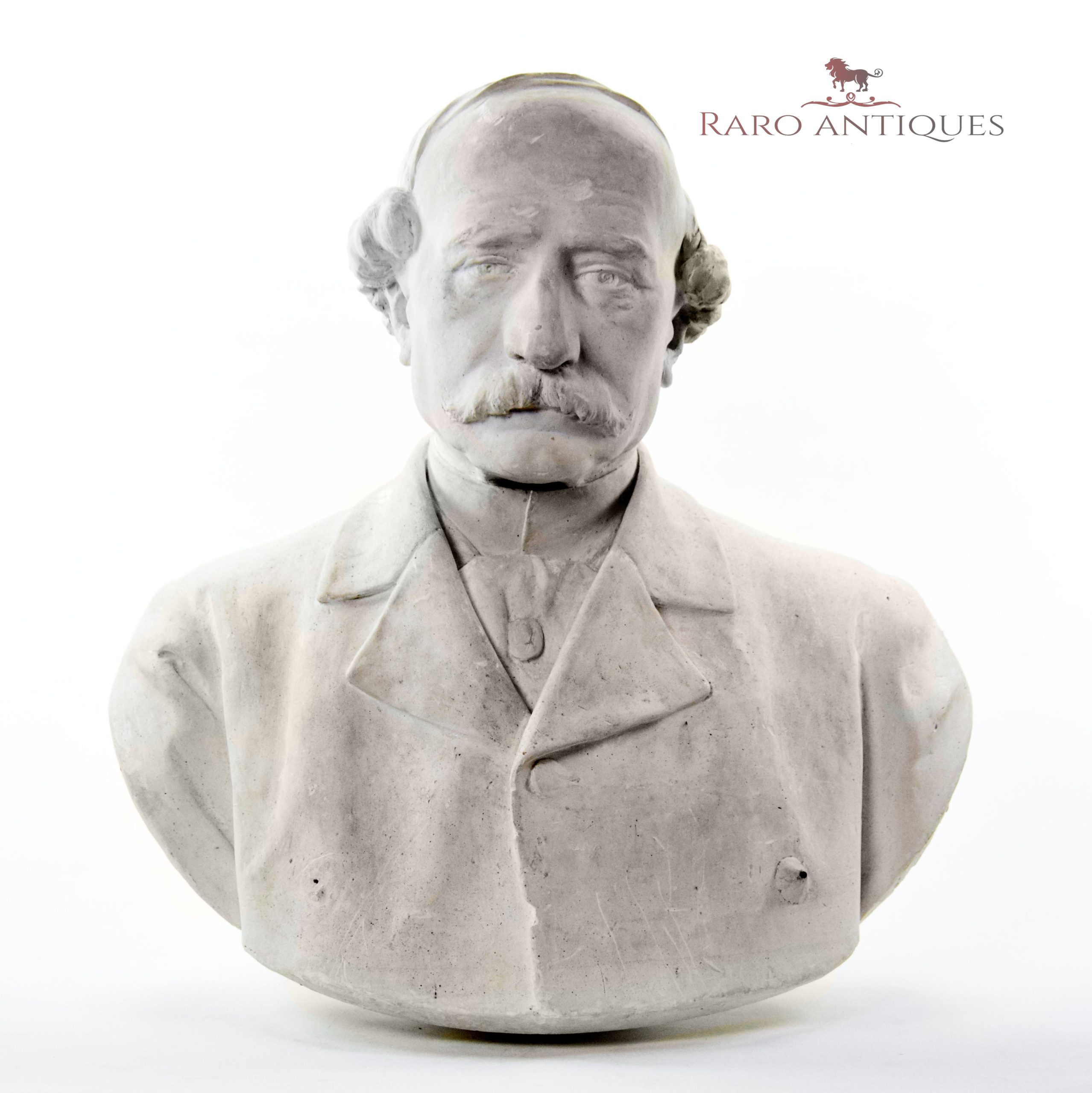
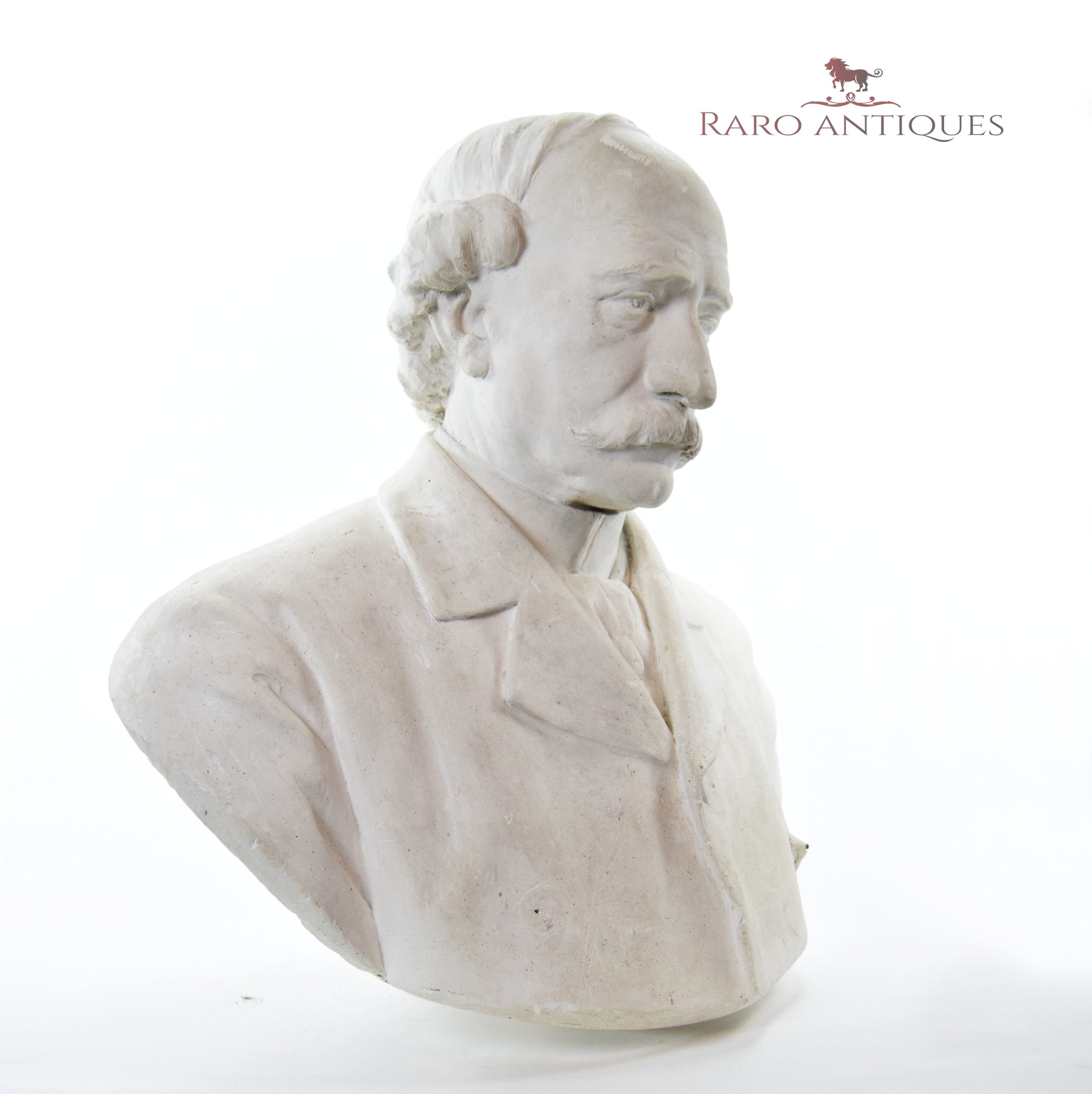
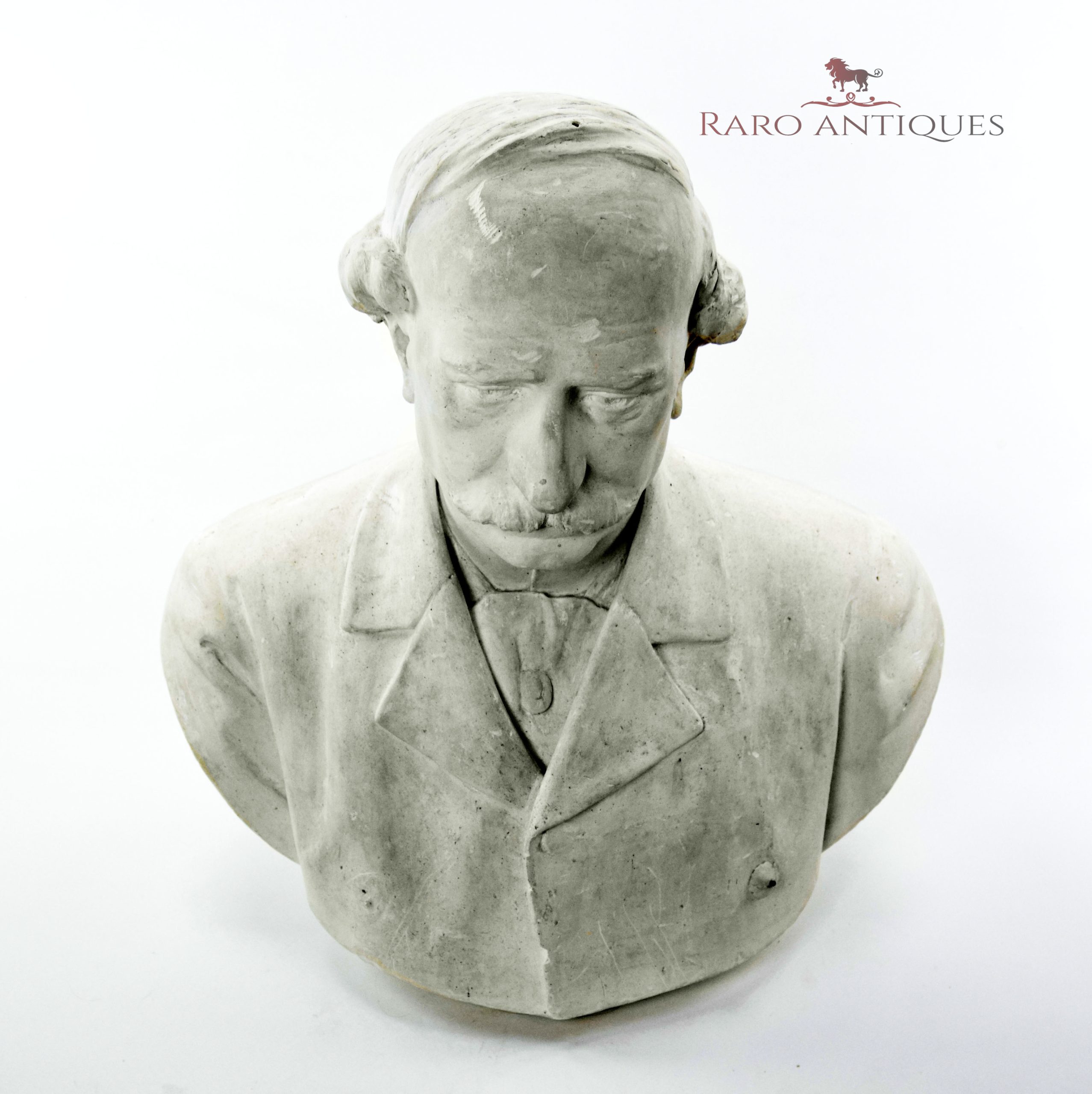
Antique bust sculpture, created in 1906, by Italian sculptor Emilio Marsili.

The bust sculpture of an elderly man will be an intriguing addition to your home or institution. You can hang it on the wall or place it on a shelf/table. The sculpture has been evaluated by the museum in Rome, ensuring that you’ll be bringing top-notch art from the previous century into your spaces. This offers you an excellent opportunity to own a piece by the esteemed sculptor, whose works are otherwise displayed in museums.

Emilio Marsili was born in Venice in 1841. He trained as a sculptor at the Venetian Academy under L. Ferrari, then moved to Paris, where his Venetian education flourished, making him extremely popular. After Paris, he moved to Belgium, inspired by the sculptors there. However, homesickness drew him back to Venice, where he continued to dedicate himself to his craft. During that time, he contributed to the remodeling of Palazze Cavalli Franchetti, created a bust sculpture of Vittorio Emanuele II for the town hall in Pordenone, and crafted a relief for the facade of the Pietà church in Venice, which can still be found there today. In those years, he also received his first recognitions for his work, not only in his native Italy but also receiving awards in Vienna and Paris, with museums beginning to acquire his works. He was described as an “aristocratic artist” endowed with “an instinctive sense of measure, allowing him to be lively without being vulgar and strict without being harsh.” In later years, he became known primarily for crafting prestigious tombstones, including one for Queen Margherita of Savoy. He passed away in 1926 in Venice, and his works remain part of museums today, highlighting his enduring creative energy, which is still appreciated to this day.

Dimensions: 68 x 65 x 40 cm

Weight: 12 kg

The bust sculpture is well-preserved and signed.

1 in stock

Add to wishlist
SKU: A1080 Categories: Decor, New Stock, Premium
Share
Facebook Email linkedin WhatsApp WhatsApp Viber
  • Additional information
  • Reviews (0)
  • Delivery
Additional information
Weight 12 kg
Dimensions 68 × 65 × 40 cm
Reviews (0)

Reviews

There are no reviews yet.

Be the first to review “ANTIQUE BUST SCULPTURE” Cancel reply

Your email address will not be published. Required fields are marked *

Delivery

Shipping Information for International Orders:

For deliveries, please contact us prior to your purchase or immediately after placing your order to arrange shipping options, costs, and delivery timelines.

We work with trusted and reliable shipping partners to ensure your order is delivered safely and on time. Since shipping costs and options vary depending on the location and type of item, we will work with you to find the best solution.

Important: For purchases outside of Europe, the buyer is responsible for any applicable import duties, customs fees, or other local taxes as required by the laws of the destination country.

For more information or inquiries, please contact us.

Related products

Close

CHAIR PAOLO BUFFA

370,00 €

Chair in mahogany with original upholstery, designed by Italian designer Paolo Buffa from the 1950s.

An excellent example of top-quality and design. The chair is sprung, making it extremely comfortable. It will be suitable for near a fireplace or any other cozy corner for lounging. Surely, it will be a chair that everyone will want to sit in. Dimensions: 129 x 51 x 48 x 45 cm Weight: 4.5 kg The chair is in excellent condition, the upholstery is in line with the time, slightly faded, but it is original and gives the stool its authenticity.
Add to wishlist
Buy
Quick view
Close

ANTIQUE CHANDELIER

2.400,00 €

Chandelier from the Art Nouveau period made in Vienna, between 1900-1910.

An exceptional Viennese Art Nouveau chandelier with five lights. Its brass frame is adorned with an elegant, linear design characteristic of the Viennese Art Nouveau movement. An extremely decorative and elegant chandelier, it is undoubtedly not just an ordinary light but an artwork that will be admired by all. Dimensions: 45 x 40 cm Weight: 3.9 kg The chandelier is in excellent condition, newly wired. For five E27 bulbs.
Add to wishlist
Buy
Quick view
Close

ANTIQUE PENDANT LIGHT

530,00 €

Antique pendant light fixture from the 1920s.

An intriguing pendant light made of mercury glass, which was once used above counters in goldsmiths' and jewelers' shops to accentuate the sparkle of diamonds, precious stones, and noble metals. Now it will be an exceptional decoration above your counter or table. Due to the relief shapes on the glass itself, it is highly decorative, and it also emits beautiful light as the mercury reflects it nicely. Such lights are, of course, extremely rare and therefore highly sought after due to their fragility. Dimensions: 47 x 10.5 cm Weight: 350 g The ceiling light fixture is in excellent condition. Uses an E27 bulb.
Add to wishlist
Buy
Quick view
Close

SPRING-LOADED CANDLE HOLDER DITMAR

330,00 €

Spring-loaded candle holder made by the Ditmar company, produced between 1895 and 1907.

A rare example of a perfectly preserved spring-loaded candle holder. The candle holder, with its spring, allows you to adjust the height of the candle so that, regardless of the candle's length, it always stays at the same height. An interesting addition to a festive table or a shelf where you can always admire it. Karl Rudolf Ditmar, the founder of the Ditmar company, was born on May 3, 1818, in Prenzlau - Brandenburg. He came to Vienna in 1839. During a business trip to Paris, he is said to have encountered the still-controversial, heavy-working moderator lamp. Improving these lamps soon became his main concern. On August 5, 1840, Ditmar founded a trading company dealing with oil lamps, cups, and lacquered tin. The next step was establishing a workshop for lamp repairs, followed by an attempt at in-house production. Together with his brother Friedrich, whom he invited to Vienna, Rudolf led the company as "Gebrüder Ditmar" in 1841. For this purpose, a "state permit for the production of lacquered tin and zinc composite goods" was issued, creating a legal basis for the first lamp factory in Vienna and Austria. During this time, the brothers succeeded in developing the "Viennese moderator lamp," a spring-loaded lamp that was both inexpensive and reliable due to its adjustable oil supply. After the death of his brother Friedrich in 1858, "Gebrüder" was removed from the company's name, and it became Lampen Fabrik R. Ditmar. Even after his death in 1895, the company retained his name and tradition. Dimensions: 41 x 11.5 cm Weight: 510 g The spring-loaded candle holder is in excellent condition.
Add to wishlist
Buy
Quick view
Close

SCOLD’S BRIDLE

820,00 €

The scold's bridle.

The scold's bridle or brank, originating from Scotland in the 16th century, was a horrific device designed to cause shame, discomfort, and pain to its wearer. Its usage spread from Scotland to England, Germany, and other European countries. Its purpose was to shame, silence, and physically discomfort individuals who were deemed unruly or outspoken, particularly women who challenged authority or societal norms. Often, these bridles were crafted to resemble masks with distorted facial features, such as large ears, noses, or horns. Some even had bells attached to them, further humiliating the wearer and drawing attention to their presence. The bridle, worn for a minimum of several hours, prevented its wearer from eating, drinking, and most importantly, speaking. It consisted of a metal part inserted into the mouth, similar to a bit in a horse's harness, which held the tongue in place. In more severe cases, these metal mouthpieces had spikes, causing additional pain. The bridle was predominantly used as a punishment for women who were considered too vocal or contentious in public, especially widows or older women who were not under male control. It was also known as a "witch's bridle," indicating its use during witch trials to prevent accused witches from casting spells on their captors or communities. Additionally, disobedient wives could be subjected to this punishment at their husbands' request. While men could also face this punishment if perceived as a threat to the common good, it was primarily reserved for women deemed gossips, adulterers, prostitutes, or witches, as well as those who defied societal norms. The bridle served as a stark reminder of the oppression women faced and the consequences of expressing dissent in conservative societies. Remarkably, this punishment was not abolished in England until 1967, reflecting the enduring legacy of patriarchal control and the gradual progress towards women's rights. The scold's bridle serves as a poignant relic of the past, prompting reflection on the darker aspects of human history. Dimensions: 26 x 25.5 x 21 cm Weight: 3.2 kg The scold's bridle is in excellent condition, complete with a lock and accompanying key.
Add to wishlist
Buy
Quick view
Close

ANTIQUE CHANDELIER

2.340,00 €

Gothic-style chandelier, made in the 1930s.

Magnificent bronze chandelier with a glass interior decoration will be an exceptional addition to your home or business space. Impress right at the entrance, as this chandelier is a guarantee to take your breath away and capture attention. It will undoubtedly be an excellent enhancement to any room. Dimensions: 80 x 60 cm Weight: 9.6 kg The chandelier is well-preserved. For four E14 bulbs.
Add to wishlist
Buy
Quick view
Close

CHANDELIER J. T. KALMAR “SONNE”

950,00 €

Chandelier flush mount, designed by the Austrian designer J.T. Kalmar.

The "Sonne" chandelier, meaning "sun" in German, is an interesting modernist fixture whose design seamlessly integrates into any contemporary space. With its simple yet sophisticated lines, this light fixture is not just for illumination; it adds a touch of style to your space. The small glass flowers at the tips further emphasize the opulence of this chandelier, which can also be used as a wall light. Austrian designer and entrepreneur Julius Theodor Kalmar was born in 1884 in Vienna to Julius August Kalmar, the founder of the eponymous company specializing in chandeliers and other objects made of cast bronze. Growing up surrounded by design due to his father and their company, Julius Theodor gained rich design knowledge from an early age. His educational journey led him to the Birmingham School of Art and the University of Applied Arts in Vienna, where he studied under the mentorship of the Secessionist architect Josef Hoffmann. After completing his studies, Julius Theodor joined his father's company in 1906 and took it over in 1913. Under his leadership, the company shifted away from the classical design of the time. Kalmar developed his distinctive design aesthetic, emphasizing the integration of form and function and combining classical traditions with innovative ideas. By the mid-1920s, his products were among the most sought after. In the 1930s, Kalmar began collaborating with the Austrian Werkbund, creating a series of glass lights with a purist aesthetic. Throughout his career, he collaborated with renowned architects such as Oskar Strnad, Josef Frank, and Oskar Wlach. In the last decade of his life, he designed numerous light collections, including the popular Atomic collection. Kalmar passed away in 1968, but the Kalmar company continues to create luxury lighting to this day. Kalmar lights can be found in prestigious locations like the Kremlin Presidential Palace and the Burj Tower in Dubai. Dimensions: 49 x 14 cm Weight: 1 kg The light fixture is in good condition, showing patina on the brass. Compatible with E14 bulbs.
Add to wishlist
Buy
Quick view
Close

DEATH MASK

750,00 €

The creation of death masks is one of the oldest sculptural techniques, serving as a memory of the deceased or as a model for creating portraits. They are made by taking an impression of the face of the deceased in wax or plaster, usually a few hours after death.

The particular death mask you have is original and made of plaster, depicting an unknown man. It is an unusual addition to any room, carrying significant symbolic meaning (Memento mori). Death masks are undoubtedly one of the most intriguing traditions of humanity, a way for people to preserve the memory of the deceased. The most famous death masks come from Egypt, where they were buried with the deceased. Similarly, ancient Roman masks made of wax are known, used as a model for carving into tombstones. This tradition continues for centuries until the end of the Middle Ages when there was a shift in the material used, and masks began to be made of plaster. During this time, masks started to be used in funeral ceremonies and were later kept in libraries, museums, and universities. Death masks were not only made for royal and noble figures but also for prominent individuals such as poets, philosophers, and playwrights. Similar to ancient Rome, these death masks were often used as references for portraits, sculptures, busts, or engravings depicting the deceased. Dimensions: 26 x 22 cm Weight: 780 g The mask is in excellent condition and has an iron hook for wall mounting.
Add to wishlist
Buy
Quick view

Sign up to be among the first to be notified of new discoveries

Facebook Twitter Instagram Pinterest
  • About us
  • Blog
  • Contact
  • My account
  • Frequently asked questions
  • Privacy Policy
  • General Terms and Conditions
  • Decor
  • New Stock
  • Other
  • Furniture
  • Premium
  • Lights
  • Sold
Raro Antiques All rights reserved; 2024

Shopping cart

close
close
Start typing to see products you are looking for.
  • Offers
  • ABOUT US
  • Contact
  • Login / Register
Scroll To Top
The online store uses certain cookies that are necessary for the proper functioning of the site.
More info Accept