


Did you know that social networks existed centuries ago? Of course, not in the form we know them today, but still very similar and comparable to modern times.
The social networks of that time didn’t have names like Facebook, Instagram, or Twitter… they were simply called visiting cards – which they essentially were. Neatly designed visiting cards, usually only containing a name, and less often an address or the area where the person lived. They represented an important social and ethical aspect of society at the time, and to truly understand what they meant, we must look further back into history.
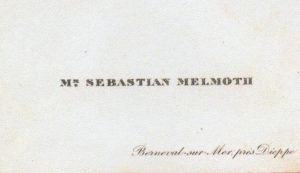
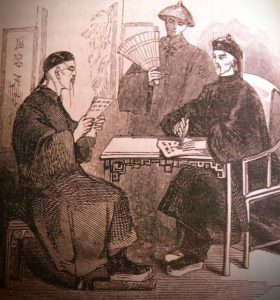 The first ‘visiting cards’ were used by the ancient Egyptians, who left ceramic tiles in worship temples, usually with the name and title of the owner. They reappeared in the 15th century in China, but they truly flourished in the early 19th century, when they spread from France throughout Europe and America. At that time, paper cards began to be made, becoming particularly popular among the upper class. These cards were initially quite minimalist, featuring only the owner’s name beautifully written on white or cream paper. As technology evolved over the years, visiting cards began to evolve as well.

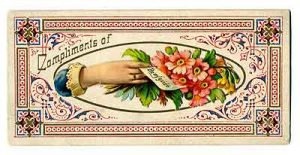
The development of technology allowed visiting cards to become colorful, painted, and feature various patterns and photographs, offering endless creative possibilities, which society at the time made good use of.
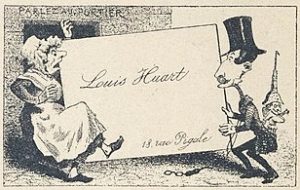
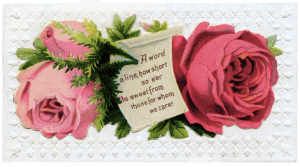
Both men and women used visiting cards. Women’s cards were typically larger and kept in special boxes made of silver, ivory, or shell. Men’s cards, on the other hand, were smaller, allowing them to carry them in their breast pockets.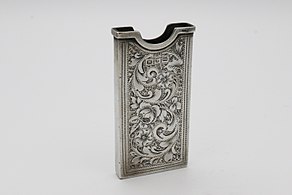
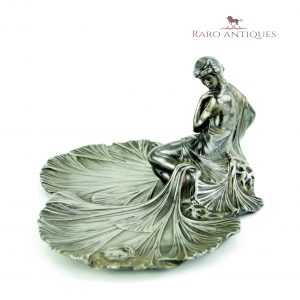
It was very important to adhere to certain rules when exchanging visiting cards. By knowing these rules, one demonstrated their status and manners. Back then, it wasn’t so easy to visit someone at their home. Imagine a time before phones, mobile phones, and the internet… How did people arrange meetings, gatherings, or simply a visit? Of course, with visiting cards. You would bring your card to the person you wanted to visit, and it would be received by the butler, who would place it in the hallway on a tray specifically for this purpose—usually silver-plated or brass trays, adorned with figures and intricate decorations to catch the eye.
Visiting cards were always prominently displayed, and the card of the most prominent person would always be placed on top so that everyone could see what important friends you had. The card would be taken by the lady of the house, who decided whether she wanted the visit or not. If she sent the card back to the person who had left it, it meant that the visit was welcome. However, if she sent the card back in an envelope or didn’t respond at all, it meant the visit was not desired.
A special rule also applied when a man brought his visiting card to a house for the first time. He had to bring a card for every woman in the house. If it was a woman visiting for the first time, she had to leave two cards—one for the main man and one for the woman of the house—and a card for her husband, which would then be given to the head of the household.
Visiting cards also played a significant role in recognition, as the way the card was folded or the corners were bent indicated different messages. If the card was folded at the top right corner, it meant the card was delivered personally. If it wasn’t folded, it meant the card was brought by a servant. If the top left corner was folded, it signified congratulations, while a fold in the bottom left corner conveyed condolences. A fold in the bottom right corner indicated that the person was about to embark on a long journey.
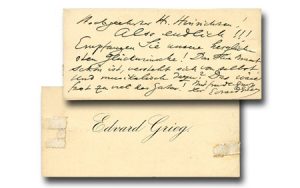
 If you were lucky enough to receive a positive response and were allowed to visit, the visiting cards would often have additional details written on them, such as when tea would be served—indicating the time you should arrive—or specific hours when the lady of the house was available for visits. These visits were regulated as well. They typically lasted no more than twenty minutes, during which polite conversation occurred, but they were also an opportunity to form closer connections. This could lead to receiving a visiting card in return, possibly with a request for a visit, or even an invitation to a party or dinner at a later time.
Visiting cards were most often used for special occasions and events. The rule and etiquette dictated that you should officially extend congratulations or condolences with a visiting card no later than a week after the event, whether it was an engagement, wedding, birth, death, or illness. Women would also typically bring visiting cards when moving to a new home in order to establish contact with neighboring ladies. These cards were used to invite others to celebrations and parties, and they also served as an offering of courtship.
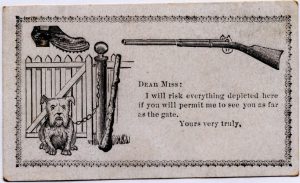
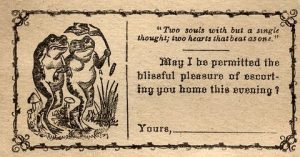
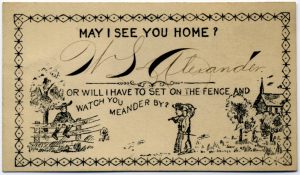
Even back then, much like today when we use abbreviations like lol, brb… they had invented abbreviations to quickly communicate their intentions. For example, ‘p.f.’ meant congratulations, ‘p.r.’ was for thanks, ‘p.c.’ for condolences, ‘p.f.N.A.’ meant Happy New Year, ‘p.p.c.’ signified ‘I am going away for a while,’ and ‘p.p.’ was used when one wished to introduce themselves to the person receiving the card…
We can imagine how fascinating this communication was, and much more measured than today when we are reachable 24 hours a day, anytime, anywhere, by anyone, without them having to ask for permission or even make an effort to reach out to us. However, we can also draw parallels with the beginning of this article and realize that this was indeed the social network of the past. People wanted as many friends as possible — visiting cards on the tray — and they could either accept or reject your request for friendship. With a visiting card, you could show your style and taste, and maybe even boast on it, much like we do with photographs today. This all proves how social we humans are, how we always desire companionship and new acquaintances, and how people from a century ago and more weren’t all that different from us.
With the advent of the telephone, visiting cards slowly began to disappear, and today we only find them as business cards, where individuals usually present their business. But the next time you receive a visiting card, don’t forget the history and story behind these simple rectangular pieces of paper.
Since we haven’t quite fallen into a bygone era and are still in the 21st century, we at RARO ANTIQUES would be happy if you join us on modern social networks, but we certainly won’t shy away from those paper ones either.